
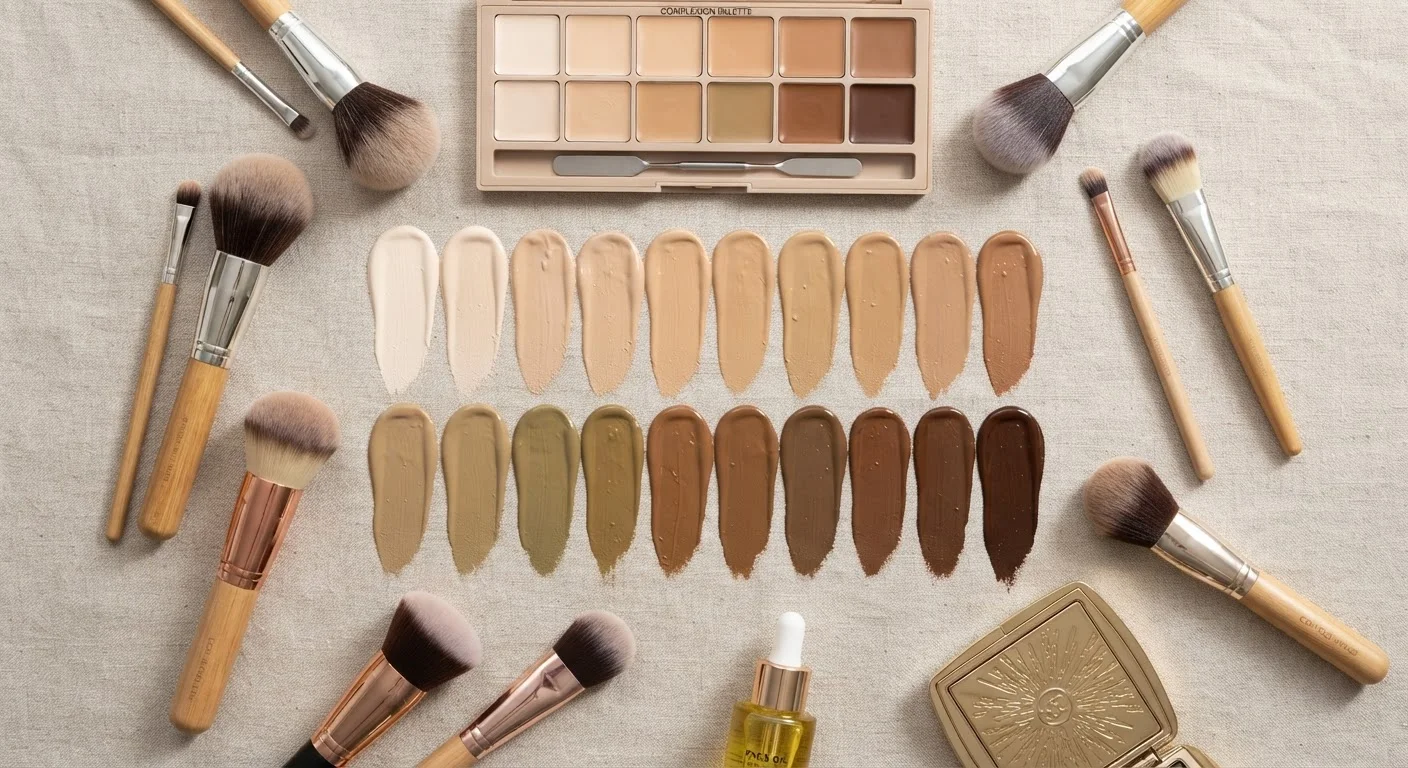
What Undertones Actually Are
Your skin has two distinct color layers working simultaneously: the surface tone (fair, light, medium, tan, deep) and the undertone, which is the subtle, underlying hue that gives your complexion its cast. While surface tone can shift with sun exposure, seasons, and aging, undertones tend to stay consistent throughout your life — making them a reliable anchor for color-matching decisions.
Think of it this way: two people can share the exact same depth of skin tone yet look completely different in the same foundation shade. That difference is almost always undertone at work. Understanding this distinction is genuinely one of the most useful things you can learn about your complexion — and it applies far beyond foundation alone.
Undertone Stays; Surface Tone Shifts
Don't assess your undertone mid-summer if you've just been in the sun. Surface tanning can temporarily mask undertone cues. Check in natural indoor light on skin that hasn't been recently exposed to significant UV for the clearest reading.
The Three Undertone Categories Explained
Undertones generally fall into three groups:
- Warm: Yellow, peachy, or golden hues beneath the skin. Common across a wide range of surface tones, from very fair to very deep complexions.
- Cool: Pink, red, or bluish hues beneath the skin. Again, this has nothing to do with how light or dark someone's surface tone appears.
- Neutral: A balanced mix of warm and cool, without one clearly dominating. Neutral undertones can work with a broader range of foundation shades, which can make matching feel easier — but also sometimes harder to pin down precisely.
It's worth noting that "neutral" doesn't mean "no undertone" — it simply means the warm and cool elements are relatively balanced. For a deeper look at how neutral as a concept shows up in color theory and fashion, see our guide on neutral colors in fashion.
3
Primary undertone categories in skin
Warm, cool, and neutral are the standard categories used by makeup formulators and beauty educators globally to guide foundation and color-product development.
~70%
Foundation returns due to shade mismatch
Industry estimates suggest the majority of foundation returns are driven by incorrect shade selection, with undertone mismatch cited as a leading factor by makeup artists and retail beauty advisers.
How to Identify Your Undertone
There's no single foolproof test, but combining a few simple methods gives you a much clearer picture:
The Vein Test
Look at the inside of your wrist in natural daylight. Veins that appear blue or purple suggest cool undertones; veins that look green suggest warm undertones. A mix of both, or veins that appear blue-green, points toward neutral.
The Jewelry Test
Notice which metal you instinctively reach for, or which looks most flattering against your skin. Gold tends to complement warm undertones; silver tends to flatter cool undertones. Both looking equally good? Neutral is likely.
The White Paper Test
Hold a plain white sheet of paper next to your bare face in natural light. If your skin looks yellowish by comparison, you're likely warm. If it reads pinkish or rosy, you're likely cool. If your skin simply looks like skin without a strong cast either way, neutral fits best.
The Sun Reaction Test
Warm undertones often tan easily and rarely burn; cool undertones tend to burn more readily or turn pink before tanning. This isn't definitive on its own, but it adds useful supporting evidence.
When in doubt between two shades, swatch both at your jawline — not your wrist or hand — and step outside to check in natural daylight. The jawline is where mismatched undertones become most visible.
The skin on hands and wrists can differ noticeably in tone and undertone from facial skin, making jaw-line testing the industry standard for accurate foundation matching.
If you're consistently between undertone categories, look for shades described as 'natural' or 'beige' in foundation lines — these are typically formulated to bridge warm and cool rather than lean distinctly either way.
Neutral-undertone shades are designed specifically for this in-between situation and tend to be more forgiving across a range of skin casts.
Why Undertones Matter for Foundation Matching
This is where undertone knowledge pays off most visibly. Foundation shades are developed along two axes: depth (how light or dark) and undertone (warm, cool, or neutral). When you match only depth but ignore undertone, the result is a foundation that looks off even if the coverage is perfect — often appearing too orange, too ashy, or too pink at the jawline.
Formulators design foundation lines with undertone built in, which is why shade names often include descriptors like "golden," "rose," "beige," or "porcelain" alongside a number. Understanding what those words signal makes shade-finding considerably less trial-and-error.
Getting the Depth Right Is Step One
Undertone matching only works once depth is in the right ballpark. If a shade is dramatically too light or too dark overall, undertone differences become harder to isolate. Narrow down depth first, then fine-tune by undertone — this two-step approach avoids confusion when testing shades.
Once you know your undertone, you can also make smarter decisions when trying lighter-coverage options. Our breakdown of tinted moisturizer vs. BB cream explains how undertone matching applies to those formats too. And if you're building a full routine, consider reading about skincare layering before makeup, since your skin's surface condition also affects how foundation undertones read.
For help choosing between foundation formulas — liquid, powder, or cream — see our formula comparison guide, which pairs naturally with undertone knowledge.
Undertones Beyond Foundation
Once you understand your undertone, it becomes a useful lens across multiple areas of your beauty and style routine:
- Concealer: The same logic applies. A concealer even slightly off in undertone can make dark circles look more green or purple rather than neutralized.
- Blush and bronzer: Warm undertones often suit peachy or terracotta blushes; cool undertones tend to look best with berry or rosy tones.
- Clothing colors: Warm undertones are generally flattered by earthy, warm palettes; cool undertones often look striking in jewel tones and crisp whites. This is essentially the same principle as the jewelry test, scaled up to wardrobe decisions.
- Hair color: Colorists routinely consider undertone when recommending warm (golden, copper) versus cool (ashy, platinum) hair tones. Knowing yours helps you have a more informed conversation.
To take your makeup knowledge further, our guide on face shape and contouring explores how placement and shading interact with your natural features — another area where a more personalized approach makes a real difference. You can also explore skincare essentials for a strong foundation (pun intended) beneath any makeup routine.
“Shade matching is really a two-part equation — you have to get both the depth and the undertone right. Miss either one and the foundation will never look like skin.”
— A Professional Makeup Artist, Editorial and bridal makeup specialist with over a decade of client experience
This article is for informational and educational purposes only. Individual results with beauty products vary. For specific skin conditions or sensitivities, consult a qualified dermatologist or skincare professional.