
Why Sequence Isn't Just a Preference
It's tempting to think of your skincare and makeup routine as a handful of products you can apply in whatever order feels convenient. In reality, sequence has a direct impact on whether your products work at all — and on how your skin looks and feels by midday.
Skin can only absorb ingredients when the surface isn't blocked. A heavy cream applied before a lightweight serum acts like a barrier, preventing those active molecules from reaching the layers where they do their work. Similarly, foundation applied over unprepared or tacky skin will break down faster, look uneven, or crease in fine lines.
The guiding logic is simple: work from the thinnest consistency to the thickest, and from treatment to protection to cosmetics. For a deeper look at what each individual skincare step actually contributes, see Cleansers, Toners, Serums, Moisturizers: What Each Step Actually Does.
Night Routines Follow the Same Logic
The lightest-to-heaviest rule applies in the evening too, but without the SPF and primer steps. Many active ingredients — like retinol and chemical exfoliants — are reserved for nighttime use because of sun sensitivity concerns. Your AM and PM routines can share a framework while using different products.
The Core Routine Order, Step by Step
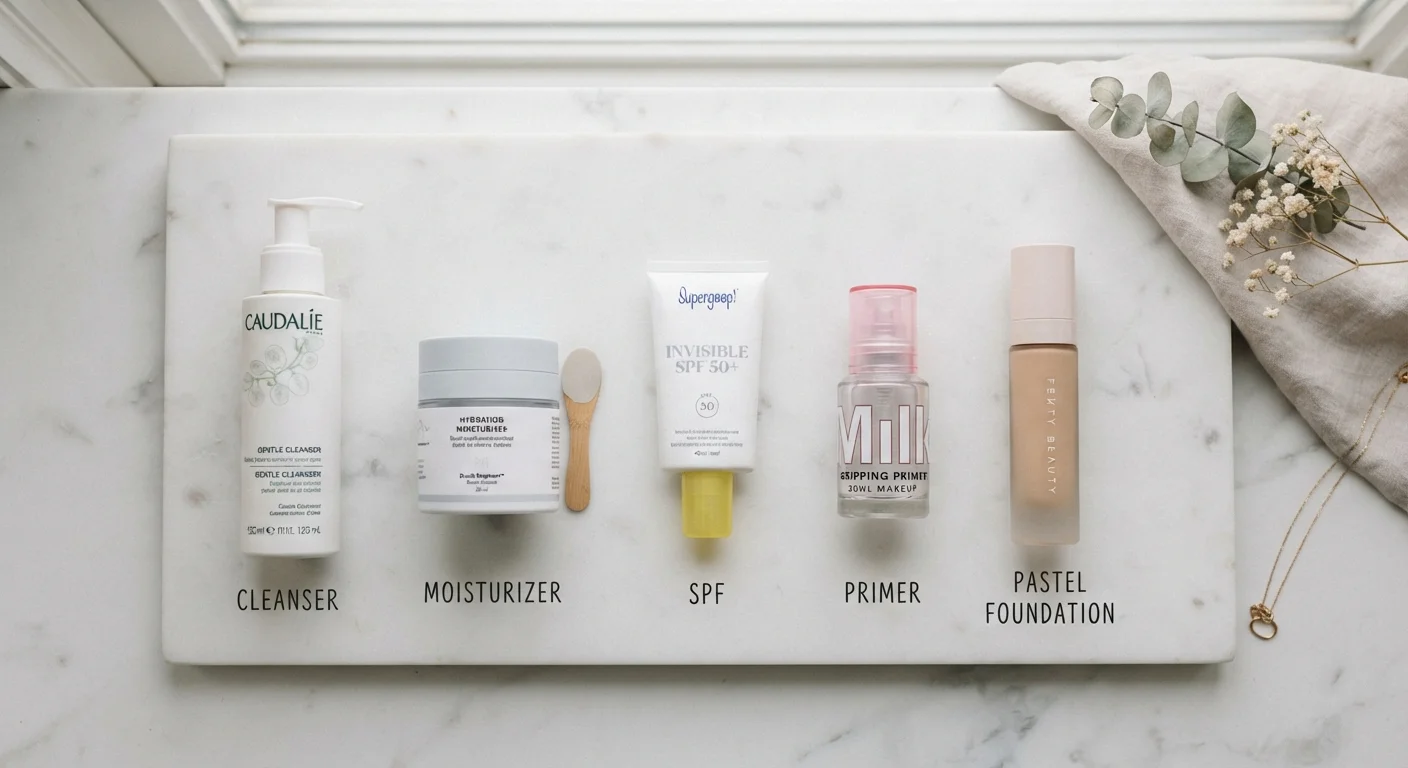
Here's how a typical morning routine flows when you're building toward makeup:
- Cleanser — Start with a clean surface. Any product applied to un-cleansed skin has to compete with overnight oils and residue.
- Toner or essence (if used) — These lightweight, water-based layers go on immediately after cleansing, before anything film-forming.
- Serums and targeted treatments — Active ingredients like vitamin C, niacinamide, or hyaluronic acid should be applied at this stage. Thinner serums go before thicker ones.
- Eye cream — Pat gently around the orbital bone before heavier moisturizers seal in the surrounding skin.
- Moisturizer — Locks in the layers beneath it and creates the foundation of a smooth surface.
- Sunscreen (SPF) — The non-negotiable final skincare step. Let it settle for a minute before moving on.
- Primer (optional) — Bridges the skincare and makeup gap, smoothing texture and extending wear.
- Foundation and makeup — Applied last, once the skin surface is fully prepared.
For guidance on how active ingredients interact with each other at steps three and four, Layering Skincare Products Without Canceling Their Benefits offers a useful breakdown.
~30–60 sec
Ideal wait time between skincare layers
Beauty professionals and cosmetic chemists generally recommend allowing each layer this brief window to absorb before applying the next product.
Lightest first
The universal layering rule
Formulating experts consistently note that applying products from thinnest to thickest consistency prevents heavier emollients from blocking absorption of lighter actives.
Common Mistakes That Affect Both Skin and Makeup
Even experienced routines can run into problems when a step gets reshuffled or rushed. A few patterns come up again and again:
- Applying SPF after primer or foundation. Sunscreen needs direct contact with the skin to work as formulated. Sandwiching it between other layers reduces its reliability.
- Using retinol or strong acids in the morning. These actives are better suited to evening routines — they increase sun sensitivity and can be destabilized by UV exposure. If you're unsure which actives work well together, Introducing New Actives Without Wrecking Your Skin is a practical starting point.
- Skipping the absorption pause. Applying foundation over a still-wet sunscreen or moisturizer often causes pilling — that frustrating balling-up of product on the skin's surface.
- Using too many heavy products. More layers don't always mean better skin prep. Overloading can prevent makeup from adhering and make the complexion look heavy or cakey.
Common Skincare and Makeup Myths That Persist for No Good Reason addresses several widely held beliefs about layering that aren't supported by evidence — worth a read if you've heard conflicting advice.
Build Your Routine the Night Before
If morning routines feel rushed, do your active-ingredient steps at night (retinol, exfoliating acids, richer treatments) so your AM routine is simpler: cleanse, serum if needed, moisturizer, SPF, makeup. Fewer steps in the morning means fewer opportunities to rush the order.
Adjusting for Your Skin Type and Makeup Style
The core sequence holds across most routines, but the specific products within each step will vary. Oily skin types may prefer a gel moisturizer and a mattifying SPF, while dry skin tends to do better with richer emollients and a hydrating primer. Both follow the same order — the formulas just differ.
Your choice of foundation also interacts with your prep steps. A skin-finish liquid foundation over well-moisturized skin behaves very differently from the same product over bare, dry skin. For a look at how formula differences in foundation affect the final result, Liquid, Powder, and Cream Foundation: What Sets Them Apart covers the key distinctions.
It's also worth knowing that skin changes over time — the routine that worked in your twenties may need adjustment later. Skincare Across Every Decade explores how skin biology shifts and what that means for your layering choices.
This article is for general informational and educational purposes only. For concerns about your skin or skin conditions, consult a qualified dermatologist or healthcare professional.