
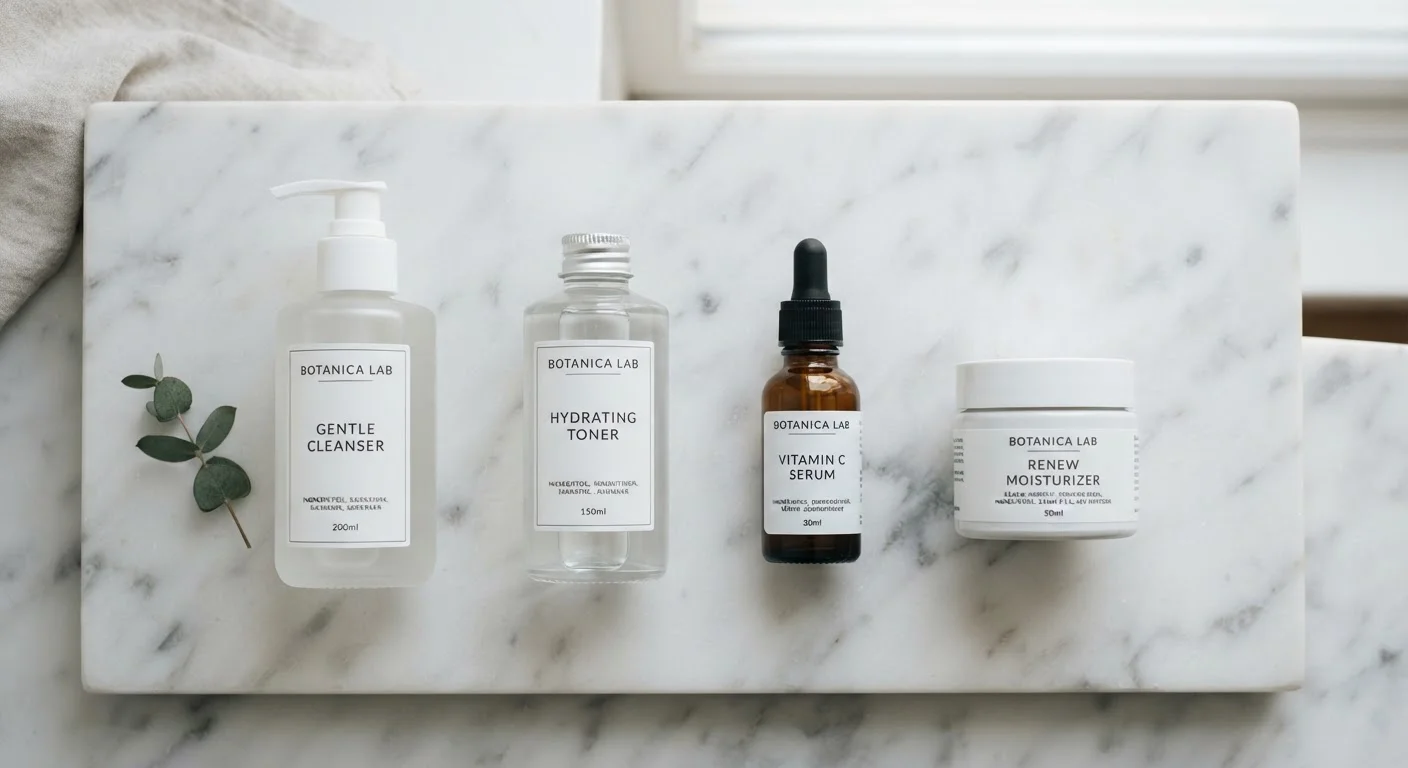
The Four Core Steps at a Glance
Walk down any beauty aisle and you'll find shelves stacked with products promising transformation. But underneath all the marketing, most skincare routines share a simple architecture: cleanse, tone, treat, moisturize. Each layer has a distinct job, and understanding what that job actually is makes it much easier to build a routine that works — without overcomplicating it.
| Routine order | Cleanser → Toner → Serum → Moisturizer (thinnest to thickest) |
| Most essential step | Cleanser and moisturizer — these are the non-negotiables |
| Toner: required? | Optional — beneficial for specific concerns, not universally necessary |
| Serum concentration | Higher active-ingredient concentration than moisturizers |
| AM vs. PM routine | AM: focus on protection (SPF); PM: focus on repair and treatment |
| SPF placement | Applied after moisturizer as the final AM step |
If you're building your first routine, the beginner's complete roadmap is an excellent companion to this reference guide.
Cleansers: The Non-Negotiable First Step
A cleanser removes what doesn't belong on your skin — dirt, excess oil, makeup residue, sunscreen, and environmental pollutants that accumulate throughout the day or overnight. Without this step, every product applied afterward is working through a layer of buildup, which can reduce effectiveness and clog pores.
Cleansers come in several formats: foaming, gel, cream, micellar water, oil-based, and balm. The right format depends largely on skin type and the time of day. Oil-based or balm cleansers are especially effective at breaking down sunscreen and heavy makeup — a method sometimes called double cleansing, where an oil cleanser is followed by a water-based one.
Humectant
An ingredient that draws water from the environment and deeper skin layers toward the skin's surface. Common examples include glycerin, hyaluronic acid, and urea.
Occlusive
An ingredient that forms a physical barrier on the skin's surface to slow water evaporation and lock in moisture. Examples include petrolatum, squalane, and shea butter.
Skin barrier
The outermost layer of the skin, composed of cells and lipids, that protects against environmental irritants and prevents moisture loss. A compromised barrier can lead to dryness, sensitivity, and breakouts.
Chemical exfoliant
An acid or enzyme that dissolves the bonds holding dead skin cells together, allowing them to shed more evenly. AHAs (like glycolic acid) and BHAs (like salicylic acid) are the most common types.
Double cleansing
A two-step cleansing method where an oil-based cleanser removes oil-soluble impurities like sunscreen and makeup, followed by a water-based cleanser to clean the skin itself.
Active ingredient
A component in a skincare product that produces a measurable effect on the skin — such as vitamin C for brightening or retinol for cell turnover — as opposed to base or texture ingredients.
The key principle: cleansing should remove impurities without stripping the skin's natural moisture barrier. If your skin feels tight or dry after washing, the formula may be too harsh for your skin type.
Toners: More Than Just a Splash of Water
Toners have a complicated reputation. Older alcohol-heavy formulas were genuinely drying, which gave the entire category a bad name. Modern toners are different — most are water-based liquids designed to prep the skin for what comes next, deliver a first pass of active ingredients, or help rebalance the skin's pH after cleansing.
Some toners focus on hydration (look for humectants like glycerin or hyaluronic acid). Others are exfoliating toners that use chemical exfoliants such as AHAs or BHAs to gently loosen dead skin cells. Still others are soothing formulas aimed at calming redness or sensitivity.
Is toner essential? For many people, no — it's genuinely optional. But for those dealing with congested pores, uneven texture, or particularly dry skin, the right toner can meaningfully improve how the rest of the routine performs.
Serums: The Targeted Treatment Layer
Serums are where most of the active skincare work happens. These lightweight, concentrated formulas are designed to deliver specific ingredients deeper into the skin than a typical moisturizer can. Because serums have smaller molecular structures and higher ingredient concentrations, they're particularly effective at addressing specific concerns.
~90%
Of visible skin aging linked to UV exposure
According to the Skin Cancer Foundation, sun protection is considered the most evidence-backed anti-aging measure in dermatology.
2–3 min
Recommended wait time between serum and moisturizer
Allowing a serum to absorb slightly before applying the next layer helps prevent dilution of active ingredients, per general dermatological guidance.
Common serum targets include hyperpigmentation (vitamin C, niacinamide), fine lines and firmness (retinol, peptides), hydration (hyaluronic acid), and acne (salicylic acid, azelaic acid). One serum addressing one or two concerns is usually more effective — and gentler on skin — than layering multiple actives at once. For guidance on ingredient compatibility, see our article on layering skincare products without canceling their benefits.
Serums are applied after toner and before moisturizer, giving actives direct access to skin before a heavier layer seals things in.
Moisturizers: Locking It All In
Moisturizers do two main things: they attract water to the skin (using humectants) and prevent that water from evaporating (using occlusives and emollients). Even oily skin benefits from moisturizer — skipping it can actually trigger more oil production as the skin compensates for dehydration.
Formulas range from lightweight gels to rich creams and thicker balms. Gel or fluid moisturizers tend to suit oilier or combination skin; cream or balm textures are better suited to dry or mature skin. Ingredients like ceramides are worth understanding — they help reinforce the skin barrier, which is the outermost layer that protects against irritants and moisture loss.
Moisturizer also acts as a finishing layer that helps the active ingredients applied earlier — in your serum — continue to do their work without being disturbed. In the morning, a moisturizer with SPF (or a separate sunscreen applied after) is widely considered the single most impactful addition to any daytime routine. Skin changes over time, too — the skincare across every decade guide explains how moisturizer needs shift as skin matures.
This article is for general informational and educational purposes only. Individual skin conditions and reactions vary. Consult a licensed dermatologist or healthcare provider for personalized skincare guidance, especially if you experience persistent irritation, breakouts, or other skin concerns.