
Why Skincare Matters (Even If You Think It Doesn't Apply to You)
Skincare isn't a luxury reserved for people with "problem skin" or those who enjoy elaborate morning rituals. Your skin is your body's largest organ, and it does serious work — regulating temperature, acting as a barrier against environmental aggressors, and signaling when something internal is off. A basic routine keeps that barrier functioning well.
The good news for anyone who's never owned a dedicated face wash: you don't need a dozen products or a dermatology degree to get started. The fundamentals are straightforward, and even a minimal habit practiced consistently outperforms an elaborate routine done irregularly. Think of this guide as your foundation — everything you need to build from, and nothing you don't.
Skincare Is General Wellness, Not Medical Treatment
The steps in this guide support everyday skin health for most adults. They are not intended to treat, diagnose, or manage skin conditions such as eczema, rosacea, acne, or psoriasis. If your skin regularly causes discomfort, bleeds, or doesn't respond to gentle, basic care, a board-certified dermatologist is the right next step.
Know Your Skin Type Before You Buy Anything
Choosing products without knowing your skin type is a bit like buying shoes without knowing your size — you might get lucky, but the odds aren't great. The classic home test: cleanse your face, pat dry, wait an hour without applying anything, then observe.
Skin barrier
The outermost layer of skin that keeps moisture in and irritants out. A healthy barrier means skin feels comfortable and resilient.
Humectant
An ingredient that draws water molecules into the skin from the environment or deeper skin layers. Hyaluronic acid and glycerin are common examples.
Non-comedogenic
A label indicating a product is formulated to avoid clogging pores, making it a safer choice for oily or acne-prone skin types.
Broad-spectrum SPF
A sunscreen that protects against both UVA rays (linked to aging) and UVB rays (linked to burning). SPF 30 or higher is widely recommended for daily use.
Ceramides
Lipid molecules naturally present in skin that help hold the outer layer together and retain moisture. Common in barrier-repair moisturizers.
Patch test
A method of testing a new product on a small area of skin before applying it to your face, to check for allergic reactions or irritation.
- Oily: Visible shine across most of the face, prone to enlarged pores
- Dry: Tight feeling, possible flaking, little to no shine
- Combination: Oily through the forehead, nose, and chin (the T-zone); drier on the cheeks
- Normal: Balanced — neither greasy nor tight, relatively even texture
- Sensitive: Reacts easily to new products, weather, or stress with redness or irritation
Skin type can shift with seasons, hormonal changes, and age. For a broader look at how skin evolves over time, this guide on skin biology across decades is a genuinely useful read.
The Core Three: Cleanse, Moisturize, Protect
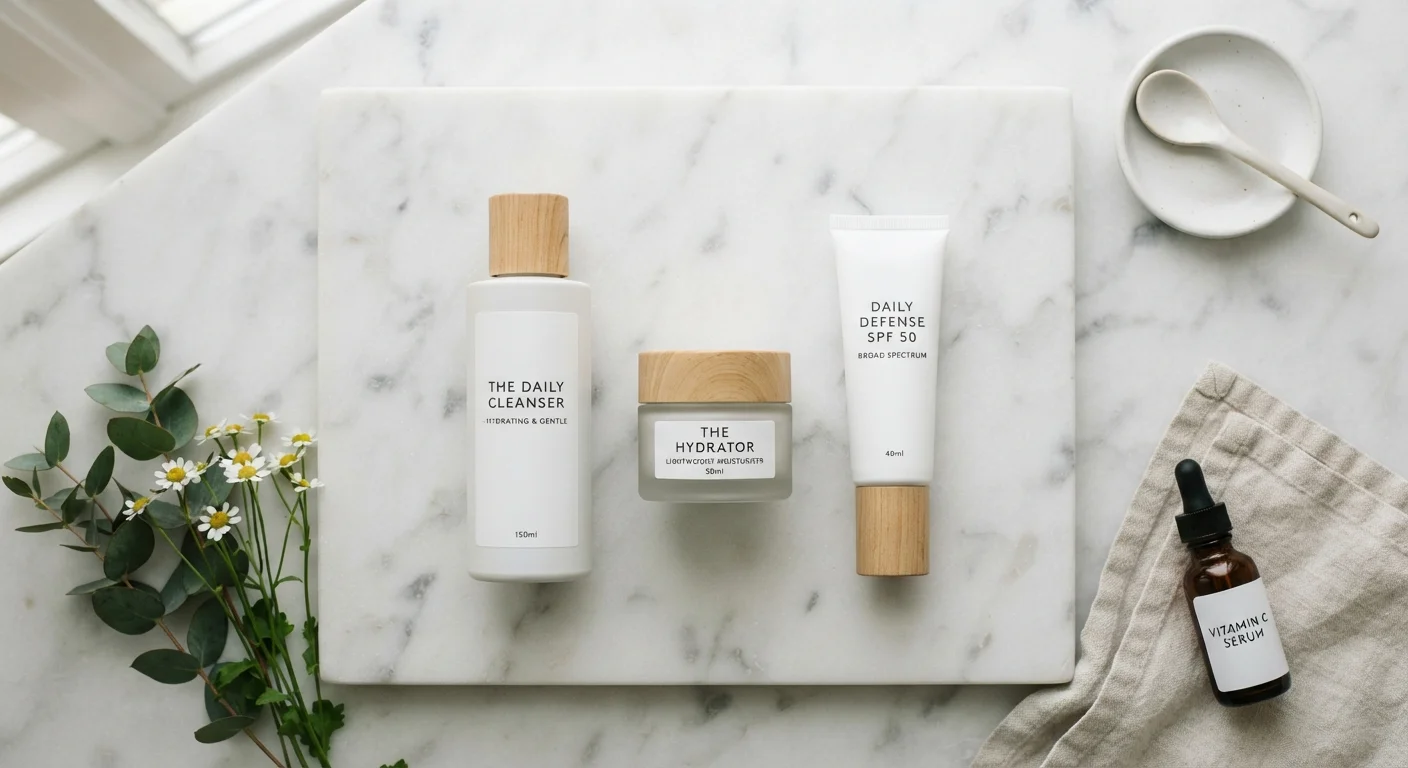
If you do nothing else, master these three steps. They address the three most fundamental skin needs: removing buildup, restoring the moisture barrier, and defending against UV damage.
Cleanse
A gentle, pH-balanced cleanser removes sweat, oil, pollutants, and makeup without stripping the skin's natural oils. Foaming formulas tend to suit oily skin; cream or milk cleansers work well for dry or sensitive types. Twice daily is standard — morning and evening — though once at night is acceptable for very dry or sensitive skin.
Moisturize
Moisturizer isn't about adding water — it's about preventing the water already in your skin from evaporating. Look for ingredients like hyaluronic acid (a humectant that draws in moisture) and ceramides (lipids that reinforce the skin barrier). Even oily skin benefits from a lightweight, non-comedogenic moisturizer.
Protect (SPF)
Broad-spectrum sunscreen with SPF 30 or higher is the step most supported by evidence for preserving long-term skin health. UV exposure contributes to photoaging, uneven pigmentation, and more serious skin concerns. Apply every morning, rain or shine, as the last step of your routine. For guidance on layering sunscreen into a fuller morning sequence, see how product order affects wear and skin health.
Start With Just One Week of Consistency
Before adding any extras, commit to the core three steps — cleanse, moisturize, SPF — for seven consecutive days. This establishes a baseline and helps you notice how your skin actually responds to a clean, supported state before layering in anything new.
Ingredients Worth Understanding
Once the core three feel natural, a handful of evidence-backed ingredients are worth knowing by name. You'll encounter them on labels, and understanding what they do helps you choose wisely rather than following trends.
- Hyaluronic acid: A humectant found naturally in skin that can hold significant amounts of moisture. Suitable for all skin types.
- Niacinamide: A form of vitamin B3 associated with reducing the appearance of pores, calming redness, and supporting the skin barrier.
- Retinoids: Vitamin A derivatives linked to cell turnover and collagen support. Effective but potentially irritating when first introduced — start slowly and always pair with SPF.
- Vitamin C: An antioxidant that can help brighten uneven tone and defend against environmental oxidative stress. Formulation stability matters.
- Exfoliating acids (AHAs, BHAs): Help dissolve dead skin cells for smoother texture. A full breakdown of how AHAs, BHAs, and PHAs work explains which type suits which concern.
For a deeper explanation of how individual product categories function, this breakdown of cleansers, toners, serums, and moisturizers covers the mechanics clearly.
Don't Stack Too Many Actives at Once
Combining multiple potent ingredients — like retinoids, vitamin C, and exfoliating acids — in the same routine can overwhelm the skin barrier and cause irritation, peeling, or sensitivity. Introduce active ingredients one at a time, and give each a few weeks before adding another. When in doubt, a dermatologist can help you sequence safely.
Building Habits That Actually Stick
The most effective routine is the one you'll actually do. A few strategies that help beginners stay consistent:
- Anchor it to an existing habit. Pairing skincare with teeth brushing or your morning coffee lowers the mental effort of remembering.
- Introduce one product at a time. Wait at least two weeks before adding anything new. This makes it easy to identify what's working — or what's causing a reaction.
- Patch test new products. Apply a small amount to the inside of your wrist or behind your ear for a few days before using it on your face.
- Keep expectations realistic. Hydration shifts fast; texture and tone changes take months of consistency.
Ready to layer your routine into a full morning look? Building a minimal everyday makeup routine from scratch is a natural next step once your skincare foundation is solid.
This article is for general informational and educational purposes only. It is not a substitute for personalized advice from a licensed dermatologist or qualified healthcare professional. If you have a skin condition, persistent irritation, or concerns about your skin health, consult a qualified professional before making changes to your routine.