Why a Minimal Routine Works
Starting a makeup routine doesn't mean committing to an elaborate process every morning. A minimal approach — using just a handful of versatile products — gives you a consistent, manageable foundation without overwhelming your skin or your schedule.
The case for keeping it simple is practical: fewer products mean fewer variables when something irritates your skin, a smaller financial investment while you're still learning what you like, and a routine you'll actually stick to. Complexity can always be added later; starting lean helps you build genuine skill with each product before layering on more.
Consistency Builds Confidence
The best routine is one you'll actually do each day. Even if your technique isn't perfect at first, repeating the same steps regularly builds muscle memory and familiarity with how products behave on your skin. Give any new routine at least two weeks before deciding whether it works for you.
The Core Five Products
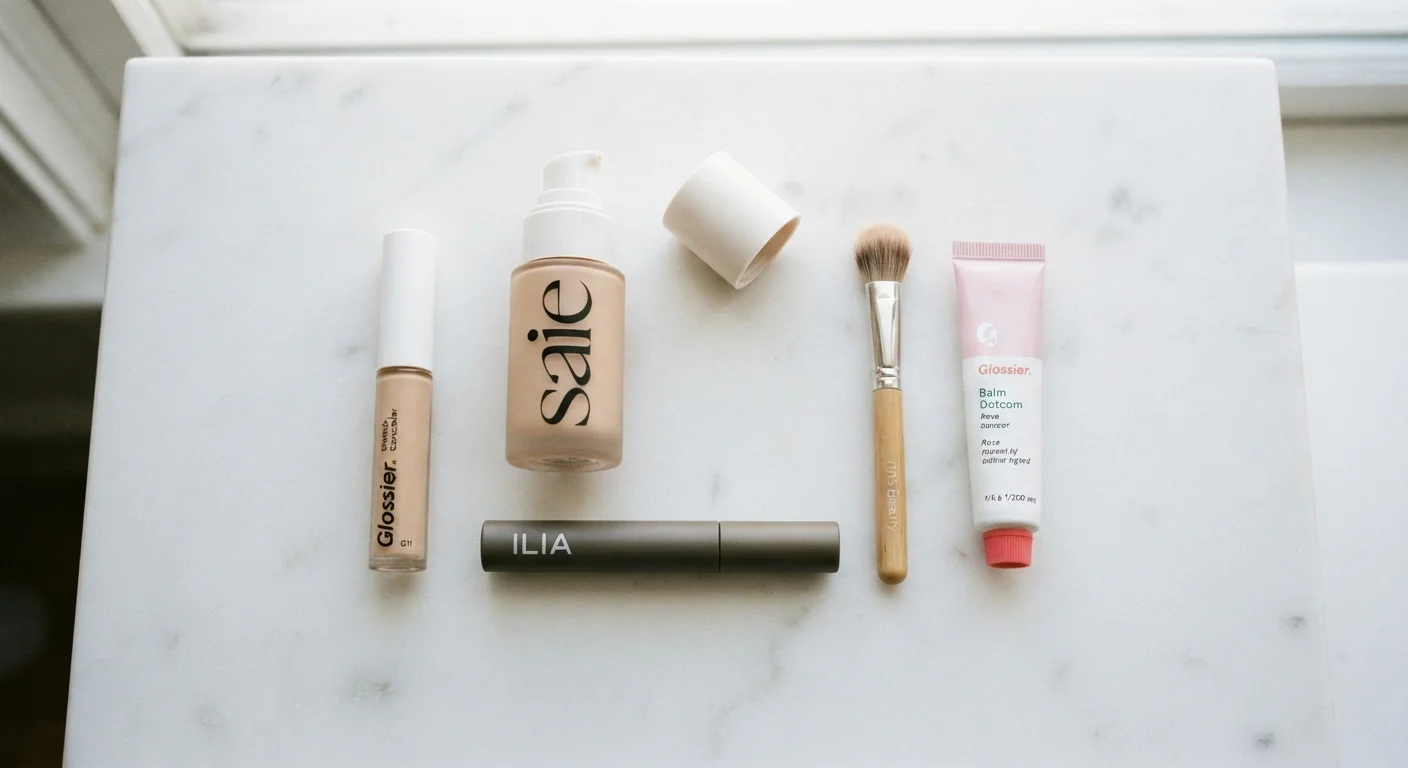
A beginner-friendly everyday routine can be built around five versatile products:
- Tinted moisturizer or BB cream — evens skin tone while hydrating, with lighter coverage than foundation.
- Concealer — targets specific areas like under-eye circles or blemishes, providing coverage exactly where needed.
- Mascara — defines and opens the eyes with minimal effort, often the single most impactful product in a minimal kit.
- Clear or tinted brow gel — grooms and shapes brows in seconds, framing the face naturally. For a deeper look at DIY brow care, see at-home brow shaping methods.
- Tinted lip balm — adds a wash of color while keeping lips comfortable, no precise application needed.
These five products work together without requiring advanced technique, and each one is useful on its own for days when you want to go even lighter.
Tinted moisturizer
A lightweight lotion that combines hydration with a small amount of pigment to even out skin tone — less coverage than foundation, but easier to apply and more comfortable for everyday wear.
Concealer
A heavier-coverage product applied to specific spots — such as under-eye circles or blemishes — to blend them into the surrounding skin tone.
BB cream
Short for blemish balm or beauty balm, BB cream is a tinted product that combines moisturizer, light coverage, and sometimes SPF in a single step.
SPF
Sun Protection Factor — a measure of how well a product shields skin from UVB rays. Many moisturizers and tinted products include SPF as an added benefit.
Brow gel
A mascara-like product used to brush and hold eyebrow hairs in place. Clear versions simply groom; tinted versions also add color and definition.
Setting powder
A fine, translucent or tinted powder applied over foundation or concealer to reduce shine and help makeup last longer throughout the day.
Skincare First: The Foundation Beneath the Foundation
How your skin is prepped before any makeup is applied significantly affects the final result. A basic skincare sequence — cleanser, moisturizer, and SPF — takes only a few minutes and creates the surface that makeup sits on.
Skipping moisturizer often leads to makeup that looks patchy or settles into dry areas. Sunscreen is worth applying daily regardless of whether you're wearing makeup, as UV exposure affects skin over time. Many tinted moisturizers include SPF, which can simplify your routine further.
For a broader approach to daily skin care, the Skincare Essentials hub covers routines for different skin types and concerns.
SPF and Tinted Products Don't Always Stack
If your tinted moisturizer includes SPF, that doesn't necessarily replace a dedicated sunscreen — dermatologists generally note that most people don't apply enough tinted product to achieve the labeled SPF level. For daily sun protection, a separate moisturizer with SPF applied before your tinted product is a more reliable approach. This is general educational information; consult a skincare professional for guidance suited to your skin type.
Applying Each Step in Order
Order matters in a makeup routine — each layer builds on the one before it. Here's a logical sequence for the five-product routine:
- Moisturizer and SPF — apply and allow to absorb for one to two minutes.
- Tinted moisturizer — dot onto cheeks, forehead, nose, and chin, then blend outward using fingertips or a damp sponge.
- Concealer — tap lightly under the eyes or over any areas you want to even out; blend the edges so there's no visible line.
- Mascara — apply to upper lashes using a zigzag motion from root to tip; one or two coats is sufficient.
- Brow gel — brush through brows following their natural shape.
- Tinted lip balm — apply directly from the tube; no liner or precision needed.
To understand which tools can make each of these steps easier, every tool in a basic makeup kit, explained is a helpful plain-language reference.
Building From Here
Once a minimal routine feels comfortable and consistent, it's easy to expand — adding a blush, a setting powder, or a bolder lip color when the mood suits you. Seasonal changes can also prompt small adjustments; lighter formulas tend to work better in summer humidity, while richer textures may feel more comfortable in cooler months. For practical guidance on that transition, see transitioning your makeup routine from summer to fall.
Personal style and beauty choices often evolve together. If you're also thinking about refreshing your overall look, building a wardrobe from scratch takes a similarly low-pressure, beginner-friendly approach to getting dressed.
Skincare Essentials Hub
A structured collection of skincare guidance covering routines, ingredients, and common skin concerns — a useful complement to any makeup routine.
Every Tool in a Basic Makeup Kit, Explained
Covers the most common brushes, sponges, and applicators in plain language — helpful once you're ready to move beyond fingertip application.
At-Home Brow Shaping: What's Worth Doing Yourself
Walks through DIY brow methods including tweezing and trimming, with practical notes on what each technique achieves and where to be cautious.
This article is for general informational and educational purposes. If you experience skin irritation or reactions to any cosmetic product, consult a qualified dermatologist or healthcare professional.