
Why the Season-Switch Actually Matters for Makeup
When summer humidity fades and autumn temperatures settle in, your skin's behavior changes in ways that directly affect how makeup applies, wears, and looks throughout the day. Sweat-resistant formulas that performed beautifully in July can suddenly feel cakey; matte foundations that kept shine at bay may now emphasize dry patches.
The shift is real — lower humidity means less moisture in the air, which can affect skin's surface texture, oil production, and overall tone. Light also angles differently in fall, revealing texture and shadows in ways that summer's bright overhead sun did not. Taking thirty minutes to audit your kit and technique before the weather fully turns can save a lot of mid-season frustration.
This checklist walks you through every stage — from skincare prep to finishing touches — so your look stays polished and intentional all the way through November. For a broader look at how your skin's underlying needs shift with the seasons, the annual skincare audit guide is a helpful companion.
Skincare Foundation
Base and Complexion
Eye Makeup
Lip and Cheek Color
Setting and Longevity
Tools, Products, and Prep You'll Need
Before working through the checklist, gather the categories of products and tools listed below. You don't need to replace everything — the goal is to assess what you already have and identify any gaps.
Hydrating foundation or skin-tint
Replaces lightweight summer formulas with something that supports moisture retention as humidity drops.
Rich daily moisturizer
Creates a smooth, supple base under makeup and prevents dry patches from disrupting coverage.
Eye shadow primer
Keeps pigments in place on skin that may become less uniform in texture as the season shifts.
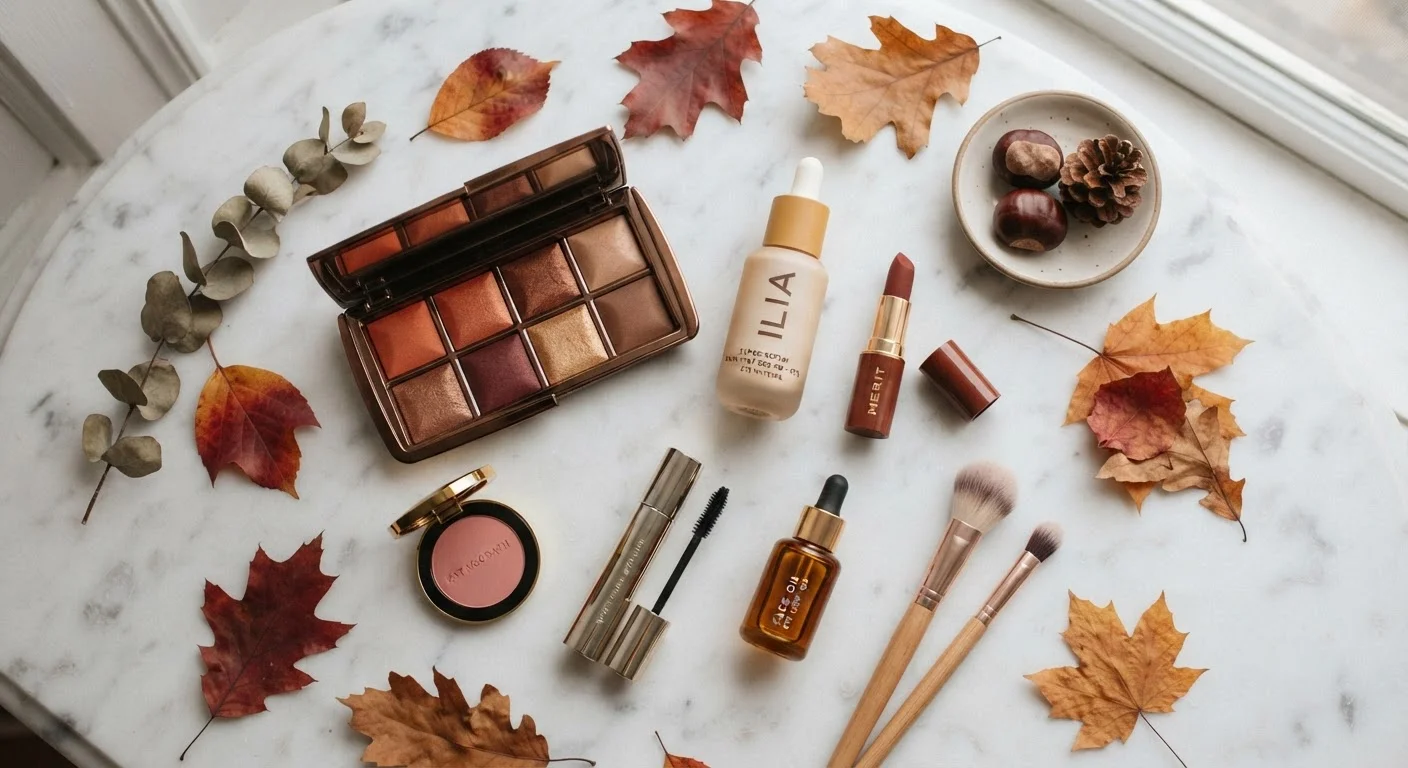
Warm-toned eyeshadow palette
Provides the earthy, deeper hues that complement fall's color environment and lower light conditions.
Cream blush
Blends more naturally on drier fall skin than powder formulas, which can look patchy on dehydrated areas.
Hydrating setting spray
Locks in a dewy finish and prevents the dry, tight feeling that heavier matte sprays can cause in cooler weather.
Lip balm or conditioning primer
Prevents drier fall air from making chapped lip texture visible beneath richer lip color formulas.
If your eye makeup has been fading or creasing, that issue often intensifies in fall when skin texture becomes less uniform. Our guide to eye shadow longevity explains the underlying causes and simple fixes worth applying before you stock up on new products.
Don't Toss Products Prematurely
Before replacing anything, check whether a product's formula is genuinely wrong for fall or whether your application technique or skincare prep is the real issue. Layering a hydrating serum under a summer foundation, for example, can extend that product's usefulness well into October. Replacing your full kit every season is rarely necessary — and working through what you have first saves money and waste.
Making It All Work Together
Seasonal makeup transitions are less about dramatic overhauls and more about recalibrating small details — formula weights, finish types, and color depth — to match what your skin and the light are actually doing. Understanding how your morning and evening skincare routines interact with makeup application is also worth revisiting; see why AM and PM routines serve different purposes for context on how prep shapes your canvas before any product touches it.
Work through this checklist once at the start of the season, then check back in mid-fall if the weather in your area shifts significantly. Skin can continue changing as temperatures drop further, so staying responsive — rather than locking in one routine — is the most reliable approach.
This article is for general informational and educational purposes only. Individual skin types and conditions vary; consult a qualified dermatologist or licensed esthetician for personal skincare guidance.