
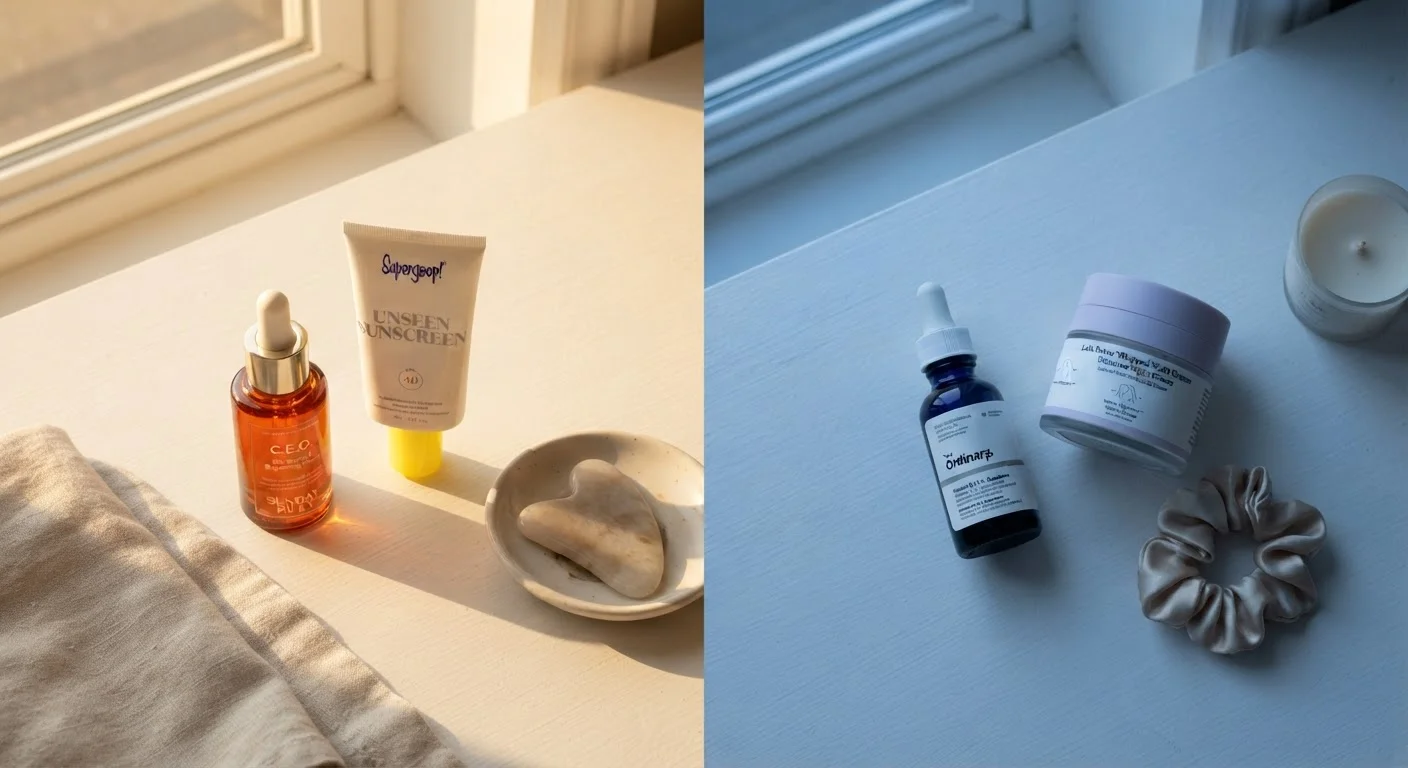
Why Timing Actually Matters in Skincare
Skin isn't static — it follows a circadian rhythm, the same internal clock that governs your sleep-wake cycle. Research in chronobiology (the study of biological time cycles) has established that skin cell turnover peaks in the evening hours, while the skin's barrier function is strongest during the day. These shifts aren't trivial; they directly affect how your skin interacts with products and the environment.
During daylight hours, your skin ramps up sebum production, strengthens its surface barrier, and braces against external aggressors like UV rays, ozone, and particulate pollution. Come nighttime, that defensive posture relaxes, circulation to the skin increases, and the cellular repair processes that reverse daily damage kick into higher gear.
This biological rhythm is the core reason a morning routine and an evening routine have genuinely different jobs — and why the products suited for each window don't always overlap. For a deeper look at how your skin's behavior changes decade by decade, see how skin evolves over time.
The Morning Routine: Defense First
Your AM routine has one overarching goal: protect. Think of it as suiting up before heading into a day full of stressors your skin didn't ask for.
| Morning Routine | Evening Routine | |
|---|---|---|
| Primary goal | Protect from daily stressors | Repair overnight damage |
| Skin state | Barrier strongest, sebum rising | Barrier relaxed, cell turnover peaks |
| Key ingredients | SPF, antioxidants, lightweight hydration | Retinoids, exfoliating acids, richer moisture |
| Cleanser intensity | Gentle or rinse-only | Thorough; double cleanse if wearing SPF/makeup |
| Photosensitive actives | Avoid (retinoids, AHAs) | Ideal window for use |
| Non-negotiable step | Broad-spectrum SPF 30+ | Full makeup and SPF removal |
Core Morning Steps
- Gentle cleanser — Removes overnight oils and residual product without stripping the barrier. Heavy-duty cleansing in the morning is generally unnecessary unless your skin is very oily.
- Antioxidant serum — Vitamin C is the most studied option. Antioxidants help neutralize free radicals generated by UV exposure and pollution before they can trigger oxidative damage.
- Moisturizer — Seals in hydration and supports barrier integrity throughout the day.
- Broad-spectrum SPF 30 or higher — This is non-negotiable. UV radiation is the leading environmental contributor to premature skin aging and hyperpigmentation. SPF should be the final skincare step every single morning, including on cloudy days. See how to layer SPF before makeup to get the sequence right.
Apply SPF as the Very Last Step
Layering anything on top of your SPF — including makeup setting sprays or facial mists — can dilute the sun protection factor. Apply sunscreen as the final skincare step, wait a minute or two for it to set, then proceed with makeup if desired. Reapplication every two hours during direct sun exposure is also important for sustained coverage.
The Evening Routine: Repair and Renew
At night, the skin's protective barriers lower and cell turnover accelerates — making the PM hours a genuinely more receptive window for certain active ingredients. Your evening routine's primary goals are thorough cleansing and targeted repair.
Core Evening Steps
- Double cleanse if you wear makeup or SPF — An oil-based cleanser first breaks down sunscreen and cosmetics; a water-based cleanser follows to clear away remaining residue and environmental debris.
- Exfoliating acids (a few nights per week) — Alpha hydroxy acids (AHAs) like glycolic and lactic acid, or beta hydroxy acids (BHAs) like salicylic acid, accelerate surface cell turnover. These are best used at night because they can increase photosensitivity.
- Retinoids — Vitamin A derivatives (retinol, retinaldehyde, prescription tretinoin) are among the most evidence-backed ingredients for addressing fine lines and uneven texture. They break down in UV light, making nighttime the only practical application window.
- Rich moisturizer or facial oil — Overnight, a slightly heavier formulation can support the skin's repair processes without the concern of feeling heavy under makeup.
Not everyone needs every step every night. If you're just getting started or noticing irritation, scaling back is smart. Signs your routine is doing more harm than good covers the warning signals worth watching for.
~28 days
Average skin cell turnover cycle
Skin cell renewal takes roughly 28 days in young adults and slows with age, according to dermatology literature — one reason consistent nightly support matters over time.
80%
Of premature skin aging attributed to UV
Research published in dermatology journals estimates UV radiation accounts for approximately 80% of visible facial aging, underscoring why daily SPF is the morning routine's most critical step.
Ingredients That Belong to One Routine — Not Both
Some ingredients have a clear home in either AM or PM — using them at the wrong time reduces their effectiveness or raises the risk of irritation.
- Daytime only
- Broad-spectrum SPF; antioxidant serums (vitamin C, niacinamide in a protective context); lightweight hydrating ingredients like hyaluronic acid work well any time but pair especially well with morning moisture-sealing.
- Nighttime only
- Retinoids (photosensitive and UV-destabilized); AHA and BHA exfoliants (increase photosensitivity); benzoyl peroxide (can bleach fabrics and interacts with some morning actives).
- Either routine
- Hyaluronic acid, ceramides, peptides, and calming ingredients like centella asiatica or oat extract are generally stable and non-sensitizing — suitable morning or evening depending on your routine structure.
As seasons change, so can which products feel right for each window. Seasonal routine adjustments offers practical guidance for shifting your regimen when the weather does.
And because skin continues to change with age and environment, periodic reassessment is worthwhile. The annual skincare audit is a practical tool for checking whether your current routine still fits.