
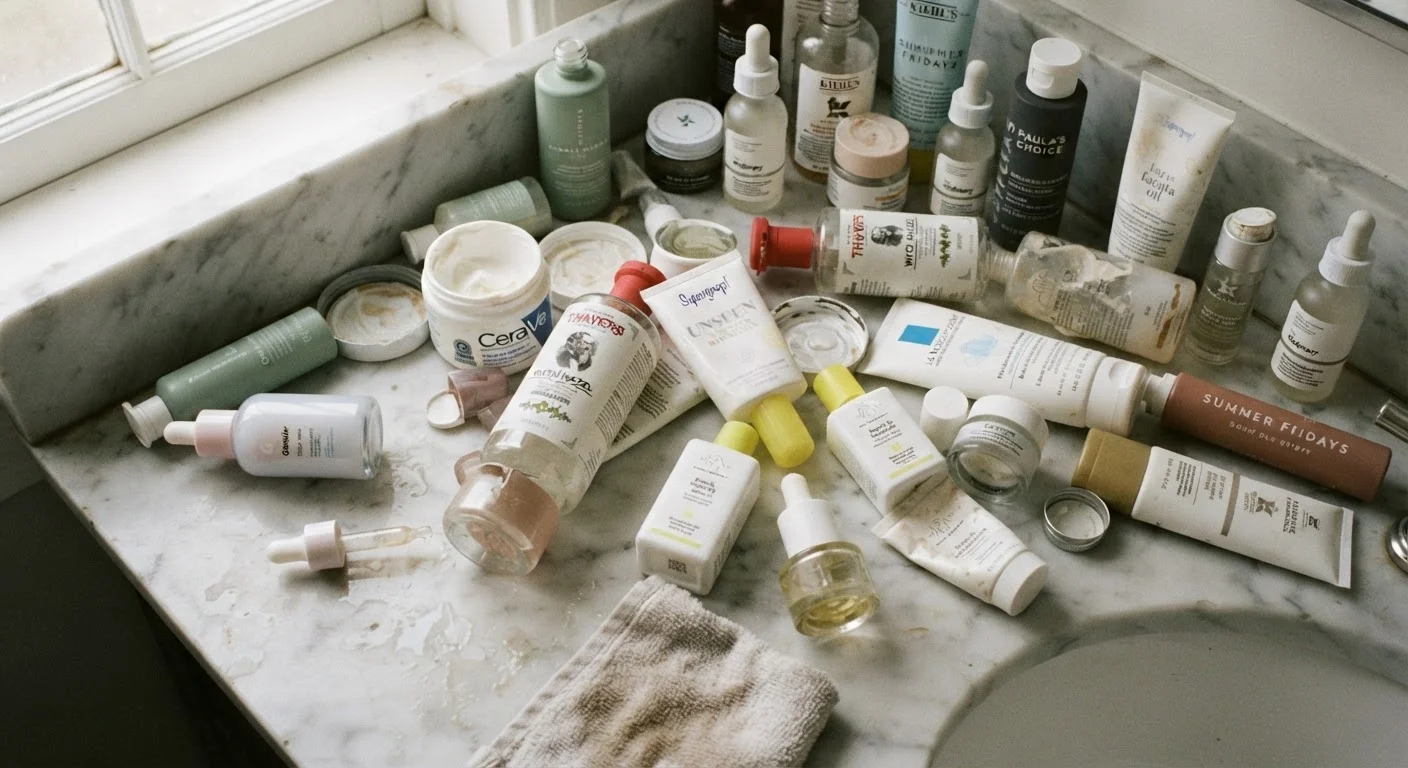
When "More" Becomes the Problem
There's a well-meaning instinct behind a fully loaded skincare shelf: if one serum is good, surely three are better. But skin doesn't work that way. A routine that grows without a clear strategy can quietly tip from helpful to harmful — and the tricky part is that the damage often looks a lot like the problems you were trying to fix in the first place.
Persistent dryness, recurring breakouts, stinging after cleansing — these are easy to misread as signals that you need more products. In many cases, they're signs you need fewer. Learning to distinguish between a routine that's working and one that's working against you is one of the most practical skincare skills you can develop. For a useful baseline, see our guide on AM and PM routine structure — understanding the purpose of each session makes it easier to spot when something's off.
Exfoliating too often or with too many acids at once.
Why it happens: Exfoliation delivers fast, visible results — smoother texture, a brighter look — so it's tempting to use it daily or layer multiple acid products. Marketing often reinforces the idea that more frequent use accelerates results.
Introducing too many new products at the same time.
Why it happens: New launches, routine overhauls, or a sudden skincare interest can lead to adding five products in a week. Without a staggered introduction, it's impossible to know which product caused a reaction.
Using active ingredients that counteract each other.
Why it happens: Each ingredient is often marketed in isolation, making it easy to mix combinations that are chemically incompatible — such as using a low-pH vitamin C serum immediately followed by a retinoid, or pairing niacinamide with high concentrations of vitamin C.
Skipping sunscreen because you're using other protective products.
Why it happens: Some moisturizers and foundations include SPF, which can create a false sense of adequate sun protection. Readers assume overlapping products provide enough coverage without a dedicated SPF step.
Treating nighttime as an opportunity to apply every active you skipped during the day.
Why it happens: Evening routines feel like a catch-up window — a chance to layer retinol, exfoliating acids, and heavy treatments all at once. It's a well-intentioned but counterproductive habit.
What Barrier Damage Actually Feels Like
The skin barrier — technically the stratum corneum — acts as a protective seal that holds moisture in and keeps irritants out. When it's compromised, skin tends to feel tight or raw immediately after washing, react to products it previously tolerated, and look dull or flaky even when you're using moisturizer. Some people notice a faint burning sensation when applying anything, including plain water.
Don't Confuse Purging with Damage
Some active ingredients, particularly retinoids and certain acids, can trigger a short-term increase in breakouts as skin cell turnover accelerates. This 'purging' phase typically resolves within four to six weeks and is distinct from an allergic or irritant reaction. True irritation — stinging, burning, persistent redness, or rash — warrants stopping the product and, if symptoms persist, consulting a dermatologist. When in doubt, err on the side of caution and seek professional guidance.
These aren't signs of skin that needs more exfoliation or stronger actives. They're distress signals. The most effective response is usually to pause all actives (retinoids, acids, vitamin C) and return to a gentle, minimal routine — a mild cleanser, an unfragranced moisturizer with ingredients like ceramides or glycerin, and SPF during the day. Give skin one to two weeks to stabilize before reintroducing anything.
If you're reassessing your entire approach, our annual skincare audit guide offers a practical framework for periodically checking whether your routine still matches your skin's actual needs.
Rebuilding a Routine That Actually Works
Once you've identified that your routine has been causing more friction than benefit, the path forward is simpler than most skincare content suggests. The goal is a short roster of products with complementary purposes — not a ten-step sequence packed with competing actives.
~60%
Adults who report sensitive or reactive skin
Dermatology surveys consistently find that a large share of adults self-report skin sensitivity, a proportion that has increased alongside the growth of complex multi-step routines.
3–5
Core products in a clinically effective routine
Dermatologists generally note that a cleanser, moisturizer, and SPF — plus one or two targeted actives — cover the functional needs of most skin types without compounding irritation risk.
Start with the non-negotiables: a gentle cleanser, a moisturizer appropriate for your skin type, and a broad-spectrum SPF for daytime use. From there, add one active at a time, spaced at least two weeks apart, so you can actually tell what each product is doing. Our guide to layering skincare products without canceling their benefits explains which ingredients play well together and which combinations to avoid.
Skin also changes with age, hormones, seasons, and stress. What worked at 25 may not serve you at 40. Revisiting your routine with fresh eyes — rather than defaulting to habit — is how you stay ahead of issues before they become chronic. Our piece on how skin evolves across every decade is a helpful companion resource for longer-term planning.
This article is for general informational purposes only and is not a substitute for advice from a qualified dermatologist or healthcare professional. If you are experiencing persistent skin concerns, please consult a licensed skincare professional.