Why Dress Codes Still Matter
Getting a dress code wrong is rarely catastrophic, but getting it right sends an immediate, wordless signal that you understand the room. Whether you're heading to a job interview, a wedding, or a rooftop birthday party, knowing what each code actually calls for removes the guesswork — and the last-minute panic.
The challenge is that dress codes have evolved significantly. Many traditional labels now mean different things to different hosts, venues, and industries. This guide cuts through the ambiguity with plain definitions you can apply right away. And if you're ever uncertain about how color or fabric choices factor in, see our articles on color theory for everyday dressing and how material choices shape the way clothes look.
| Number of major dress code tiers | 6 (Casual → White Tie) |
| Most commonly misunderstood code | Smart Casual |
| Safe default when code is unclear | Dress one level up from your estimate |
| Fabric signal for formal occasions | Silk, crepe, velvet, structured wool |
| Cocktail attire hem length | Knee to midi |
| Rarest dress code in everyday life | White Tie |
The Dress Code Spectrum, Explained
Think of dress codes as a sliding scale from the most relaxed to the most formal. Each level has a core logic — and once you understand that logic, you can adapt it confidently rather than just memorizing outfit formulas.
Casual
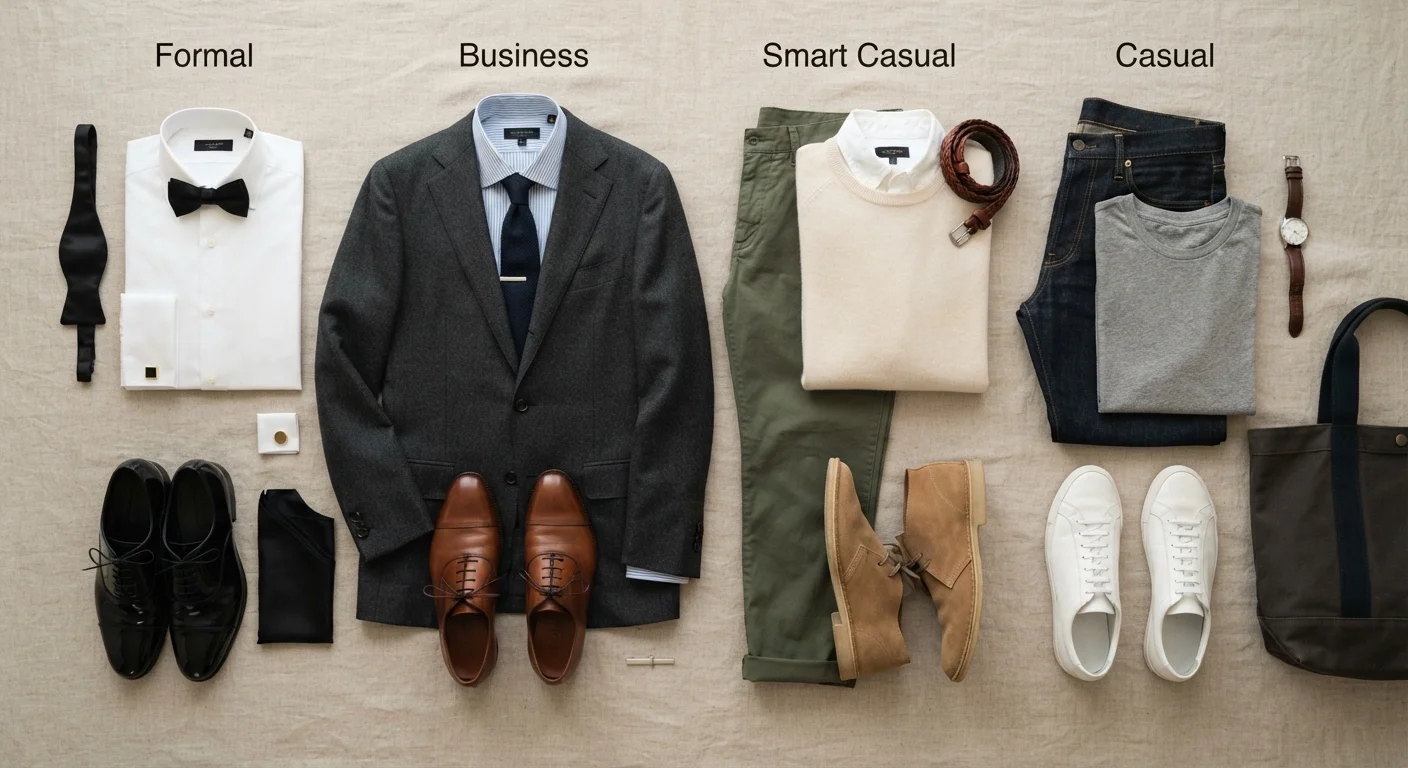
Casual means comfortable, but not careless. Clean, well-fitting jeans, T-shirts, sneakers, and sundresses all fit here. The key word is intentional — even a relaxed outfit benefits from pieces that fit properly and are free of visible wear.
Smart Casual
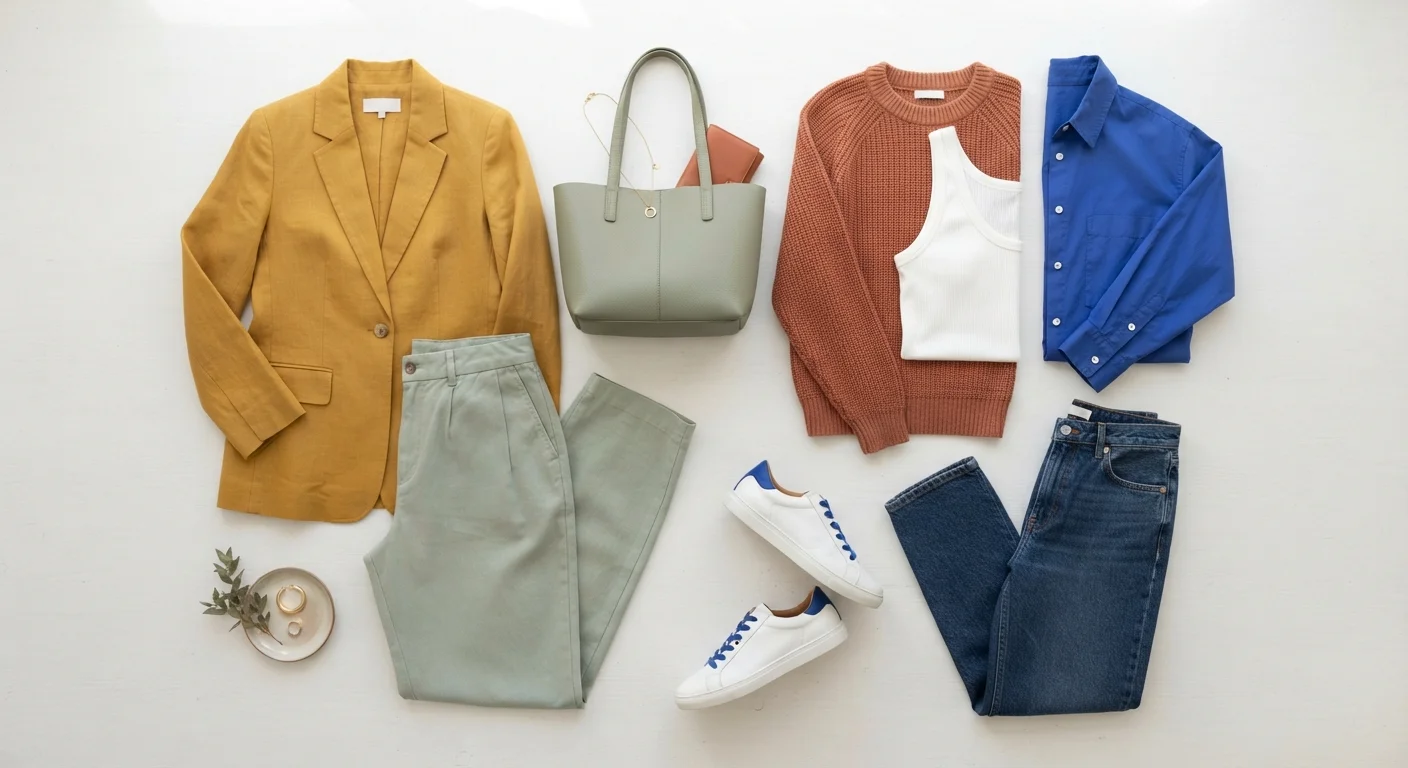
This is one of the most misunderstood codes. Smart casual bridges the gap between everyday comfort and polished dressing. Think dark-wash jeans or chinos paired with a button-down or blouse, clean loafers or low heels, and a structured layer like a blazer or cardigan. Avoid athletic wear, flip-flops, or anything overly distressed.
Business Casual
Business casual is workplace-adjacent but relaxed. For most industries, this means tailored trousers or a midi skirt, a polished top or blouse, and closed-toe shoes. A blazer is a strong choice but not mandatory. Denim is typically a no — unless it's dark, clean, and the workplace has explicitly signaled it's acceptable.
Business Formal / Professional
Here, suits or tailored coordinates are expected. For suiting, neutral tones — charcoal, navy, grey — read as most authoritative. Shoes should be leather or leather-look and polished. Accessories stay minimal and purposeful. This code appears most often in law, finance, and formal interviews.
Cocktail Attire
Cocktail is festive but not floor-length. A knee-to-midi dress or a sharp separates combination works well, as does a suit in a richer fabric or color. Heels, dressy flats, or polished oxfords all fit. Sequins and bold color are entirely welcome here.
Black Tie
Black tie is the traditional formal standard for evening events. It calls for a floor-length gown, a tuxedo, or occasionally a sophisticated midi-length dress in a luxe fabric. Accessories lean elegant — metallics, pearls, statement earrings. The guiding principle: if you'd wear it to dinner on a Tuesday, it probably doesn't qualify.
White Tie
White tie is the most formal dress code in existence and is genuinely rare outside of state dinners, galas, and a handful of formal balls. It requires full-length gowns with formal gloves for women and tailcoats with white waistcoats for men. If you encounter it, treat it as a costume brief — research the specifics carefully.
Smart Casual
A dress code that sits between everyday casual and business casual. It implies polished, put-together clothing without requiring formal suiting or ties.
Business Casual
A workplace-adjacent dress standard that avoids strict suiting but expects neat, professional-looking clothing — typically tailored trousers, blouses, or blazers.
Cocktail Attire
A semi-formal evening dress code typically calling for knee-to-midi-length dresses or sharp suit separates in richer fabrics or colors.
Black Tie
A formal evening dress code requiring tuxedos or floor-length gowns, typically reserved for galas, charity dinners, and upscale weddings.
White Tie
The highest and rarest level of formal dress, requiring full-length gowns and tailcoats. Reserved for state dinners, formal balls, and elite ceremonial events.
Formality Tier
A way of categorizing dress codes along a spectrum from casual to white tie, helping wearers calibrate the appropriate level of dressiness for any occasion.
Navigating Ambiguous Invitations
When an invitation skips the dress code entirely, look for context clues: the venue, the time of day, and the event type all point toward an appropriate tier. A Saturday afternoon garden party skews toward smart casual; a Saturday evening gala at a hotel ballroom skews cocktail or above.
When in doubt, it's almost always safer to dress one level up rather than down — you can remove a blazer, but you can't manufacture formality on the spot. It's also worth questioning the style myths you may have absorbed along the way; our piece on common style myths is a useful reality check. And if you're building an outfit from scratch, dressing for your body shape offers a grounded perspective on fit principles that apply at every formality level.
Finally, fabric choice matters more than most people realize as formality increases. Matte cotton signals casual; silk, crepe, velvet, and structured wool signal occasion. For a deeper look, fabric and material choices can help you shop and dress more strategically.
When the Host Sets the Tone
If you have a direct relationship with the host, it's completely appropriate to ask what they envision for attire. A quick message shows consideration, not insecurity. Many hosts genuinely appreciate the question and will give you a clearer steer than the invitation did.