Why Fabric Is the Foundation of Every Garment
You can love a silhouette in photos and be disappointed the moment you put it on. More often than not, fabric is the culprit. The material a garment is made from determines how it drapes against your body, how it responds to heat and humidity, how it survives repeated washing, and ultimately how long it stays in rotation. Understanding the basics gives you a practical edge—whether you're building a wardrobe from scratch or doing a wardrobe audit.
Fabrics generally fall into three categories: natural fibers (grown or produced by animals or plants), synthetic fibers (made from petroleum-derived polymers), and blends (combinations of both). Each category has distinct strengths and trade-offs.
| Most-used natural fiber globally | Cotton (Textile Exchange, Preferred Fiber & Materials Report) |
| Most wrinkle-resistant natural fiber | Wool |
| Fiber with highest drape-to-weight ratio | Silk |
| Most common synthetic fiber in apparel | Polyester (Textile Exchange, Preferred Fiber & Materials Report) |
| Semi-synthetic fiber derived from wood pulp | Rayon / Viscose / Lyocell (Tencel) |
| Fabric property that describes how cloth falls | Drape |
Natural Fibers: The Classic Players
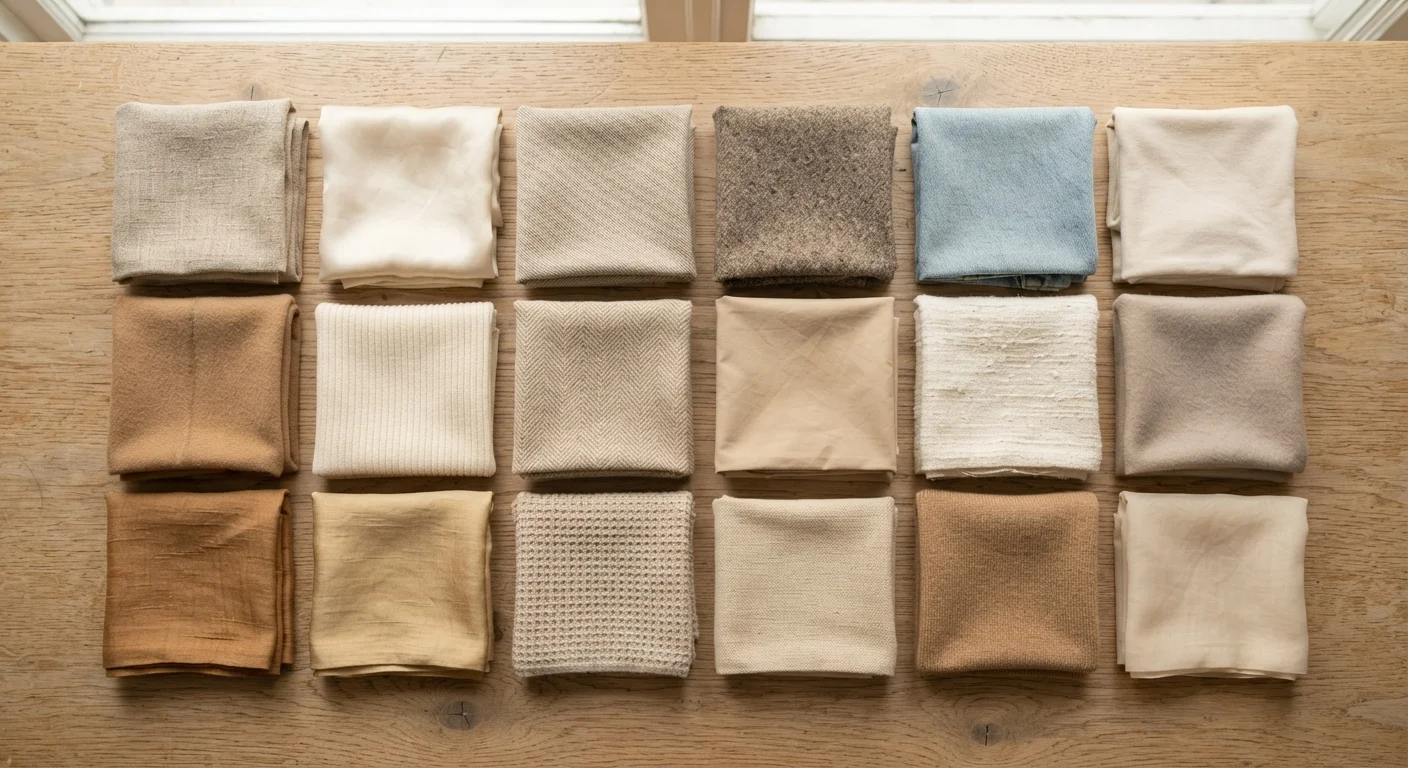
Cotton is the most widely used natural fiber, and for good reason. It breathes well, absorbs moisture, and softens with washing. It does wrinkle readily and can shrink if exposed to high heat—always check care labels. Linen, woven from flax, is even more breathable than cotton and excels in warm weather. Its signature relaxed texture comes from the fiber's natural texture; it creases easily but many people consider that part of its charm.
Wool is a year-round performer. Finer grades like merino are soft enough for direct skin contact, while heavier wools provide structure and warmth. Wool's natural crimp gives it resilience—it resists wrinkles and bounces back to shape. Silk is a protein fiber that drapes exceptionally well and has a natural sheen that most synthetics can't replicate convincingly. It's temperature-regulating and lightweight, though it requires more careful handling than cotton or wool. If you're assessing which pieces are worth tailoring, silk and wool garments often benefit most from expert alterations.
Drape
The way a fabric hangs or falls when worn or held. Fluid fabrics like silk drape closely to the body, while stiffer fabrics like canvas hold an independent shape.
Fiber content
The list of raw materials used to make a fabric, expressed as percentages on a care label (e.g., 80% cotton, 20% polyester). It's the single most informative data point on a garment tag.
Pilling
Small balls of tangled fiber that form on a fabric's surface from friction and wear. More common in lower-quality yarns and certain fiber blends.
Weave density
How tightly the threads in a fabric are woven together. Higher-density weaves tend to be more durable, less prone to pilling, and better at holding their shape over time.
Blend
A fabric made from two or more different fiber types combined to achieve a balance of properties, such as a cotton-polyester mix that reduces wrinkling while retaining breathability.
Semi-synthetic fiber
A fiber derived from a natural raw material (such as wood pulp) that undergoes significant chemical processing. Rayon, viscose, and lyocell are common examples.
Synthetic and Blended Fabrics: Performance and Trade-Offs
Polyester is durable, holds color well, and resists wrinkles—which is why it's everywhere. Its downside is breathability: it traps heat and moisture more than natural fibers, which can feel uncomfortable during active wear or warm weather. Nylon is similarly durable with added abrasion resistance, making it common in athletic and outerwear contexts. Rayon (and its relatives viscose and lyocell/Tencel) is a semi-synthetic fiber made from processed wood pulp. It mimics the softness and drape of natural fibers at a lower cost, though it can be prone to shrinkage and may need gentle washing.
Blends are designed to capture the best of both worlds. A cotton-polyester blend, for instance, reduces wrinkling and improves durability while retaining some breathability. A wool-nylon blend strengthens sock or sweater fibers that would otherwise wear through faster. The trade-off is usually some compromise in feel or breathability compared to a pure natural fiber. When shopping smarter, reading fiber content labels—not just brand names—gives you real information to work with.
How Fabric Affects Drape, Structure, and Longevity
Drape describes how a fabric falls and moves. Fluid fabrics like silk, rayon, and jersey cling and flow, creating soft, body-skimming silhouettes. Stiffer fabrics like canvas, denim, or tightly woven cotton hold their shape independent of the body underneath—they create structure rather than follow it. Knowing this helps you predict how a garment will actually look on, not just on a hanger. It also connects directly to how fit and fabric work together—a loose-fit piece in a stiff fabric reads very differently than the same cut in a draped material.
Longevity depends heavily on fiber quality, weave density, and care. Tightly woven fabrics generally pill less and hold their shape longer. Natural fibers often improve with age when cared for properly; many synthetics degrade or develop pilling over time. Pilling—those small fuzzy balls on the surface—happens when short or broken fibers tangle together from friction. It's more common in lower-quality yarns and certain blends. Timeless pieces are often made from higher-quality fabrics precisely because the material is built to last rather than to hit a price point.
~52%
Share of global fiber production that is polyester
According to the Textile Exchange Preferred Fiber & Materials Report, polyester consistently accounts for roughly half of all fiber produced worldwide.
3–5×
Longer lifespan of quality wool vs. many synthetics
Industry textile research suggests well-maintained wool garments can outlast lower-quality synthetic alternatives by several multiples when cared for properly.