Why Fit Outranks Everything Else in Your Wardrobe
You can invest in quality fabrics, nail the color palette, and add thoughtful accessories — but if the fit is off, the whole outfit reads as unfinished. Fit is the silent variable that separates a put-together look from one that just doesn't quite land.
The challenge is that fit problems are often subtle. A shoulder seam sitting half an inch too far down the arm, trousers pooling at the ankle, or a shirt that pulls slightly across the back — none of these seem catastrophic on their own, but together they create an impression of clothes wearing you rather than the other way around.
Size Labels Are Not a Standard
Clothing sizes are not regulated or standardized across the fashion industry. A size 10 in one brand may fit like a size 8 — or a size 12 — in another. Relying on a single number rather than your actual body measurements is one of the most common reasons clothes look off right off the rack.
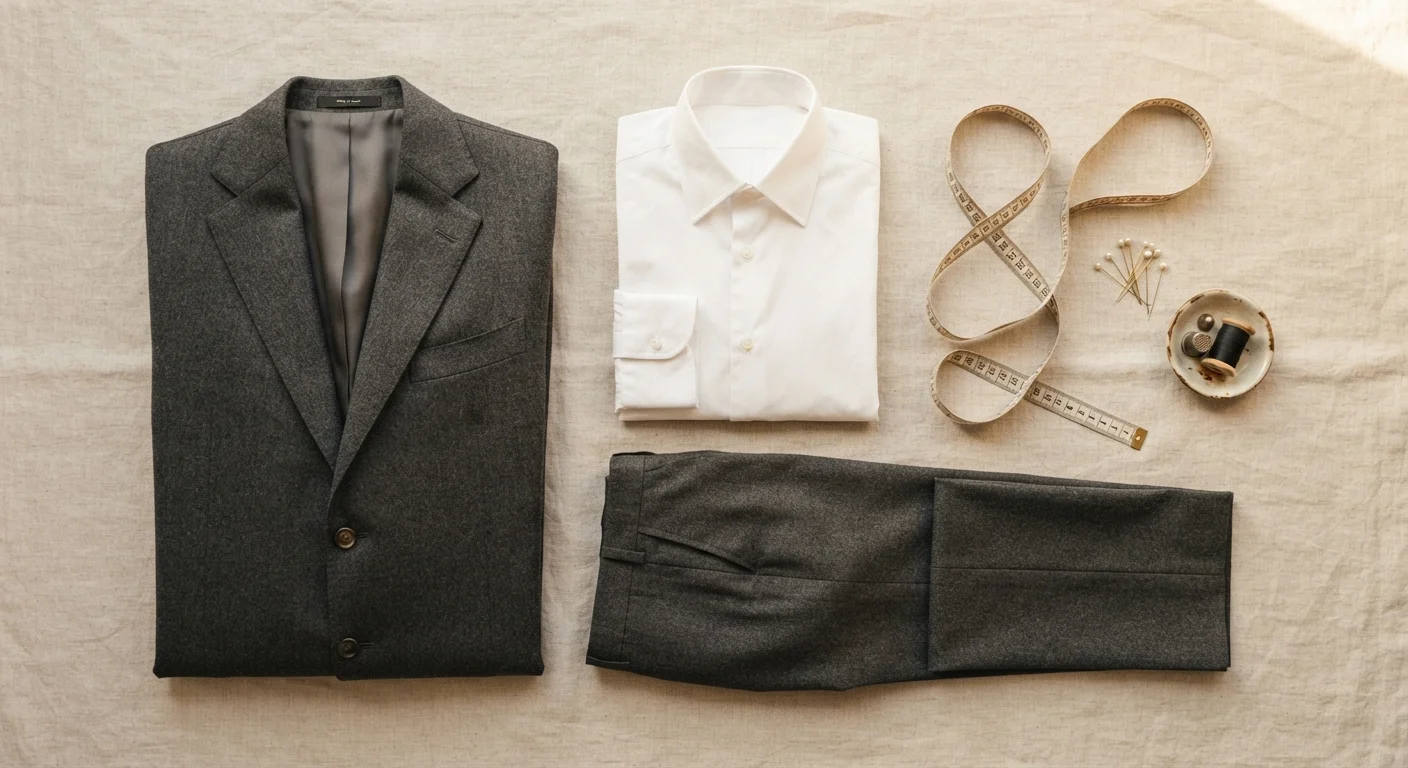
Understanding why fit goes wrong — and where the common traps are — is the most practical thing you can do to improve how your wardrobe performs. Most of these mistakes are fixable with small adjustments or a visit to a tailor. Our guide on when tailoring is worth it and what to expect walks you through exactly that.
The Most Common Fit Mistakes — and How to Correct Them
Most fit problems trace back to a short list of recurring errors. Recognizing them on yourself — or in the fitting room before you buy — gives you an immediate advantage.
Buying clothes that fit your largest measurement and ignoring everything else.
Why it happens: Most people have one area — hips, shoulders, chest — that's harder to fit, and they size up to accommodate it, assuming they can 'make it work' with styling.
Assuming the number on the tag reflects how a garment will actually fit your body.
Why it happens: Years of shopping by size label creates a habitual shortcut, but sizing is inconsistent across brands and even across collections within the same brand.
Wearing tops and jackets where the shoulder seam falls off the shoulder.
Why it happens: Shoppers often prioritize chest or arm room and end up in a size that's too large through the shoulders without realizing how much it affects the overall silhouette.
Ignoring trouser break length and hem placement.
Why it happens: Hem length feels like a minor detail, and many people skip alterations thinking it's 'close enough.'
Confusing 'oversized intentionally' with 'just too big.'
Why it happens: Relaxed and oversized silhouettes are legitimate style choices, but without proportion awareness they can easily look unintentional or unkempt.
Overlooking how fabric behavior changes the way fit reads on the body.
Why it happens: A garment that fits well on the hanger or in a fitting room can behave differently in motion or across a full day of wear, especially when fabric is stiff, clingy, or has no stretch.
Don't Ignore the Shoulder Seam
The shoulder seam is one of the hardest — and most expensive — points for a tailor to alter. If a jacket or structured top doesn't sit correctly at the shoulder, no amount of tailoring elsewhere will fully fix the look. Always check shoulder placement first when trying on any structured garment.
Once you've got the fit fundamentals working, accessories can finish the job of anchoring and personalizing your look. See how accessories complete an outfit for practical guidance on building from a strong fitted base.
~60%
Shoppers who return clothes due to fit issues
Industry estimates consistently point to fit as the leading reason consumers return apparel purchases, outpacing style and color concerns.
3–5
Key measurements that determine most garment fit
Chest, waist, hips, inseam, and shoulder width are the core measurements most size charts use — knowing yours takes guesswork out of sizing.