Why the Right Tool Actually Matters
You can own great makeup and still struggle with the finish — and often, the missing piece isn't a better product, it's the right applicator. Brushes, sponges, and specialty tools each interact with formula and skin texture in distinct ways, affecting how evenly pigment distributes, how long wear lasts, and how natural the result looks. Before you reach for the nearest brush, it helps to know what each tool is actually designed to do.
If you're also building a skincare routine to prep your complexion, see our guide to skincare layering before makeup — a prepped base makes every tool work better.
| Minimum starter brush count | 5–7 brushes cover most everyday looks |
| Sponge use tip | Dampen before use to reduce product absorption |
| Brush wash frequency (face brushes) | Approximately once per week for daily users (General professional guidance) |
| Bristle types | Synthetic (best for liquid/cream); natural or mixed (best for powder) |
| Lash curler rule | Always curl before mascara, never after |
Brushes: A Tool-by-Tool Breakdown
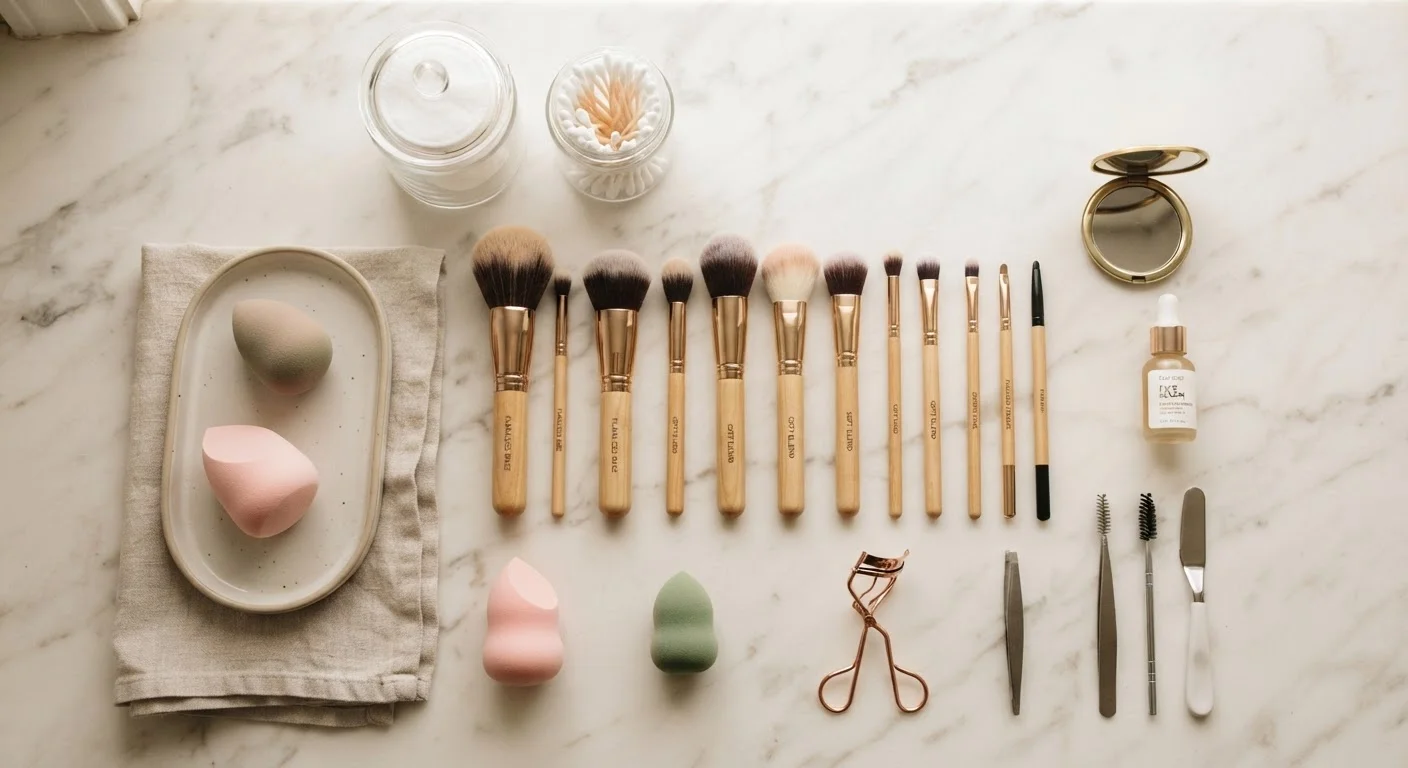
Brushes are the foundation of most kits. The bristle type, shape, and density determine the finish they deliver.
Face Brushes
- Flat foundation brush: Densely packed synthetic bristles buff liquid or cream foundation into skin with controlled, streak-free coverage. Best for medium-to-full coverage looks.
- Stippling brush: Duo-fibre bristles — short synthetic at the base, longer natural-style at the tips — create a diffused, skin-like finish. Works well with lighter formulas.
- Powder brush: Large, fluffy, and dome-shaped. Sweeps loose or pressed powder across the face to set makeup without disturbing layers beneath.
- Contour brush: Angled or tapered with firmer bristles to deposit matte powder precisely along cheekbones, jawline, and temples.
- Fan brush: Thin, spread bristles apply a light dusting of highlighter or blush with a feather-soft touch — ideal for subtle, natural-looking color.
- Blush brush: Slightly smaller than a powder brush, often domed or angled. Picks up pigment and places it on the apples of the cheeks with buildable intensity.
Eye Brushes
- Flat shader brush: Compact, firm, and paddle-shaped. Packs eyeshadow pigment onto the lid for bold, saturated color.
- Fluffy blending brush: Soft, rounded bristles diffuse harsh edges and blend multiple shadow shades seamlessly.
- Pencil brush: Small, pointed tip for detailed work — inner corner highlights, precise liner placement, or lower lash line shadow.
- Brow brush/spoolie: Dual-ended tool; the angled brush fills sparse areas with powder or pomade while the spoolie combs and shapes brow hairs.
Ferrule
The metal band that connects brush bristles to the handle. A well-secured ferrule keeps bristles from shedding; avoid soaking it in water during cleaning.
Stippling
A dabbing or bouncing application motion used with brushes or sponges. It deposits product without dragging, reducing streaks and preserving texture.
Baking
A makeup technique where loose setting powder is pressed generously under the eyes and left for several minutes before being dusted away, locking concealer in place.
Duo-fibre bristles
A brush construction combining two types of fibers — typically shorter synthetic and longer natural-style bristles — that picks up less product for a lighter, airier finish.
Spoolie
A mascara wand-style brush used to comb and shape eyebrow hairs or blend brow product for a natural look. Often included on the reverse end of brow pencils.
Shader brush
A flat, firm eyeshadow brush designed to pack concentrated pigment onto the eyelid. Its compact shape limits diffusion, giving bold, precise color payoff.
Sponges, Puffs, and Specialty Tools
Not every application calls for a brush. Sponges and other tools solve specific problems that bristles can't.
Beauty Sponge (Damp-Use Blender)
A teardrop-shaped foam sponge used slightly damp. The bouncing or stippling motion sheers out liquid foundation and concealer without streaks, mimicking a natural skin texture. The pointed tip reaches corners of the nose and under-eye area; the flat side blends across broader surfaces. Damp sponges are less absorbent of product than dry ones, so more formula reaches your skin.
Powder Puff
A velour or fabric puff presses setting powder firmly into skin — especially useful for baking (the technique of letting powder sit under the eyes to set concealer before dusting away the excess). Less airy than a brush, it delivers denser powder coverage.
Lash Curler
A hinged clamp tool that bends lashes upward before mascara application. Crimping at the root and mid-lash creates lift that mascara alone rarely achieves. Always curl before applying mascara — curling coated lashes risks breakage.
Eyelash Applicator (Lash Applicator Tool)
A scissor-grip or tweezer-style tool designed to hold and position false lashes precisely along the lash line — much easier than using fingertips, especially for beginners.
Brow Comb and Spoolie
The spoolie (a mascara wand-style brush) brushes brow hairs into place before and after filling them in, keeping the look natural. It can also be used to feather out over-applied brow product.
Want to separate beauty fact from fiction? Our rundown of persistent beauty myths is a useful companion read.
Synthetic vs. Natural Bristles: A Quick Guide
Synthetic bristles are made from man-made fibers and are generally recommended for liquid and cream formulas because they don't absorb as much product. Natural bristles, made from animal hair, have a texture that holds powder formulas well. Many modern brushes use a blend of both. If you prefer vegan options, look specifically for brushes labeled 100% synthetic.
Keeping Your Kit Clean and Your Skin Healthy
Tool hygiene is more than a housekeeping detail — it directly affects skin health. Brushes and sponges accumulate makeup residue, skin oils, and environmental bacteria. Using unwashed tools can contribute to clogged pores and skin irritation over time.
General guidance from dermatology professionals and makeup artists:
- Wash foundation and concealer brushes roughly once a week if used daily.
- Eye brushes used with multiple colors benefit from a quick dry-clean (wiping on a clean tissue) between shades and a full wash weekly.
- Beauty sponges should be washed after every use because their porous structure retains significant product and moisture.
- Allow brushes to dry flat or with bristles hanging downward — storing upright while wet can loosen ferrule glue over time.
Building healthy skin habits alongside your tool routine matters too. Our first-timer's skincare roadmap and the Skincare Essentials hub are great starting points for pairing good skin prep with confident makeup application.
5–7
Brushes needed for a functional everyday kit
Most professional makeup artists agree a small, deliberate set of versatile brushes outperforms a large, redundant collection.
After every use
Recommended beauty sponge wash frequency
Due to their porous structure, beauty sponges retain significantly more product and moisture than brushes, making frequent cleaning important for skin hygiene.