
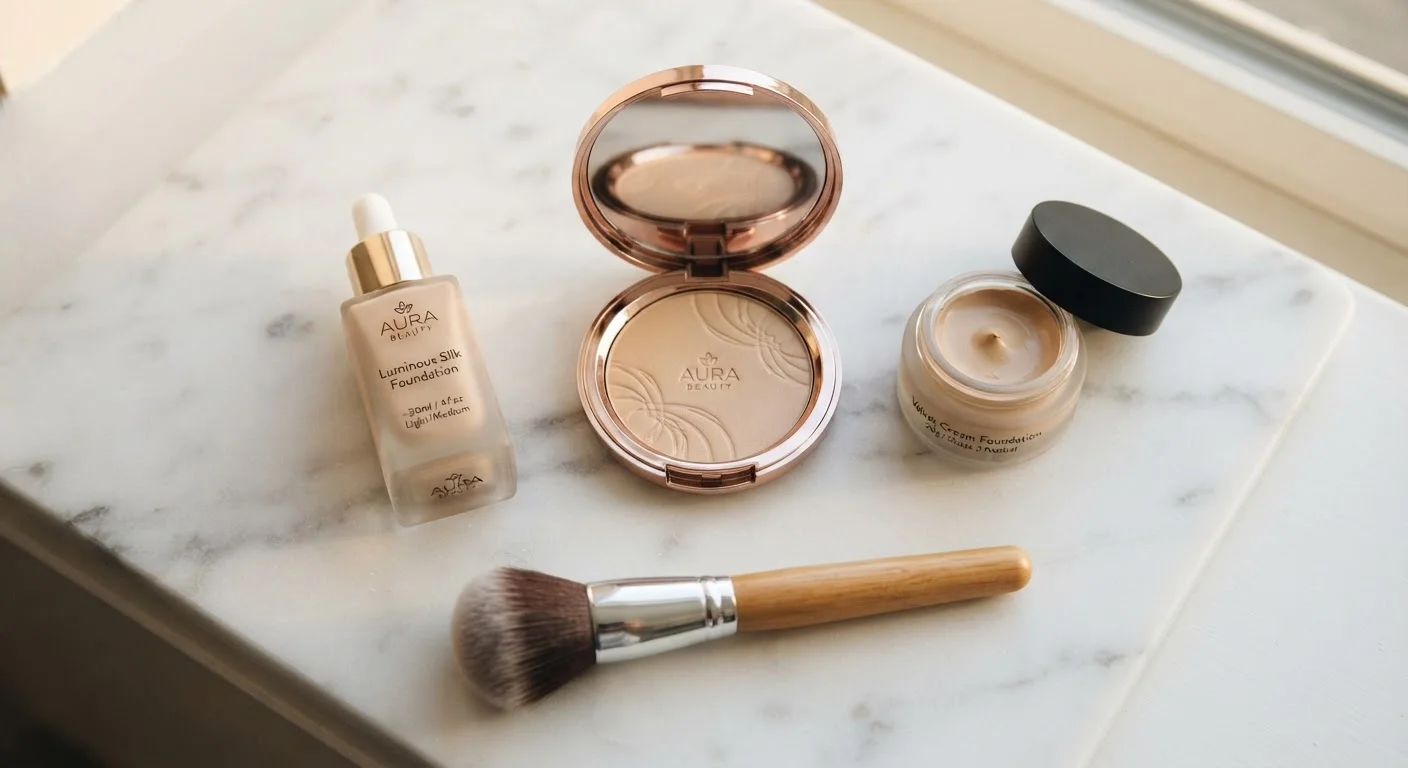
Why Foundation Formula Matters More Than You Think
Foundation is often the first makeup product people experiment with, yet it's also one of the most misunderstood. Walk down any beauty aisle and you'll find dozens of options — but the most meaningful divide isn't shade or brand, it's formula. Liquid, powder, and cream foundations behave differently on the skin, deliver different finishes, and suit different skin types and lifestyles.
Choosing a formula that works against your skin type — say, a heavy cream on acne-prone skin or a dry-finish powder on dehydrated skin — can leave you wondering why your foundation never looks the way you hoped. The good news: once you understand what each formula is actually doing, matching it to your needs becomes straightforward. Before any of that, though, it's worth reviewing your base. Check out how skincare prep affects makeup wear — the right foundation can't do its job on an unprepared canvas.
Liquid Foundation: The Versatile Workhorse
Liquid foundation is the most widely used formula for good reason. Its water- or silicone-based texture blends easily with fingers, brushes, or sponges and can be sheered out for light coverage or layered for something more substantial. Most liquid formulas fall into three finish categories: dewy (luminous, skin-like), satin (a balanced middle ground), or matte (flat, oil-controlling).
Liquid works across a broad range of skin types. Dewy liquid formulas are especially comfortable on normal to dry skin, while matte-finish liquids can manage shine on oily skin without the heaviness of a cream. For combination skin, a satin-finish liquid often splits the difference well.
Getting the Most from Liquid Foundation
Start with a pea-sized amount and build gradually — it's far easier to add coverage than to remove excess product. Apply to the center of the face first, then blend outward toward the hairline and jawline for the most natural result. A damp makeup sponge can give a particularly seamless, skin-like finish with most liquid formulas.
One caveat: liquid foundations with higher water content can settle into fine lines over time. If that's a concern, a setting powder applied lightly over the T-zone — rather than all over the face — can extend wear without emphasizing texture. Also, don't overlook how undertones affect your foundation match — even a great formula looks off if the undertone is wrong.
Powder Foundation: Lightweight and Oil-Controlling
Pressed or loose powder foundations are a go-to for anyone whose primary concern is shine control. Applied with a brush or sponge, they deposit a fine layer of pigment that absorbs excess sebum and delivers a natural-to-full matte finish, depending on how much product is built up.
Powder foundation is well-suited to oily and combination skin types, and it's particularly popular in warmer, more humid climates where liquid formulas can slide. It also doubles as a quick touch-up tool mid-day — one of its most practical advantages.
Where powder tends to fall short: dry or dehydrated skin. The formula can cling to flaky patches, emphasize dry texture, and look chalky or cakey rather than smooth. It also offers less buildable coverage than liquid or cream, so it may not fully meet the needs of anyone looking to cover uneven skin tone or discoloration significantly.
| Liquid Foundation | Powder Foundation | Cream Foundation | |
|---|---|---|---|
| Best skin types | Normal, dry, combination, oily (formula-dependent) | Oily, combination | Dry, mature, normal |
| Typical finish | Dewy, satin, or matte | Matte to natural | Satin to natural |
| Coverage level | Sheer to full, buildable | Light to medium | Medium to full, buildable |
| Ease of blending | Easy — fingers, brush, or sponge | Easy — fluffy brush | Moderate — sponge or brush |
| Longevity | Good with setting spray or powder | Good, especially for oily skin | Good; needs setting on oily skin |
| Ideal use case | Everyday versatility | Quick, low-maintenance wear | Events, photography, high coverage |
Cream Foundation: Rich Coverage with a Luxe Texture
Cream foundations — sometimes sold in compacts, sticks, or pots — are the densest formula of the three. They contain higher concentrations of emollients and pigment, which translates to fuller, more buildable coverage from a relatively small amount of product. The finish tends to sit between satin and natural; it's rarely matte unless the formula is specifically designed that way.
This formula genuinely shines on dry and mature skin, where its richness feels comfortable and its coverage minimizes the appearance of uneven tone without settling into lines the way some powders can. It's also a popular choice for stage, event, or photo makeup where high coverage and longevity are priorities.
The trade-off: cream formulas can feel heavy on oily skin and may not wear as long without a mattifying primer or setting powder layered on top. They also tend to require a bit more blending skill to avoid a thick or streaky application. For a fuller picture of how foundations interact with the rest of your makeup routine, see how tinted moisturizers and BB creams compare — lighter-coverage alternatives worth knowing about.
Cream Foundation on Oily Skin: Proceed Carefully
Without proper prep and setting, cream foundation can break down on oily skin within a few hours, leading to a patchy or shiny appearance. If you have oily skin and want to try a cream formula, use a mattifying primer beforehand and set with a translucent powder — particularly in the T-zone. Testing the formula on a small area before committing to a full-face application is always a good idea.
Choosing What's Right for You
The comparison below distills the key differences, but a few extra factors are worth keeping in mind as you decide:
- Coverage goal: Light and natural leans toward powder or sheer liquid; full and flawless leans toward cream or buildable liquid.
- Climate and season: Humid summers often favor powder or matte liquid; dry winters often favor satin or dewy liquid.
- Application tools: Cream formulas reward a damp sponge or flat brush; powder needs a fluffy brush for even distribution.
- Skin prep: All three formulas perform better over moisturized, well-prepped skin. Understanding what each skincare step does can help you build a routine that supports your makeup, not just your skin.
There's no obligation to commit to one formula forever. Many people keep a liquid formula for everyday wear and a cream or powder on hand for specific needs. Experimentation — especially when you know what you're looking for — is what gets you to a finish you genuinely love.