What Each Product Is Actually Designed to Do
Despite sharing a spot on the same drugstore shelf, tinted moisturizer and BB cream were built around different goals. Understanding that distinction makes choosing between them a lot easier.
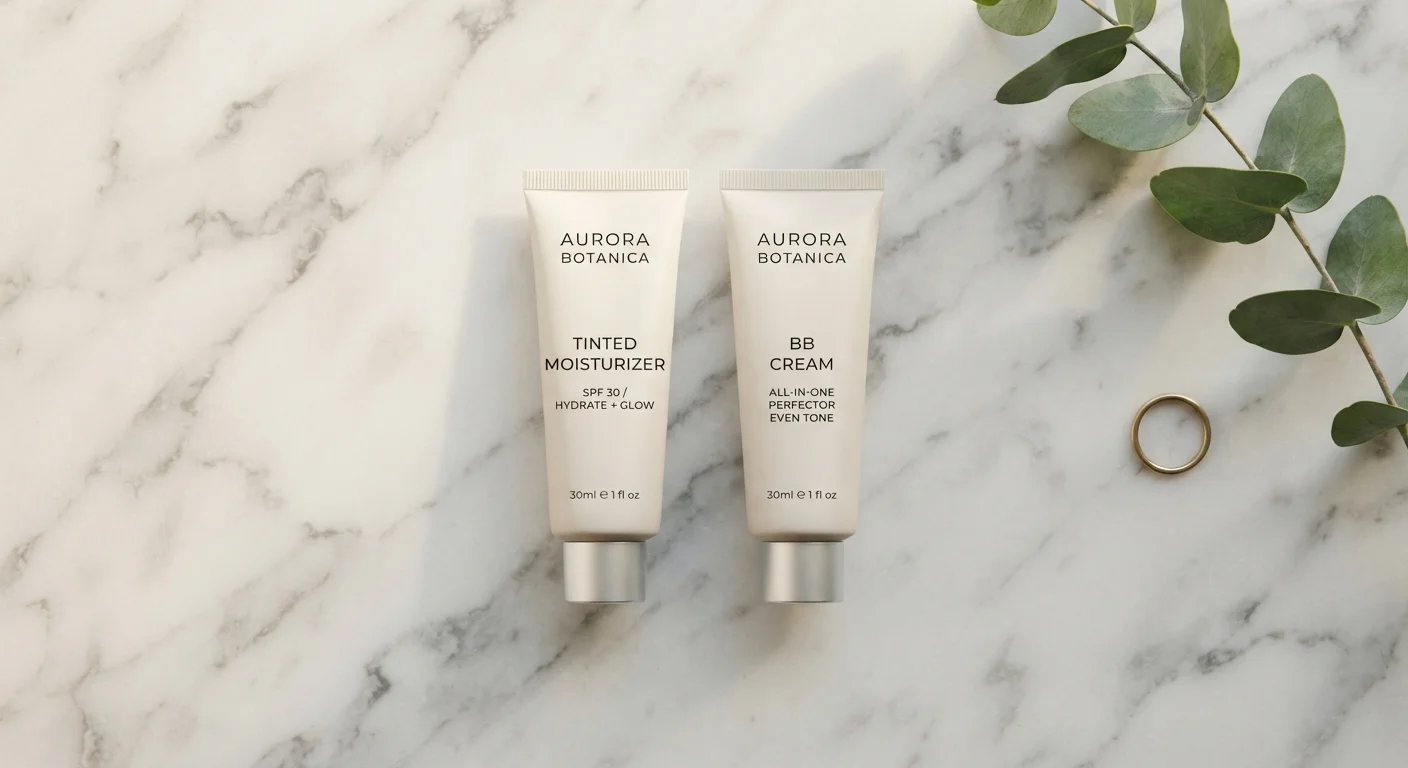
Tinted moisturizer is exactly what it sounds like: a traditional moisturizer with a small amount of pigment blended in. The formula's priority is skin hydration — the tint exists to even out skin tone just slightly, not to provide meaningful coverage. Think of it as your moisturizer wearing a very light veil.
BB cream stands for "beauty balm" or "blemish balm," and it originated as a post-procedure skin treatment in Germany before being reformulated for cosmetic use. Modern BB creams are hybrid products — they sit somewhere between a skincare treatment and a light foundation. The coverage is more substantial than a tinted moisturizer, and the formula usually includes active skincare ingredients such as SPF, antioxidants, or skin-smoothing agents.
For a deeper look at how these products fit within a full skincare-to-makeup routine, see our guide on skincare order before makeup.
| Criterion | Tinted Moisturizer | BB Cream |
|---|---|---|
| Primary Purpose | Hydration with a hint of color | Light coverage with skincare benefits |
| Coverage Level | Sheer | Light to medium |
| Typical Finish | Dewy, luminous | Natural to satin; varies by formula |
| SPF Inclusion | Rarely included | Commonly included |
| Added Skincare Actives | Minimal | Often includes antioxidants, skin-smoothers |
| Best Skin Type | Dry, dehydrated | Oily, combination, or normal |
| Wear Longevity | Shorter; fades with moisture | Generally longer-lasting |
Coverage, Finish, and Skin-Type Fit
Coverage is the most practical difference between these two products. Tinted moisturizers are genuinely sheer — they blur redness and uneven tone without masking the skin underneath. BB creams deliver light-to-medium coverage, which means minor blemishes or discoloration are more likely to be softened or concealed.
The finish differs, too. Tinted moisturizers tend to leave a dewy, luminous result because the base formula is moisture-rich. BB creams vary more widely — some have a satin or natural finish, others include mattifying ingredients that suit oilier skin types.
SPF 15–30
SPF range common in BB cream formulas
Many BB creams marketed in the U.S. include broad-spectrum sun protection as a core selling point, though the level varies by product.
~5–10%
Typical pigment concentration in tinted moisturizers
Compared to foundation, tinted moisturizers contain significantly less pigment by volume, which accounts for their sheer, skin-like finish.
When it comes to skin type, here's a general guide:
- Dry or dehydrated skin often responds well to tinted moisturizer, which layers seamlessly over a hydrating skincare routine.
- Oily or combination skin may find BB cream more manageable, especially formulas that include oil control.
- Sensitive skin should look at ingredient lists carefully — both product types can contain fragrance or active ingredients that may cause irritation.
If you're curious about how undertones affect any base product — including these two — understanding undertones is worth a read before you shop.
How They Stack Up Against Foundation — and When to Use What
Neither tinted moisturizer nor BB cream is a substitute for foundation when full or buildable coverage is the goal. Both are intentionally low-coverage products. If you're comparing them to foundation formulas, the differences in pigment load and staying power are significant. Liquid, powder, and cream foundations offer a different set of trade-offs that are worth understanding if you need more from your base.
That said, both products shine in everyday situations:
- Use a tinted moisturizer on low-key days, for outdoor activities, or whenever you want your skin to look like itself — just more even.
- Reach for BB cream when you want a polished, put-together look without the weight of foundation, or when you'd like SPF coverage baked into your base step.
A Note on SPF in Base Makeup
When a BB cream lists SPF on its label, that protection is real — but dermatologists generally note that most people don't apply enough product to achieve the labeled SPF value. If sun protection is a priority, applying a dedicated sunscreen underneath remains the more reliable approach. Think of SPF in BB cream as a helpful bonus, not a complete replacement for sunscreen.
Both products apply best on skin that's already been prepped. For guidance on building the base that goes underneath, understanding what each skincare step does helps clarify what your skin actually needs before any makeup goes on.