
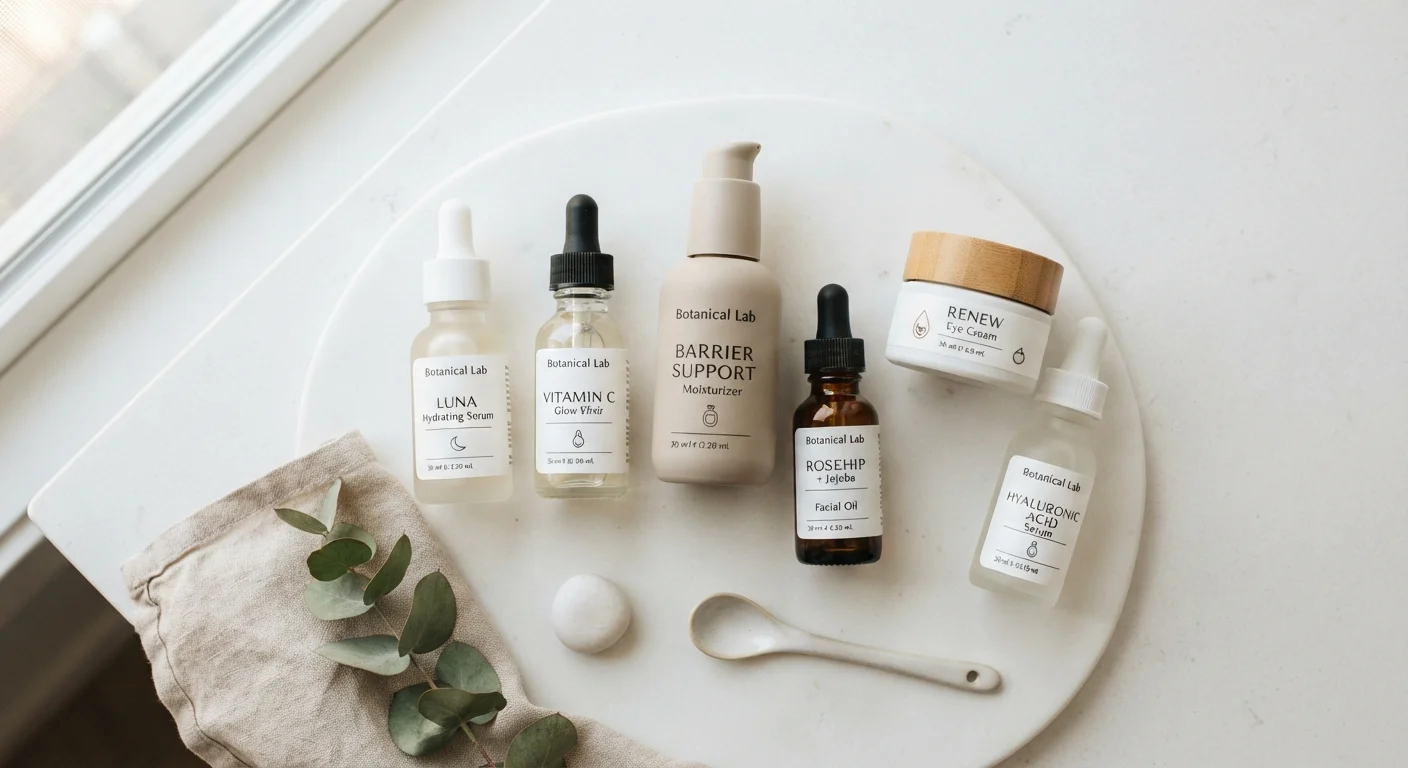
Why Active Ingredients Deserve a Careful Introduction
Active ingredients — a category that includes retinoids, vitamin C, AHAs (alpha-hydroxy acids), BHAs (beta-hydroxy acids), niacinamide, and peptides — are the workhorses of results-driven skincare. Unlike moisturizing agents or emollients, actives are formulated to produce a measurable change in how skin cells behave. That potency is exactly what makes them valuable, and exactly what makes a hasty introduction risky.
When too many new ingredients hit the skin at once, or when a single strong active is applied too often too soon, the skin's barrier — a protective layer of lipids and proteins that keeps moisture in and irritants out — can become compromised. The result is what's sometimes called sensitized skin: skin that's reactive, inflamed, or prone to breakouts even when that wasn't your baseline. What looks like a product "not working" is often actually barrier disruption from moving too fast.
Understanding the distinction between a normal adjustment period and genuine irritation is one of the most useful skills in building a skincare practice. Some actives, like retinoids, have a well-documented initial adjustment phase that can involve mild flaking or temporary purging. Others, like strong exfoliating acids, should feel comfortable almost immediately — ongoing stinging is a sign to pull back. If you're ever unsure whether your skin is adjusting or reacting, err toward less frequent use and consult a dermatologist. See our related guide on signs your routine is doing more harm than good for a detailed breakdown of red flags.
New active ingredient product
The serum, toner, or treatment you plan to introduce into your routine.
Gentle, fragrance-free cleanser
Keeps the rest of your routine simple and reduces confounding irritants while testing a new active.
Moisturizer with barrier-supporting ingredients
Helps buffer potential irritation and supports skin recovery between active applications.
Broad-spectrum SPF 30+ sunscreen
Many actives increase photosensitivity; daily SPF is essential to prevent sun damage.
Skin log or notes app
Tracks your introduction timeline, frequency, and any skin changes for accurate self-assessment.
How to Introduce a New Active Step by Step
The process below works for virtually any active ingredient category. Adjust the pacing based on the potency of the specific formulation — a low-percentage lactic acid serum will generally be more forgiving than a high-percentage glycolic treatment, for example.
What you will need
Simplify your baseline routine first
Before adding anything new, pare your routine back to the fundamentals: a gentle cleanser, a basic moisturizer, and sunscreen in the morning. Using a stripped-down routine for one to two weeks gives your skin a neutral starting point. If irritation already exists before you introduce the new active, you won't be able to tell what caused it.
Patch test the new product
Apply a small amount of the product to a discreet skin area — the inner forearm or behind the ear are common choices. Leave it on for 24 to 48 hours without washing that area. Check for redness, itching, swelling, or burning. If none of those appear, it's generally safer to move to facial application, though a negative patch test doesn't guarantee zero reaction on your face.
Start with low frequency — twice a week
For the first two to four weeks, apply the new active only two or three times per week, on non-consecutive days. This pacing lets your skin adjust incrementally rather than flooding it with a new ingredient daily. It also makes it easier to catch early signs of irritation before they escalate into full barrier disruption.
Observe your skin over two to four weeks
After each application, monitor for the following over the next 24 hours: persistent redness that doesn't subside, flaking or peeling beyond mild surface shedding, stinging or burning that lasts more than a few minutes after application, and new breakouts concentrated in the application area. Some mild tingling and initial purging (a temporary increase in congestion) can be normal with certain actives — but sharp discomfort and worsening skin health are signals to slow down.
Gradually increase frequency if skin tolerates it
If your skin shows no concerning signs after two to four weeks at low frequency, you can increase to every other day, then eventually to daily use if that's appropriate for the specific active. Not every ingredient needs to be used daily to be effective — follow the guidance on the product's labeling and cross-reference general skincare education on that ingredient type.
Introduce a second active only after full adjustment
Wait until you've been comfortably using the first active for at least four to six weeks before considering a second new ingredient. Introducing multiple actives simultaneously makes it nearly impossible to know which one is causing a reaction — and increases the risk of compounding irritation. One-at-a-time is the only reliable method for understanding how your skin responds.
Keep a Simple Skin Log
Jot down the date you started a new active, the frequency you used it, and any skin changes you noticed. Even three quick notes per week makes it far easier to spot patterns — and to report accurately if you do consult a professional. A notes app on your phone works just as well as a dedicated journal.
Consult a Dermatologist for Persistent Reactions
This article provides general skincare education, not medical or dermatological advice. If you experience severe burning, swelling, hives, or prolonged irritation after introducing a new ingredient, discontinue use and consult a qualified healthcare professional. Skin reactions can sometimes indicate an allergy that needs professional evaluation.
Once you've successfully integrated a new active and feel confident reading your skin's signals, you can begin thinking about how your whole routine layers together. Our article on skincare order before makeup can help you understand how actives fit into a fuller morning and evening sequence. And if your skin needs change over time — which they will — the decade-by-decade skincare guide explains how to adapt your approach as your biology shifts.