What the Two-Second Rule Actually Measures
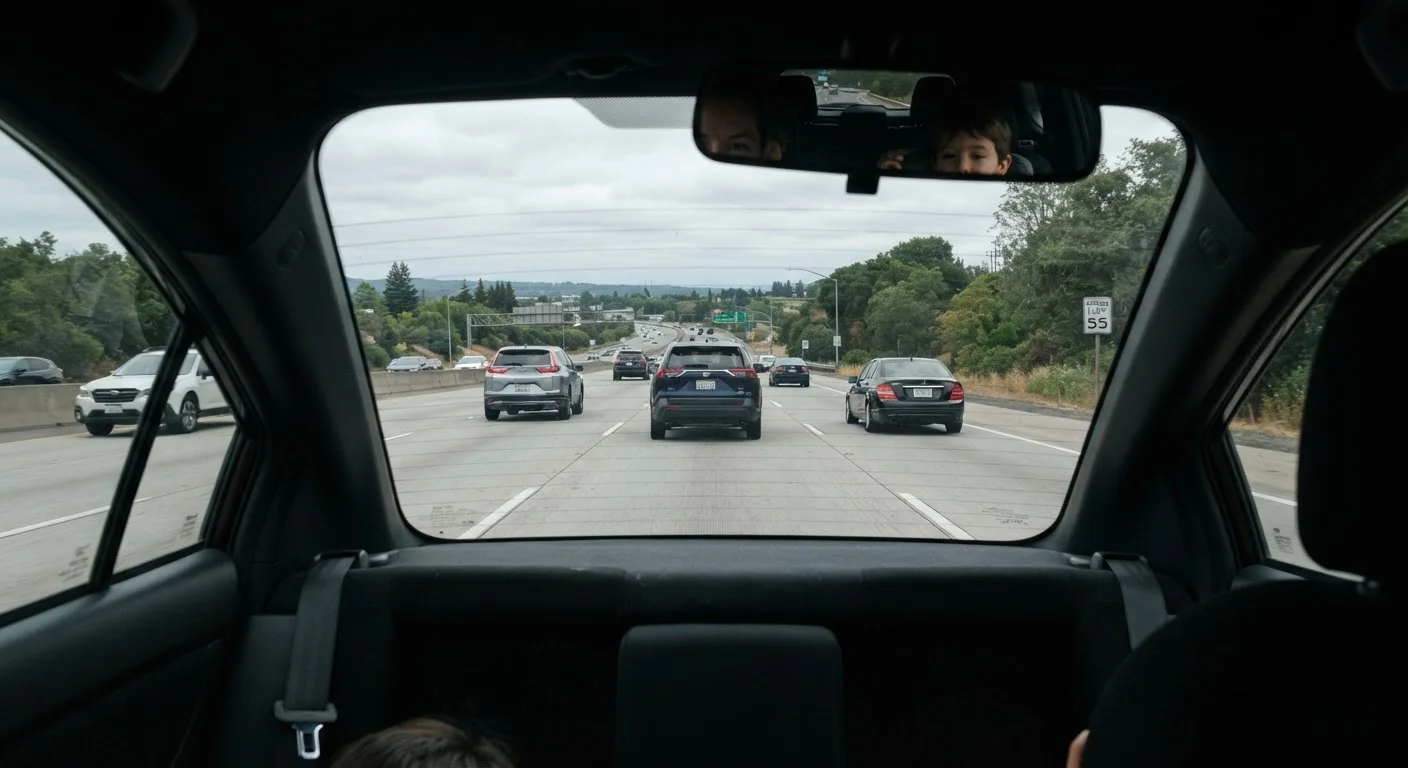
The two-second rule is a practical tool for estimating a minimum safe following gap. At any speed, the idea is the same: the time between when the vehicle ahead passes a fixed point and when you pass that same point should be at least two seconds. That interval accounts for the time your brain needs to recognize a hazard and initiate braking - often called perception-reaction time.
Average perception-reaction time in alert, unimpaired drivers is roughly 1.5 seconds, though it can stretch considerably with distraction, fatigue, or surprise. The two-second rule builds in a modest buffer so that braking can begin before you close the gap entirely.
What the rule does not account for is the additional distance your vehicle travels while it decelerates to a stop. At 60 mph on dry pavement, a typical passenger car needs roughly 180-200 feet of braking distance alone - and that is before reaction distance is added. The two-second gap at that speed is approximately 176 feet, which leaves little room for error.
~29%
Share of U.S. crashes that are rear-end collisions
Rear-end crashes consistently rank among the most common crash types in National Highway Traffic Safety Administration (NHTSA) annual data.
4×
Increase in braking distance when speed doubles
Because kinetic energy scales with the square of velocity, doubling speed approximately quadruples the distance needed to stop - a core physics principle underlying following distance guidance.
1.5-2.5 sec
Typical driver perception-reaction time
Traffic engineering standards and driver education research commonly cite this range for alert, unimpaired drivers under normal conditions.
When Two Seconds Is Not Enough
Several conditions systematically increase stopping distance, making the two-second baseline inadequate on its own.
Speed
Physics compounds the problem at higher speeds. Kinetic energy - and therefore the work your brakes must do - increases with the square of velocity. Driving at 60 mph does not require twice the stopping distance of 30 mph; it requires roughly four times as much. On highways, a three- to four-second following distance is a more appropriate starting point.
Weather and Road Surface
Wet pavement can reduce tire traction by 30-40 percent depending on tire condition and water depth. Ice and packed snow are dramatically worse - braking distances can increase five to ten times compared to dry roads. Rain, snow, or ice should prompt an immediate, significant increase in your following gap. For more on how road conditions interact with legal speed requirements, see speed limits and advisory signs.
Vehicle Load and Trailer Towing
A heavier vehicle requires more braking force and more distance to stop. Drivers towing trailers must account for added weight, trailer sway, and the possibility that trailer brakes (if equipped) may not respond as quickly as the tow vehicle's brakes.
Tire and Brake Condition
Worn tires and degraded brake pads reduce the mechanical stopping force available. A vehicle with low tire tread on wet pavement can behave very differently from the same vehicle with new tires, even at identical speeds.
Choose a Larger Default on Highways
Rather than aiming for exactly two seconds on fast roads, many driving safety instructors recommend a three- to four-second gap as your everyday highway default. This provides more buffer for unexpected hazards and accounts for the reality that reaction times vary. Counting to three costs you almost nothing in travel time but buys meaningful stopping room.
Tailgating: The Risk Beyond the Numbers
Rear-end collisions are among the most common crash types on U.S. roads, and following too closely is a primary contributing factor identified by traffic safety researchers. The consequences extend beyond property damage: rear-end crashes are a significant source of whiplash injuries and can trigger multi-vehicle pileups at highway speeds.
Tailgating also limits what you can see. When you follow closely behind another vehicle - particularly a large truck or SUV - their body blocks your view of brake lights, stopped traffic, debris, and pedestrians farther down the road. Increasing your gap does double duty: it buys stopping time and opens your visual field.
Understanding how following distance fits into a broader set of defensive skills is worth exploring in depth. Defensive driving principles emphasize anticipation over reaction - and following distance is one of the clearest ways to give yourself time to anticipate.
“The single most effective thing a driver can do to avoid rear-end crashes is to simply leave more space. Most drivers are not aware of how far they actually travel during the time it takes to react.”
— National Safety Council, U.S. nonprofit organization focused on eliminating preventable deaths and injuries
Practical Habits for Managing Your Gap
A few consistent behaviors help drivers maintain appropriate following distance without constant mental effort.
- Use the count method every time conditions change. Recheck your gap after entering a highway, after weather changes, and after merging behind a new vehicle. See merging skills and timing for how gap management connects to lane changes.
- Scan past the vehicle directly ahead. Watching one or two vehicles farther down the road gives you earlier warning of slowdowns, giving your existing gap more value.
- Adjust for special zones proactively. School and work zones create sudden, unpredictable stops. Zone-specific rules exist partly because following distance at lower speeds matters as much as at highway speeds.
- Default to a larger gap than feels necessary. Most drivers systematically underestimate their speed and overestimate their reaction time. A gap that feels generous is often closer to actually adequate.
Building consistent following distance habits is part of the broader set of road safety habits worth building that experienced drivers sometimes let slip over time.
This article is for general educational purposes only. Always follow the traffic laws applicable in your state and consult official driver education resources for guidance specific to your jurisdiction.