Why Merging Feels Harder Than It Should
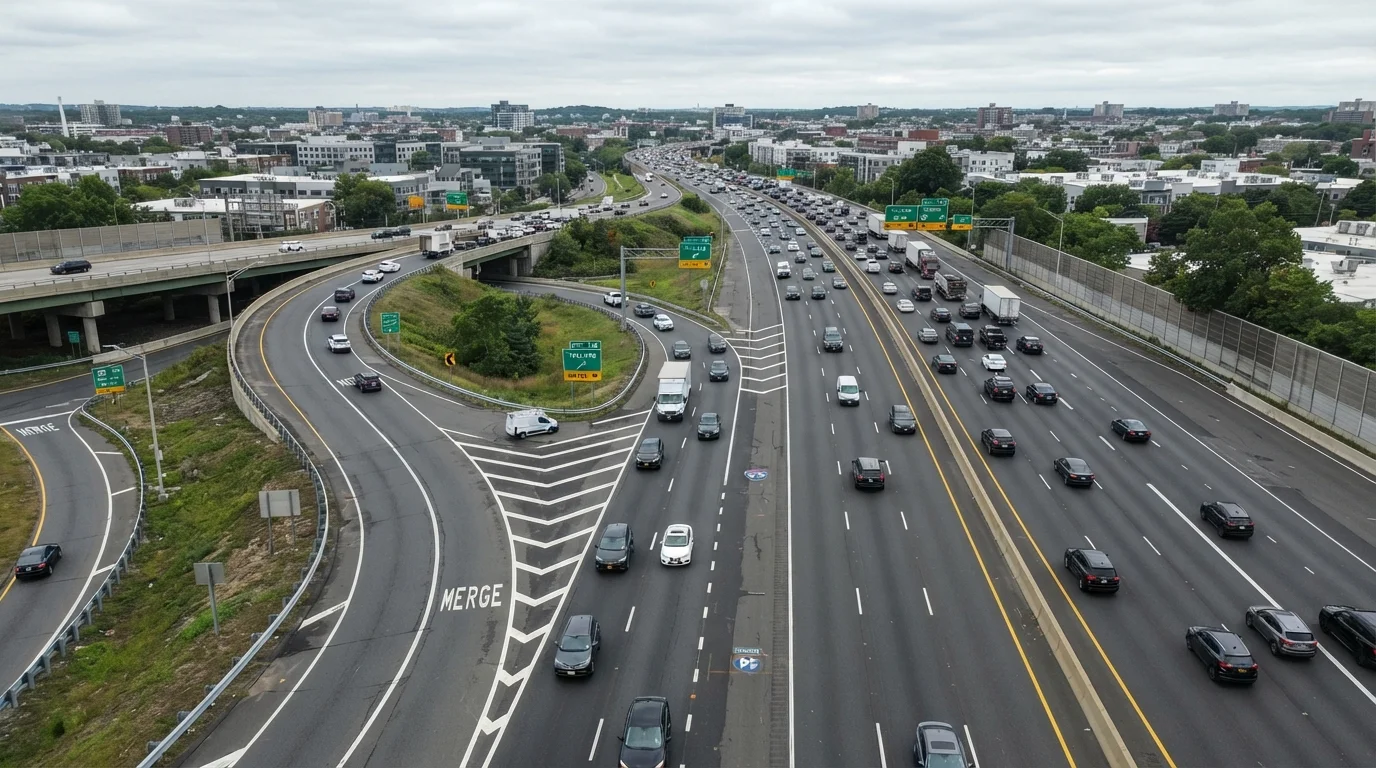
Highway merging is one of the most cognitively demanding maneuvers in everyday driving, yet it receives minimal attention after the learner-permit stage. The task requires simultaneous speed management, gap assessment, mirror scanning, blind-spot checking, and signaling - all compressed into a span of seconds. When even one of those elements breaks down, the consequences at highway speeds can be severe.
Data from the Federal Highway Administration consistently identifies merge and weave zones among the highest-risk segments of the Interstate highway system. Yet most drivers approach the on-ramp the same way they did on their first solo drive - with habits that were never formally reviewed or corrected. The good news: the skills involved are learnable and improvable at any experience level.
For a broader look at how high-speed driving differs from urban environments, see our comparison of highway and city driving risks.
The Most Common Merge Mistakes - And How to Fix Them
The errors below appear repeatedly in traffic-safety research and driver-education literature. They span both new and experienced drivers, which tells us that merging skill is not simply a function of years behind the wheel.
Entering the acceleration lane and immediately slowing down or stopping at the yield line.
Why it happens: Many drivers treat the on-ramp yield line like a stop sign, especially when traffic looks dense. Anxiety about entering fast-moving traffic causes hesitation that the acceleration lane is specifically designed to prevent.
Failing to check the blind spot with a physical head turn before committing to the merge.
Why it happens: Drivers rely entirely on mirrors, which leave a predictable blind zone along the rear quarter of the vehicle. This habit often forms during initial training and is never corrected.
Signaling too late - or not at all - before attempting to merge.
Why it happens: Some drivers view turn signals as a courtesy rather than a safety tool, and in light traffic the consequence is rarely immediate. The habit erodes over time.
Targeting a gap that is too small for the vehicle's current speed differential.
Why it happens: Drivers often misjudge closing speed when looking at vehicles approaching from behind in mirrors. Objects in mirrors appear farther away than they are at highway speeds.
Merging without scanning far enough ahead to anticipate the overall traffic pattern.
Why it happens: Attention narrows during high-stress moments, causing drivers to fixate on the immediate merge point rather than reading the wider traffic environment.
Understanding who actually has the right-of-way in merge situations prevents the kind of overconfident entry that leads to side-swipe crashes. Our breakdown of U.S. right-of-way rules covers this in detail.
Merging Drivers Do Not Have Automatic Right-of-Way
A common and dangerous misconception is that highway drivers must yield to merging traffic. In most U.S. states, the vehicle already traveling on the main roadway has the right-of-way. Merging drivers are responsible for finding a safe gap and adjusting their speed accordingly. Assuming the lane will clear for you is a leading cause of merge-related collisions.
Building the Merge Into Your Broader Driving Routine
Safe merging does not happen in isolation - it depends on habits that should already be active before you reach the ramp. Proper mirror adjustment, a consistent pre-drive blind-spot familiarization, and disciplined following distance on surface streets all set up a cleaner merge.
~300,000
Annual merge/weave zone crashes in the U.S.
The Federal Highway Administration estimates merge, diverge, and weave zones account for a disproportionate share of freeway crashes relative to their length.
3-4 sec
Minimum safe gap for highway merging
Defensive driving curricula generally recommend a gap of at least three to four seconds at highway speed when selecting a merge opening.
Maintaining adequate following distance on the highway after you merge is equally important: a driver who merges correctly but then tailgates has only solved half the problem. Similarly, in adverse weather, gap acceptance thresholds should expand significantly - wet or icy pavement dramatically extends stopping distance. Our guide on adjusting driving for rain, snow, and fog explains how conditions change the calculation.
If you want to build these habits into a more complete driving routine, road safety habits worth building before you need them offers a practical framework applicable to drivers at every experience level.
This article is for general informational and educational purposes. Traffic laws vary by state; consult your state's driver handbook or a qualified driving instructor for guidance specific to your jurisdiction.