The Core Difference: Moisture Content and What It Means
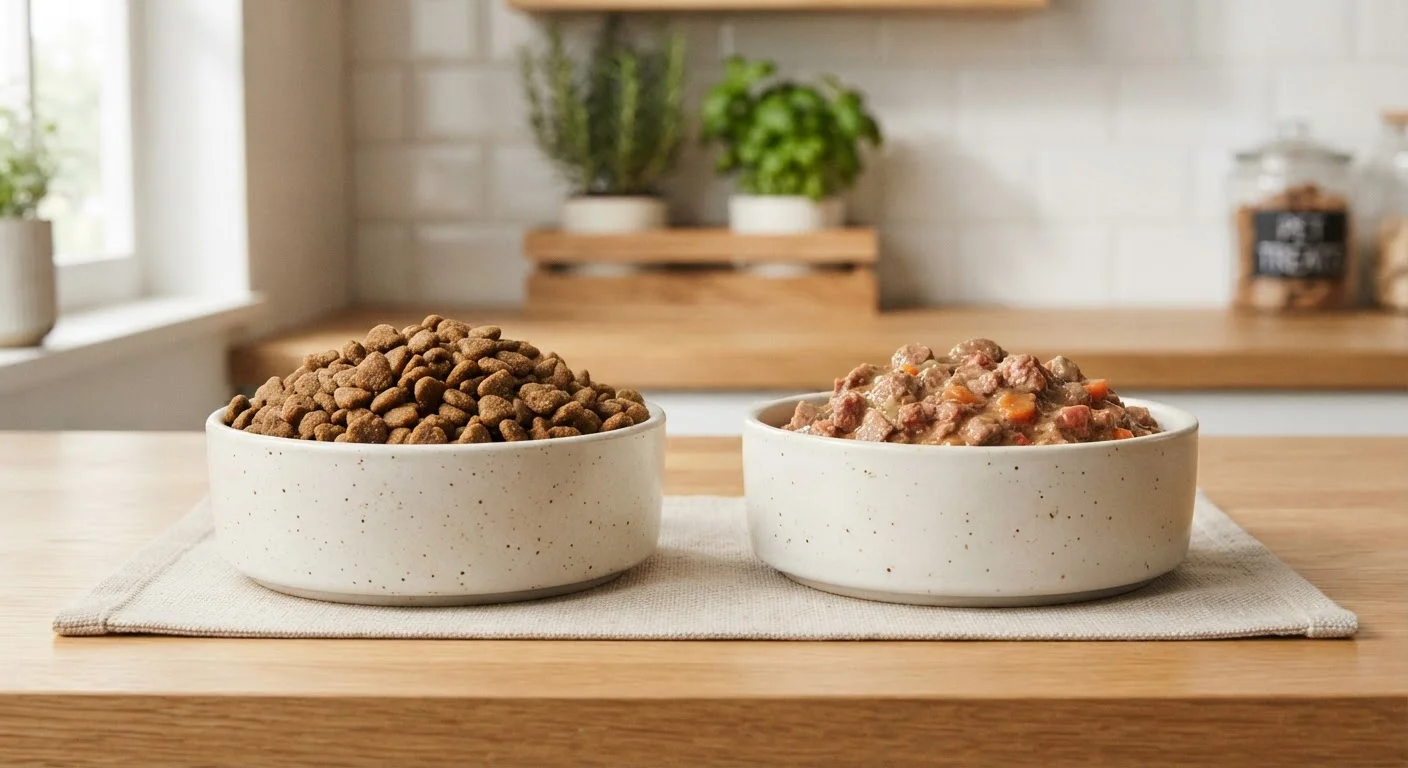
The most fundamental distinction between dry kibble and wet food isn't flavor or texture — it's water. Wet food typically contains between 70% and 80% moisture by weight, while dry kibble usually falls below 10%. That gap has real downstream effects on digestion, kidney function, and overall hydration, particularly for cats, who evolved from desert-dwelling ancestors with naturally low thirst drives.
Pets who consume wet food absorb a meaningful portion of their daily fluid intake from their meals. This matters most for animals prone to urinary tract issues or kidney stress. Dry-fed pets must compensate by drinking more water voluntarily — something many cats, in particular, are reluctant to do. As explained in our guide to the six essential nutrients every pet diet should cover, water is classified as a nutrient in its own right, not merely a delivery vehicle.
70–80%
Moisture content of typical wet pet food
Compared to under 10% in most dry kibble formulas, according to general nutritional composition data reported by veterinary nutrition sources.
~3x
More water consumed by wet-fed cats vs. dry-fed cats
Research published in veterinary nutrition literature consistently shows wet-fed cats achieve significantly higher total daily fluid intake than those fed only dry kibble.
~4 kcal/g
Approximate caloric density of dry kibble
Dry kibble typically delivers around 3.5–4.5 kcal per gram, roughly two to four times the caloric density of most wet food formulas by weight.
Nutritional Profile and Caloric Density
When comparing nutrition labels, it's critical to evaluate food on a dry matter basis — meaning moisture is mathematically removed so macronutrients (proteins, fats, carbohydrates) can be compared fairly. On a dry matter basis, many wet and dry formulas are nutritionally similar, though wet foods often contain higher protein and lower carbohydrate levels due to their composition.
Caloric density differs substantially, however. A cup of dry kibble typically delivers significantly more calories than the same volume of wet food, simply because kibble is energy-dense. This makes portion measurement more critical with dry food. Our guide to reading pet food labels explains how to use the guaranteed analysis panel to compare nutrient percentages across formats before buying.
| Criterion | Dry Kibble | Wet Food |
|---|---|---|
| Moisture content | ~6–10% | ~70–80% |
| Caloric density (per gram) | Higher | Lower |
| Protein level (dry matter) | Varies; often moderate | Often higher |
| Carbohydrate content | Generally higher | Generally lower |
| Dental cleaning effect | Mild mechanical action | Minimal to none |
| Palatability | Moderate | High |
| Shelf life (opened) | Weeks (sealed container) | 1–2 days (refrigerated) |
| Cost per serving | Generally lower | Generally higher |
| Best for hydration support | No | Yes |
Dental Health: Separating Fact from Assumption
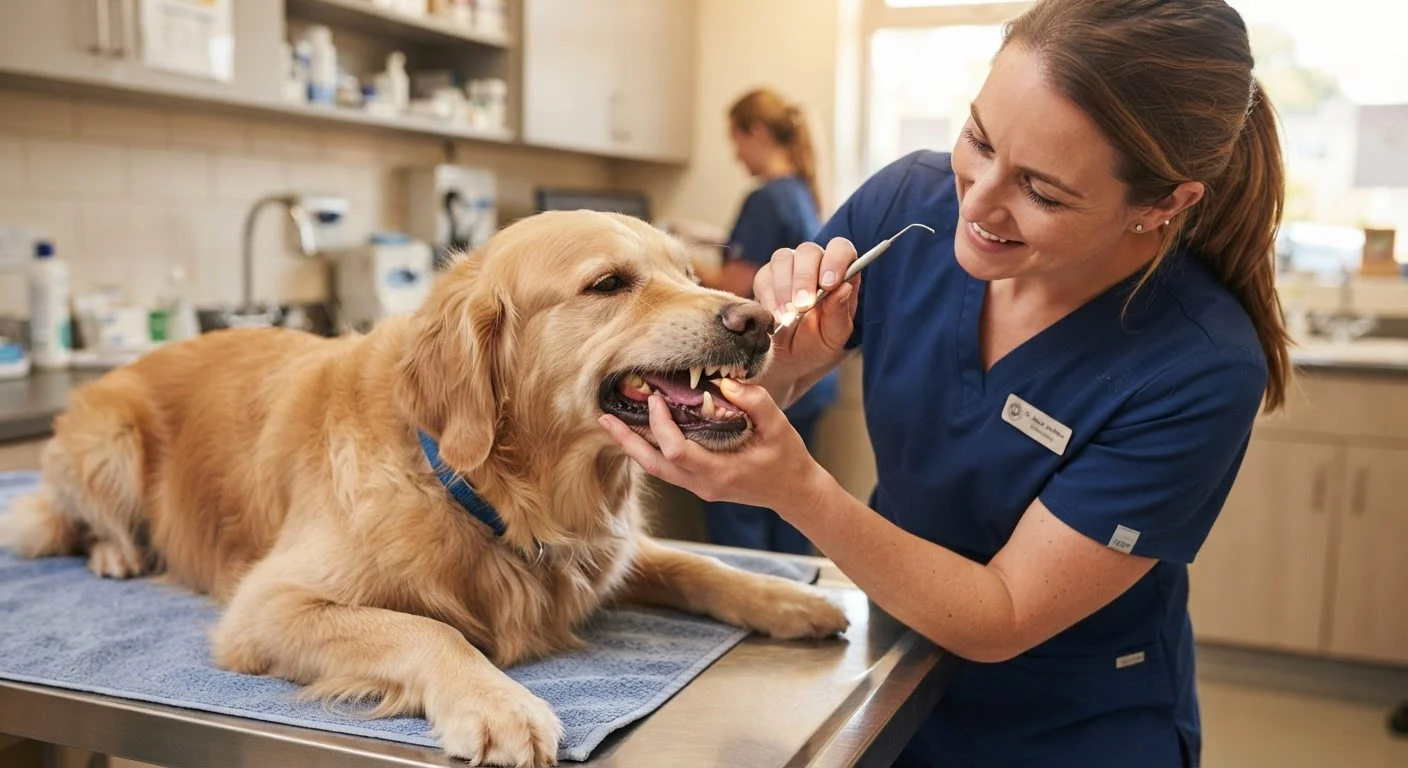
One frequently cited advantage of dry kibble is dental health. The mechanical action of crunching kibble is thought to scrape away some plaque and tartar as dogs and cats chew. There is some evidence supporting a modest benefit, particularly for kibble formulas specifically designed with larger, textured pieces to encourage chewing.
However, veterinary dental organizations consistently note that kibble alone is not an adequate substitute for active dental care — including veterinary cleanings, dental chews, or tooth brushing. Many cats swallow kibble whole, bypassing any scrubbing action entirely. Wet food's soft texture means no mechanical cleaning occurs, but it doesn't directly cause dental disease either. Genetics, saliva composition, and oral hygiene practices matter far more than food format alone.
AAFCO Completeness Applies to Both Formats
Both dry kibble and wet food can carry the AAFCO (Association of American Feed Control Officials) statement indicating a formula is "complete and balanced" for a specific life stage. This statement — not the format — is the primary marker that a food meets established minimum nutritional standards. When comparing options, always look for this statement on the label regardless of whether the food is dry or wet. Our label-reading primer covers exactly what this language means and where to find it.
Palatability, Special Needs, and Mixed Feeding
Wet food consistently scores higher on palatability — most pets find its aroma and texture more appealing, which is clinically useful when dealing with a sick, elderly, or underweight animal whose appetite has declined. Heating wet food slightly (to body temperature) can further enhance aroma, encouraging reluctant eaters.
Mixed feeding — offering both formats in a single day — is a common and generally sound practice, provided total daily caloric intake stays controlled. Some owners use wet food as a topper on kibble for palatability, or feed wet food at one meal and dry at another. Understanding how these formats affect your specific species is also important: dogs and cats have meaningfully different nutritional requirements that affect which format might suit each one better.
If your pet shows any signs that their current diet isn't working — such as coat changes, energy shifts, or digestive upset — our article on recognizing signs of nutritional gaps in pets provides a practical framework for what to watch for before consulting your veterinarian.
This article provides general educational information for pet owners and is not a substitute for advice from a licensed veterinarian. Always consult your vet before making significant changes to your pet's diet, especially if your animal has an existing health condition.