Why Raw Feeding Debates Get So Heated
Few topics in the cat owner community generate stronger feelings than raw diets. Advocates describe dramatic coat improvements and higher energy levels. Critics — including the majority of organized veterinary bodies — point to serious, documented risks. The intensity of both camps makes it genuinely difficult for owners to find grounded, evidence-based guidance.
What makes this conversation especially complicated is that some widely repeated claims on both sides oversimplify the science. Cats are obligate carnivores, meaning they depend on nutrients found only in animal tissue. But that biological reality doesn't settle the question of whether raw meat, specifically, is the safest or most effective way to deliver those nutrients. For a broader look at how feline nutritional needs differ fundamentally from other pets, see how cats' and dogs' nutritional needs diverge.
Below, we address the most common myths circulating about raw cat diets and replace them with what current evidence and veterinary guidance actually support.
Myth
Cats evolved to eat raw meat, so a raw diet is naturally the healthiest option for them.
Fact
While cats are obligate carnivores shaped by evolution, that history doesn't guarantee modern raw diets are safe or nutritionally complete.
Wild feline diets and commercially prepared or homemade raw diets are not the same thing. Wild prey provides a complete nutritional profile including organs, bone, and stomach contents. Most raw diets prepared at home lack this complexity. A 2019 study published in the Journal of Nutritional Science found that the majority of homemade raw cat diet recipes analyzed were deficient in multiple essential nutrients. Evolution-based arguments, while intuitively appealing, don't address contamination risks or nutritional gaps in practice.
Myth
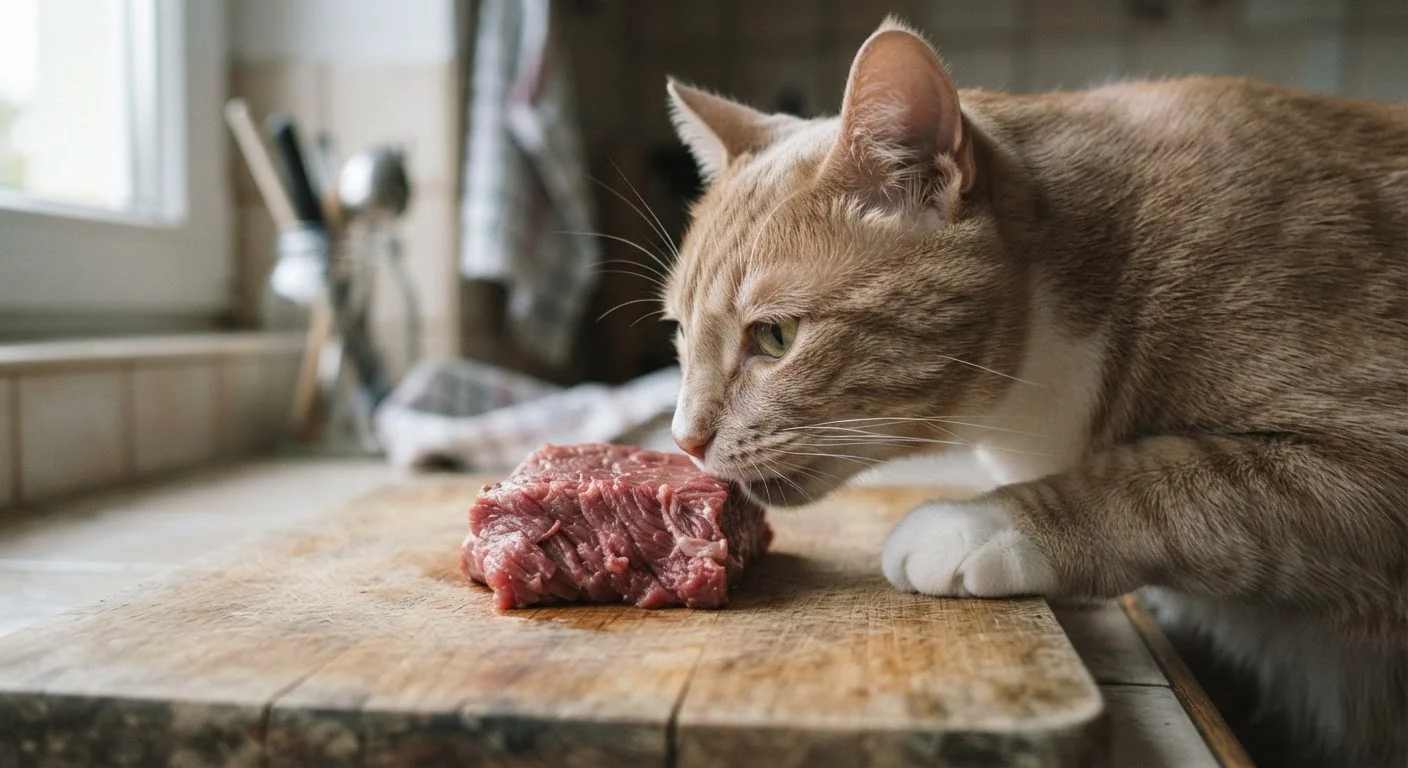
Raw food is always safer than processed commercial cat food.
Fact
Raw meat frequently harbors pathogens that commercial processing is specifically designed to eliminate.
The FDA has documented multiple recalls and contamination events tied to raw pet food products, including the detection of Salmonella and Listeria in commercially sold raw pet food. Commercial cat foods formulated to AAFCO (Association of American Feed Control Officials) standards undergo nutrient testing and, in many cases, heat treatment that reduces microbial load. "Processed" is not synonymous with inferior — processing steps often exist precisely to make food safer. Explore the Pet Nutrition hub for more context on how to evaluate cat food quality.
Myth
Cats' stomach acid is strong enough to kill any bacteria in raw meat.
Fact
Feline stomach acid does not reliably neutralize all foodborne pathogens, and cats can become asymptomatic carriers.
While cats have a comparatively acidic digestive environment, research has confirmed that cats fed raw meat can shed pathogens like Salmonella in their feces — even without showing obvious illness themselves. This creates a real zoonotic risk (disease transmissible between animals and humans) for people handling litter boxes or in close contact with the cat. The AVMA specifically cites this carrier dynamic as a public health concern, particularly in households with vulnerable individuals.
Myth
A raw diet will cure my cat's allergies or chronic digestive issues.
Fact
Diet changes may help some cats, but raw feeding is not an established treatment for feline allergies or gastrointestinal disease.
If your cat has suspected food allergies or chronic GI issues, a veterinarian-guided elimination diet — which can use hydrolyzed protein or novel-protein commercial foods — is the evidence-supported diagnostic approach. Switching to raw food without veterinary guidance may introduce new allergens or pathogens while leaving the underlying condition unaddressed. Anecdotal improvements reported online can reflect many variables, including the novelty effect of any diet change, and shouldn't be mistaken for clinical evidence.
Myth
Homemade raw diets are easy to get right with basic internet research.
Fact
Most homemade raw diets, even well-intentioned ones, are nutritionally incomplete without expert formulation.
Board-certified veterinary nutritionists consistently find that recipes circulating online, including those that appear detailed and authoritative, frequently fall short on calcium, specific B vitamins, iodine, and taurine — a deficiency that can cause fatal heart disease in cats. Achieving balance requires precise ratios of muscle meat, organ meat, and bone, along with targeted supplementation. This is not a task most owners can accomplish reliably without professional guidance. If you do pursue this path, a consultation with a board-certified veterinary nutritionist (Diplomate, ACVN) is essential.
What Veterinary Organizations Actually Recommend
The American Veterinary Medical Association (AVMA), the American Animal Hospital Association (AAHA), and the FDA's Center for Veterinary Medicine have each issued guidance discouraging raw meat-based diets for pets. Their primary concerns center on pathogen contamination — particularly Salmonella, Listeria monocytogenes, and E. coli — which pose risks not only to the cat but also to human family members, especially children, elderly individuals, and immunocompromised people sharing the home.
Immunocompromised Households Face Higher Risk
If anyone in your home is pregnant, elderly, undergoing chemotherapy, or living with a condition that affects immune function, the pathogen risks associated with raw pet food are amplified. The CDC and AVMA both recommend that households with immunocompromised members exercise particular caution. Consult both a physician and a veterinarian before introducing raw meat into the home environment.
This doesn't mean every veterinarian categorically refuses to discuss raw feeding. Some veterinary nutritionists are willing to help owners formulate a balanced raw diet under close supervision. However, the burden of getting that formulation right is substantial, and the margin for error — particularly around taurine, calcium-to-phosphorus ratios, and vitamin supplementation — is narrow. For a wider look at how marketing language on pet food packaging can cloud these decisions, see pet food claims that sound scientific but aren't.
If you're considering any significant dietary change for your cat, a conversation with a licensed veterinarian or board-certified veterinary nutritionist is the appropriate starting point — not online forums or anecdotal testimonials.
~60%
Homemade raw recipes with nutritional deficiencies
A 2019 Journal of Nutritional Science analysis found the majority of reviewed homemade raw cat diet recipes were deficient in one or more essential nutrients.
3–5x
Higher Salmonella detection in raw vs. conventional pet food
FDA surveillance testing has found pathogen detection rates significantly higher in raw pet food samples compared to conventional commercial pet foods.
This article is for general informational purposes only and does not constitute veterinary or medical advice. Always consult a licensed veterinarian before making changes to your cat's diet.