Why Dental Disease Goes Unnoticed for So Long
Periodontal disease is often called a silent condition, and for good reason. Unlike a broken limb or an obvious wound, oral disease in pets develops gradually and rarely produces the kind of distress signals owners expect. Most pets instinctively continue eating and behaving normally even when gum infection is well advanced — a survival instinct that obscures the problem.
Plaque, the sticky bacterial film that forms on teeth after every meal, is the starting point. Without regular disruption, it mineralizes into calculus (tartar) within days. Tartar buildup triggers gum inflammation — gingivitis — and without intervention, the infection spreads below the gumline, destroying the ligaments and bone that anchor the teeth. This progression can unfold over months or years with no obvious behavioral change in the animal.
Veterinary professionals frequently discover moderate to severe periodontal disease during routine wellness exams in pets whose owners had no indication anything was wrong. This underscores why annual oral assessments are essential, and why dental health is a core part of the preventive care checklist responsible owners maintain.
Cats Are Equally at Risk
Dental disease in cats is often underappreciated by owners who assume it is primarily a dog problem. Cats are prone to a painful condition called tooth resorption, in addition to standard periodontal disease, making feline dental care just as critical. Because cats are especially adept at masking discomfort, veterinary oral exams are often the only reliable way to detect problems.
The Systemic Risks of Untreated Oral Infection
The consequences of periodontal disease extend well beyond the mouth. The oral cavity is richly supplied with blood vessels, and bacteria from infected gum tissue can enter circulation — a process known as bacteremia. Veterinary research has documented associations between chronic periodontal disease and changes in kidney function, cardiac tissue, and liver health in companion animals.
Small-breed dogs are disproportionately affected, partly because their teeth are crowded into smaller jaws, creating pockets where bacteria accumulate more readily. Senior pets carry additional risk, since disease has had more time to progress and organ systems may be less resilient. The health needs of aging pets make oral care particularly important in the later years of life.
80%
Dogs affected by periodontal disease by age 3
According to the American Veterinary Medical Association, the majority of dogs show signs of dental disease before they reach their third birthday.
70%
Cats with dental disease by age 3
Veterinary dental specialists estimate that most adult cats have some degree of periodontal disease, often going undetected without professional examination.
60%
Tooth structure hidden below the gumline
Dental radiographs are the only way to assess this region, making X-rays a critical component of a thorough professional cleaning.
What Professional Dental Care Actually Involves
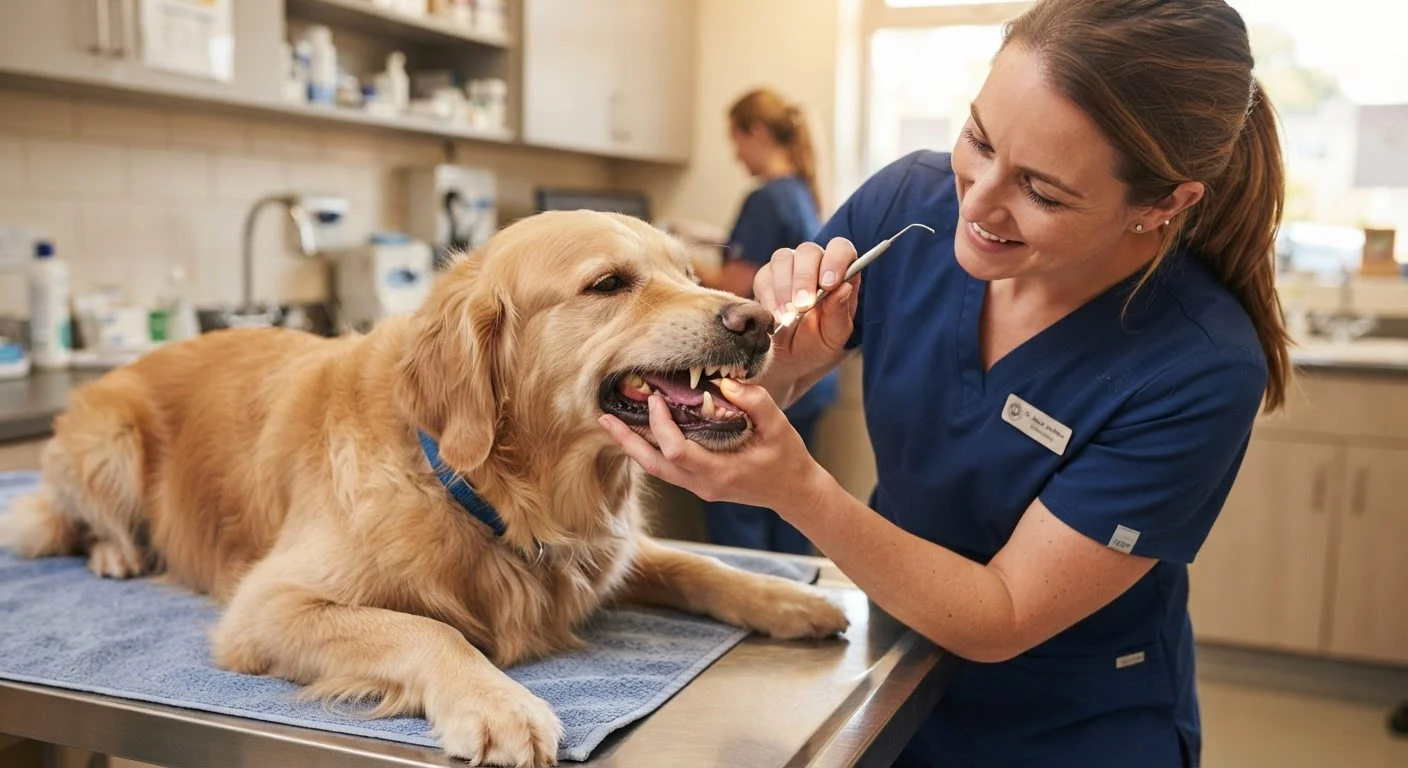
A professional veterinary dental cleaning is meaningfully different from a cosmetic tooth polish. The procedure is performed under general anesthesia — a requirement that allows the veterinarian to probe below the gumline, take dental radiographs (X-rays), and safely treat or extract teeth with significant disease. Anesthesia also prevents the animal from moving during scaling, which protects delicate oral tissues.
Dental radiographs are particularly important because approximately 60% of the tooth structure lies beneath the gumline and is invisible to the naked eye. Disease in that region — including root resorption, bone loss, and abscesses — can only be identified through imaging. Skipping X-rays during a cleaning means a significant portion of the mouth goes unevaluated.
Ask About Dental X-Rays at Every Cleaning
If your veterinary practice does not routinely include dental radiographs with cleanings, ask whether they are recommended for your pet. The American Veterinary Dental College considers full-mouth radiographs the standard of care during professional dental procedures. Without them, disease below the gumline can be missed entirely.
Following a professional cleaning, your veterinarian will typically assign a periodontal stage and recommend a home care plan and follow-up schedule tailored to your pet's findings. This is also a good moment to discuss any concerns about your pet's nutrition or overall condition — poor diet can sometimes intersect with oral health, and a nutritional gap can affect tissue health more broadly.
Building an At-Home Dental Care Habit
Professional cleanings address existing disease, but at-home care determines how quickly it returns. Daily toothbrushing is the most evidence-supported method for controlling plaque accumulation between veterinary visits. The goal is consistency — even brief daily sessions are more effective than infrequent longer ones, because plaque begins mineralizing within 24 to 72 hours.
Introduce brushing gradually, especially with young or unaccustomed animals. Start by allowing the pet to taste veterinary-formulated enzymatic toothpaste, then progress to brief contact with a finger brush or pet toothbrush along the outer tooth surfaces. Building this habit early — and integrating it into a consistent daily routine — is far easier than attempting it with an adult pet who has never experienced it.
Dental chews, water additives, and veterinary-approved oral rinses carry the Veterinary Oral Health Council (VOHC) seal when they have met pre-established efficacy standards. These products can supplement brushing but are generally not considered equivalent replacements. Your veterinarian is the appropriate guide for selecting adjunct tools suited to your pet's size, health status, and temperament.
This article is for general informational and educational purposes only and does not constitute veterinary advice. Always consult a licensed veterinarian for guidance specific to your pet's health needs.