Why Vet Visits Trigger Anxiety in Pets
For many cats and dogs, a veterinary clinic is a place of unfamiliar smells, sounds, and handling — all of which can trigger a fear response even before the exam begins. Animals that have had painful or overwhelming past experiences are especially prone to what veterinary behaviorists call fear-based conditioning, where the sight of a carrier or the car ride alone becomes a reliable signal for distress.
Understanding the source of that anxiety is the first step toward managing it. Fear at the vet is rarely stubbornness — it's a physiological stress response. Recognizing early stress signals, such as panting, yawning, flattened ears, or excessive vocalization, gives you a window to intervene before the situation escalates. For a deeper look at how stress signals manifest during any kind of handling, see our guide on recognizing stress signals in pets.
Fear-Free Veterinary Practices Are Worth Seeking Out
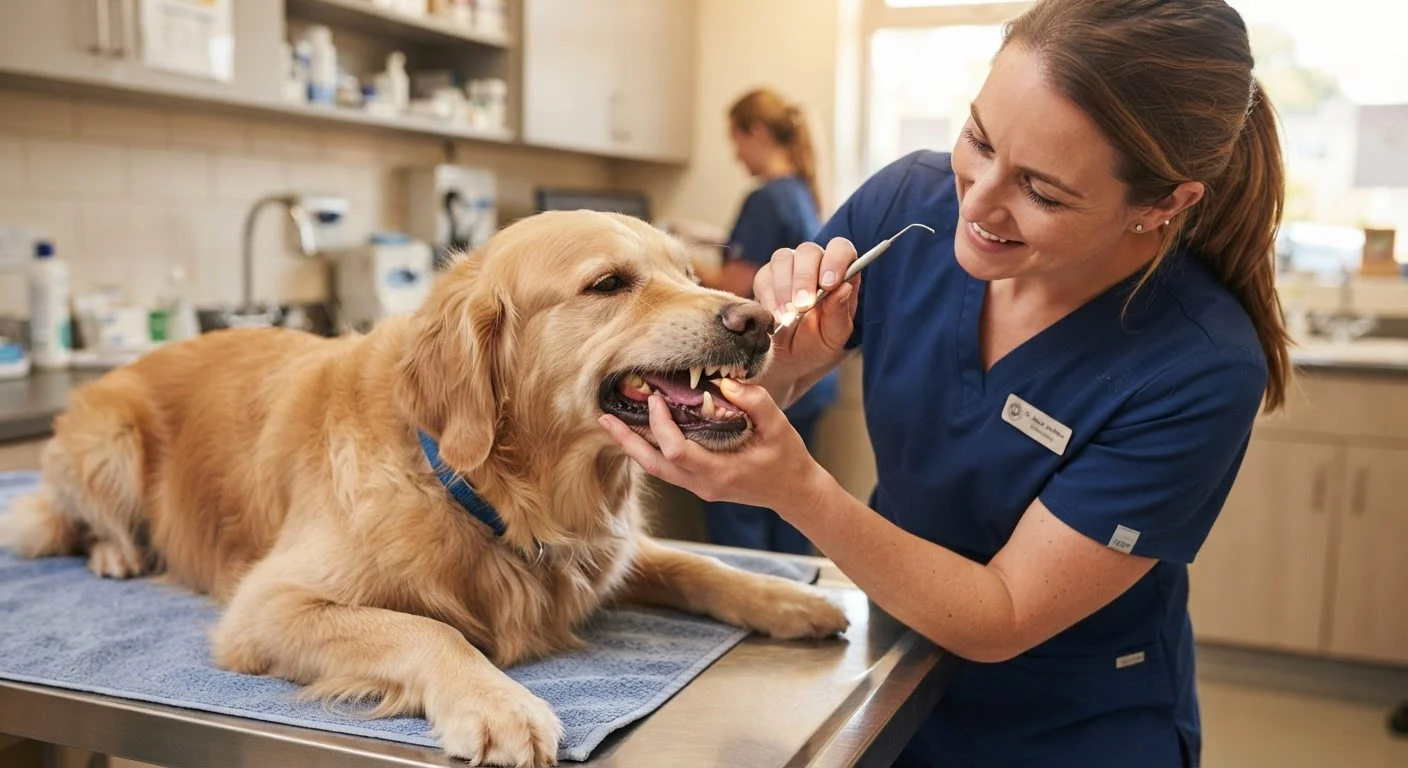
A growing number of clinics in the US have adopted Fear Free certification — a training program that equips veterinary teams with low-stress handling techniques. If your pet has significant anxiety, asking whether a local clinic follows these protocols can make a meaningful difference. Your regular vet may also be willing to discuss a desensitization visit where your pet simply comes in for treats and a weigh-in, with no exam.
Tools and Resources That Help
A few practical items can meaningfully reduce stress before and during the appointment.
Well-ventilated carrier or crate
Provides a familiar, enclosed space that reduces overstimulation during transport and in the waiting room.
Familiar bedding or worn clothing
A piece of bedding or clothing carrying your scent placed inside the carrier can provide olfactory comfort for anxious pets.
High-value treats
Used to reinforce calm behavior during handling practice at home and throughout the veterinary visit.
Pheromone spray or diffuser
Synthetic pheromone products designed for dogs or cats may help reduce stress responses when applied to the carrier before travel.
Pressure wrap or anxiety wrap
Applies gentle, constant pressure around the torso; some animals respond to this with reduced anxiety during travel and handling.
Step-by-Step: Preparing Your Pet Before and During the Visit
The following steps apply to most dogs and cats. Adjust the pace and intensity based on your individual animal's temperament and history.
Desensitize the carrier weeks in advance
Leave the carrier out in your home as a permanent fixture rather than producing it only on appointment day. Place familiar bedding, treats, and toys inside. Feed meals near or inside it. The goal is to shift the carrier's association from "something bad is about to happen" to a neutral or positive resting space.
Practice short car trips without a destination
Many pets associate the car exclusively with the vet clinic. Take brief rides that end back at home with a reward. Start with simply sitting in a parked car, then short drives, gradually building up. This breaks the predictive chain between the car and the stressful endpoint.
Handle your pet regularly at home
Gently touch your pet's paws, ears, mouth, and abdomen during calm moments at home — not just before appointments. This kind of routine handling reduces the novelty of the physical exam and makes restraint feel less alarming. Pair every handling session with treats and praise to build a positive association.
Choose a quieter appointment time
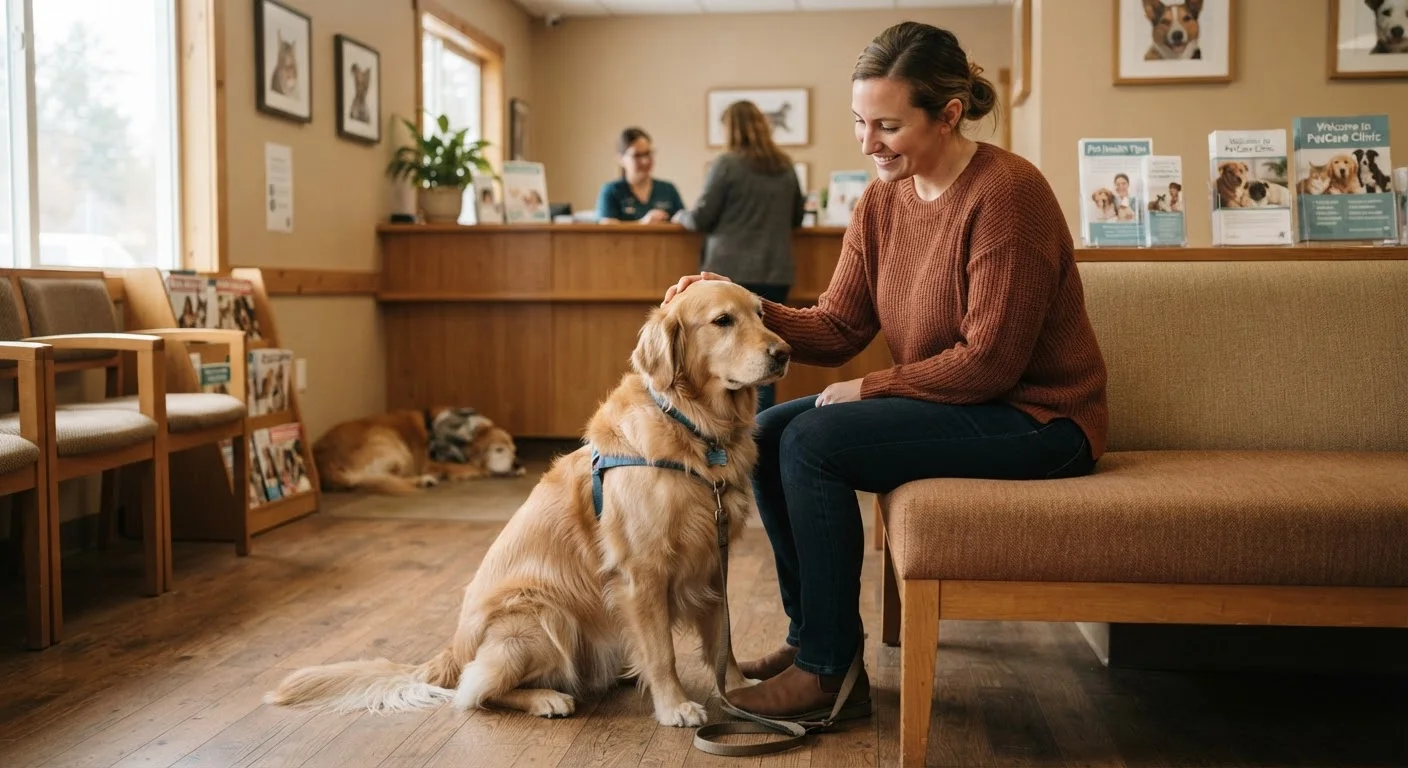
Ask your clinic whether they have lower-traffic appointment slots — early morning or mid-week times are often calmer. Some practices offer fear-free or low-stress handling protocols; inquire about these when booking. Reducing ambient chaos in the waiting room alone can lower your pet's arousal level before the exam begins.
Use calming aids if appropriate
Pheromone sprays (such as synthetic analogs of dog-appeasing pheromone or feline facial pheromone) applied to the carrier 15–30 minutes before use are supported by some veterinary research as mild anxiolytics — agents that reduce anxiety. Wraps that apply gentle, consistent pressure are another option some owners find helpful. Neither replaces behavioral preparation but may provide a useful adjunct.
Stay calm and use low-key body language during the visit
Animals are highly attuned to owner stress. Speak in a relaxed, even tone. Avoid hovering or overreassuring, which can inadvertently signal that there is something to be worried about. Let the veterinary team guide the handling — trained staff use positioning and restraint techniques that minimize fear. Bring high-value treats and offer them throughout the visit if your pet is willing to eat (a relaxed animal will accept food; a highly stressed one typically won't).
Don't Wait for a Crisis Appointment to Start Preparation
Desensitization and counter-conditioning take time — ideally weeks, not days. If your pet's only exposure to handling and the carrier happens in the 24 hours before an appointment, preparation has limited effect. Build these habits into your pet's everyday routine well in advance of scheduled visits.
When Preparation Alone Isn't Enough
Some pets have anxiety severe enough that behavioral preparation strategies provide only partial relief. If your animal consistently shows extreme distress — defensive aggression, complete shutdown, or self-injury — it's worth discussing prescription anti-anxiety options with your veterinarian before the next visit. Medications used in this context are not sedatives in the traditional sense; they reduce the fear response so the animal can process the experience more neutrally. Only your vet can assess whether this is appropriate for your pet.
If anxiety extends beyond clinic visits and affects your pet's daily life, that pattern deserves its own evaluation. Conditions like generalized anxiety or separation-related distress often overlap. Our article on separation anxiety in dogs explores how to distinguish true anxiety from boredom-driven behavior. Similarly, sudden behavior changes at home can sometimes point to underlying medical causes — a concept covered in our piece on problem behavior that may be a medical issue.
Routine preventive care is the most effective long-term strategy. The more familiar your pet becomes with handling and the clinical environment through repeated, low-stakes exposure, the less threatening it becomes over time. Pairing vet visits with a broader preventive care habit is a useful frame — our preventive pet care checklist helps owners stay on top of regular appointments and health tasks year-round.
This article is for general informational purposes only and does not constitute veterinary medical advice. Always consult a licensed veterinarian for guidance specific to your pet's health and behavior.