
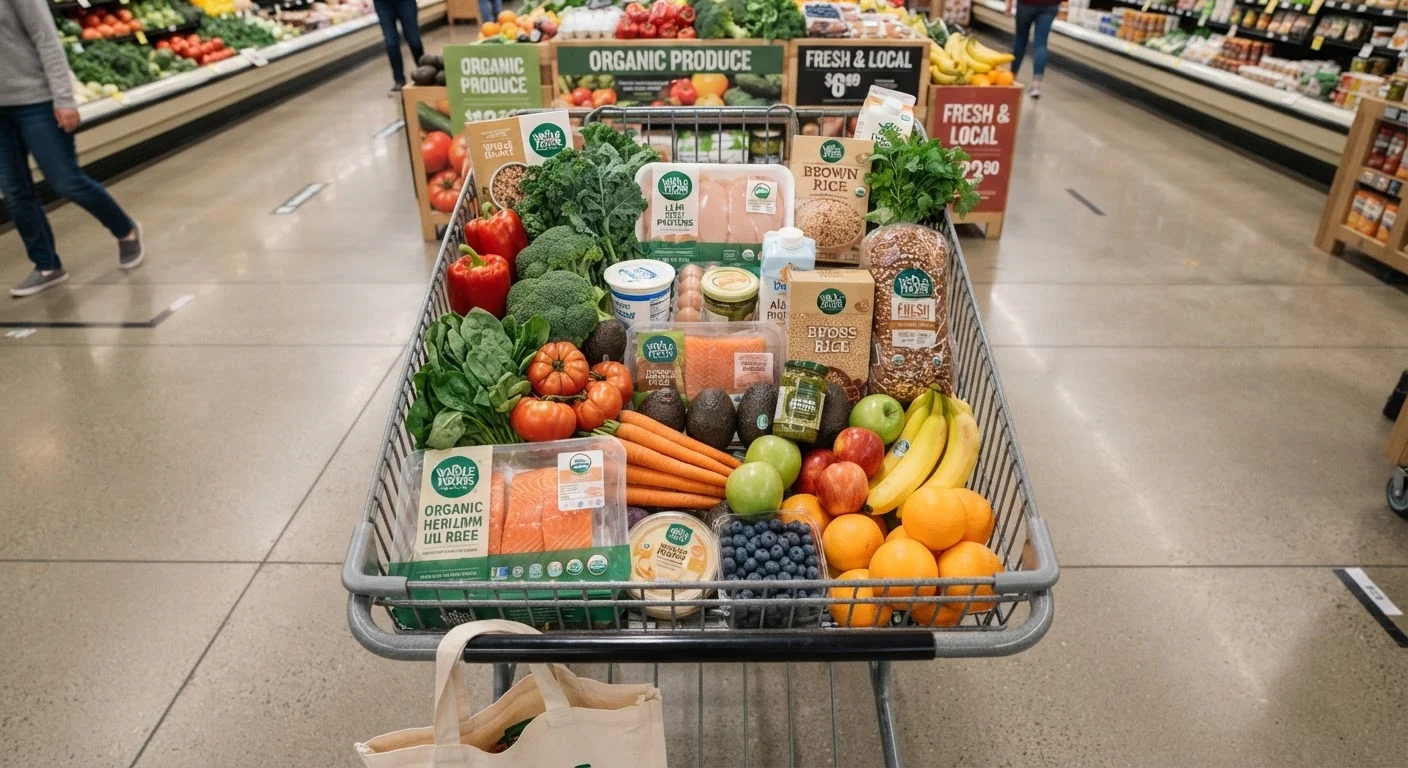
Why a Grocery Checklist Actually Helps
Most grocery trips aren't planned as carefully as we think. Retailers design store layouts specifically to encourage unplanned purchases - and it works. According to consumer behavior research, shoppers frequently add items they didn't intend to buy once they're inside the store. If you want to understand the tactics at play, our piece on retail tricks that drive overspending breaks them down clearly.
This checklist isn't about rigid rules or eliminating enjoyment. It's about giving yourself a simple decision framework - one you can use in under 30 seconds per item - so your cart reflects your actual goals rather than in-store impulses. Think of it as a habit layer that sits between reaching for something and putting it in the cart.
For anyone building these habits from scratch, shopping on a budget for the first time is a helpful companion read covering the broader foundation.
Before You Leave Home
Fresh Produce
Proteins (Meat, Fish, Poultry, Plant-Based)
Dairy and Refrigerated Items
Packaged and Pantry Goods
At Checkout
How to Use This Checklist in the Store
You don't need to run through every item below for every product - that would be exhausting. Instead, apply the relevant group based on what you're shopping for. Produce checks take seconds; packaged food label reviews take slightly longer but pay off in consistent choices over time.
Don't Rely on "Best By" Dates Alone
Date labels on food packaging are often indicators of peak quality, not safety - and they vary in meaning by product and manufacturer. "Sell by," "best by," and "use by" are not federally standardized for most products. Always use your senses (appearance, smell, texture) alongside date labels when assessing freshness, and when in doubt, err on the side of caution.
For produce and fresh proteins, the checks are largely sensory: what does it look and feel like, and what does the date say? For packaged goods, the work is on the label. Knowing what to look for - and what to skip - is a skill that builds quickly with repetition.
If you're weighing whether buying larger quantities makes sense for pantry staples, our guide on bulk buying: when it saves money and when it doesn't explains when the math actually works in your favor.
Finally, if you're curious how a product's price and quality relates to where it's been before it reached the shelf, understanding the consumer product lifecycle adds useful context.
Weekly Meal Plan Template
A simple written or digital grid mapping each day's meals helps anchor your grocery list to what you'll actually cook.
Notes App or Shopping List App
A running digital list lets you add items throughout the week as you run low, reducing forgotten essentials.
Calculator or Phone
Used to quickly calculate unit prices (total price ÷ ounces or count) when comparing package sizes or brands.
Reusable Insulated Bag
Keeps perishables at safe temperatures during transport, particularly useful for meat, dairy, and frozen items.
Reading Labels Without Getting Overwhelmed
Nutrition labels can feel dense, but you only need to focus on a handful of fields to make a meaningful assessment. Start with serving size - everything else on the label is based on it, and packages often contain two or more servings. Next, scan sodium and added sugars, which are among the most commonly overconsummed nutrients in American diets according to federal dietary guidance.
Added Sugar Is Separate From Total Sugar
Nutrition labels in the US list both "Total Sugars" and "Added Sugars" as distinct lines. Total sugars include naturally occurring sugars found in fruit or dairy. Added sugars are what manufacturers put in during processing - these are the ones most associated with overconsumption concerns in public health guidance. When evaluating a packaged product, focus on the added sugars line specifically.
Ingredient lists tell a separate story from the nutrition panel. A short, recognizable ingredient list is generally a reliable indicator of less processing - though it's not the only factor. For a deeper look at what the whole-food versus processed-food distinction actually means, see our article on whole foods vs. processed foods.
Marketing language on the front of packaging - words like "natural," "wholesome," or "clean" - carries no standardized regulatory definition in most contexts. Always flip to the back to verify what a claim actually means in terms of ingredients and nutrients. The smarter shopping consumer field guide covers this principle across a wider range of purchase types.
This article is for general informational and educational purposes only and is not a substitute for personalized nutritional or medical advice. Consult a registered dietitian or qualified healthcare professional for guidance specific to your health needs.