Where It All Starts: Manufacturing and Landed Cost
Before a product reaches any shelf or listing, it has already accumulated a stack of costs. Raw materials, labor, factory overhead, quality control, and outbound freight all combine into what supply chain professionals call landed cost - the true baseline expense of getting a finished product to a point of distribution.
Manufacturers build a margin on top of landed cost when they sell to distributors or retailers. That margin funds research, product development, marketing, and profit. So even before a retailer touches the product, its price has already moved significantly above its material cost.
For shoppers, this matters because a product's retail price tells you almost nothing about what it costs to make. A $40 item might have a $6 material cost or a $22 one - and the difference in price often reflects brand positioning more than engineering superiority.
The Middle Mile: Distributors, Wholesalers, and Fulfillment
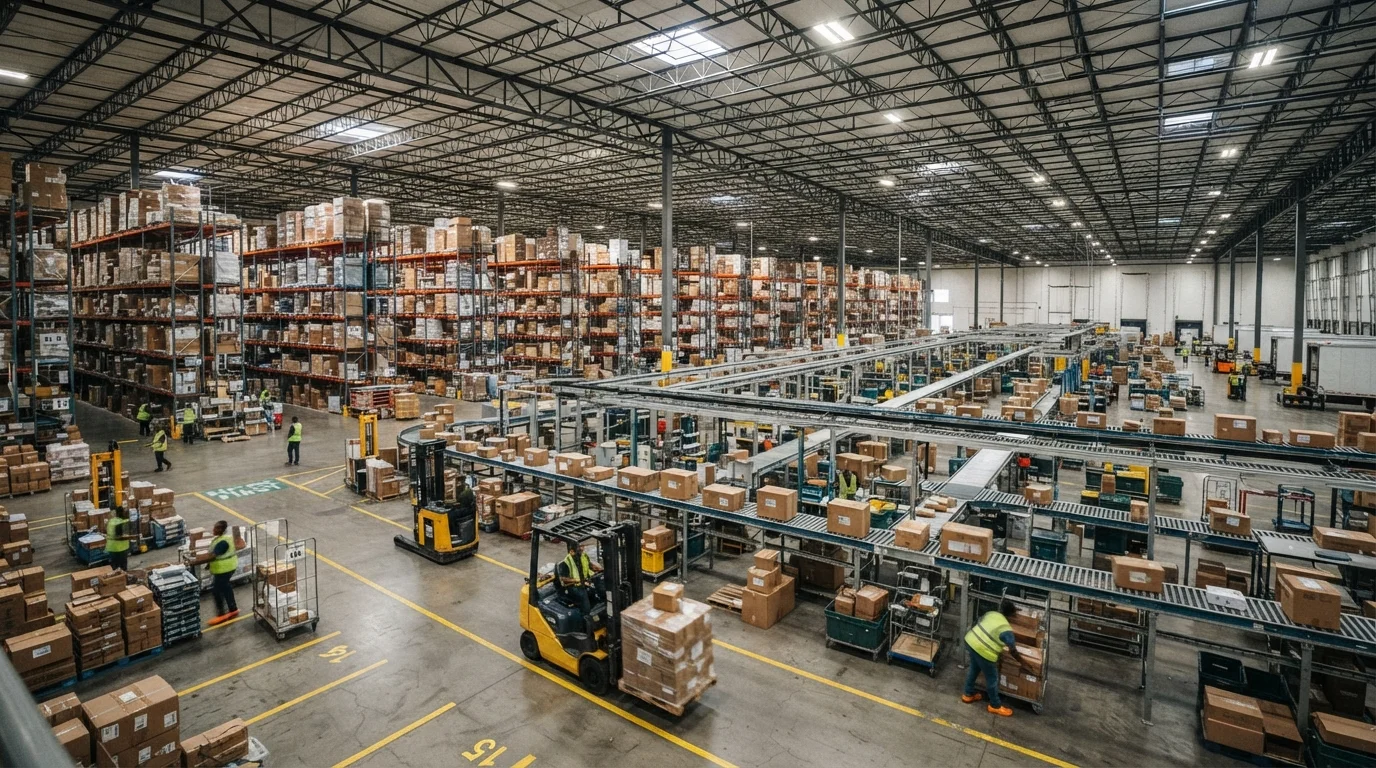
Most consumer goods don't travel directly from a factory to a store. They pass through one or more intermediaries - distributors or wholesalers - who buy in large volume and resell to retailers in manageable quantities. Each of these entities applies their own margin to cover warehousing, transportation, and operating costs.
2-4 layers
Typical intermediary stages for mass-market consumer goods
Most consumer products pass through manufacturer, distributor, and retailer stages before reaching the end buyer, according to general supply chain literature.
50%+
Common retail markup in apparel and beauty categories
Industry analyses of retail margins consistently show apparel and beauty products carry some of the highest markups relative to wholesale cost in consumer goods.
Fulfillment centers run by large online marketplaces play a similar role. When a third-party seller ships inventory to a marketplace warehouse, the marketplace charges storage and fulfillment fees that become embedded in the product's listed price. Understanding this helps explain why identical items sometimes cost more on one platform than another - fees differ, and sellers price accordingly.
For the electronics and gadgets category in particular, the number of distribution layers often correlates with how niche or specialized a product is. Mass-market items tend to move through leaner, more efficient channels.
At the Shelf: Retail Markup, Placement, and Perceived Value
Retailers apply a final layer of margin - their gross profit - before the price reaches you. That margin funds storefronts, staffing, returns handling, and advertising. A store's overall margin target can influence how aggressively it prices individual categories.
Shelf placement and packaging are deliberate investments at this stage. Products placed at eye level in physical stores or positioned prominently in search results online typically got there through co-op advertising or paid placement fees - costs that may be baked into pricing. Premium packaging signals quality and justifies higher price points, but the signal and the underlying reality don't always match.
This is why comparing product specifications - rather than packaging aesthetics or shelf position - gives a more reliable read on value. See our checklist of questions to ask before buying online for a practical framework.
What This Means for Everyday Shopping Decisions
Knowing the lifecycle of a product reframes how you evaluate price. A lower price doesn't automatically signal a bargain - it may reflect a leaner supply chain, a brand investing less in packaging, or a seller with lower overhead. A higher price doesn't automatically mean higher quality; it may reflect distribution inefficiencies, heavy marketing spend, or premium positioning strategy.
Check What's Actually Included in the Price
When evaluating any product, separate the tangible features - materials, performance specs, warranty terms - from the intangible ones like brand reputation or packaging design. Intangibles have real value, but knowing what you're paying for puts you in control of the decision rather than marketing.
Direct-to-consumer channels often promise savings by cutting out the middleman, but they also assume all the costs a distributor or retailer previously absorbed. Evaluate DTC offers on total value - product quality, shipping cost, return policy - not on the presumption that fewer intermediaries always means a better deal.
The Consumer's Field Guide to Everyday Purchases and habits of thoughtful shoppers both build on this foundation: the more you understand about how prices are constructed, the harder it becomes for marketing alone to drive your decisions.
This article is for general informational and educational purposes only. It does not constitute financial or purchasing advice tailored to your individual circumstances.