How Each Method Produces Strength
Strength development relies on one core principle: presenting your muscles with sufficient resistance to stimulate adaptation. Both bodyweight and free weight training do this - they just deliver that stimulus differently.
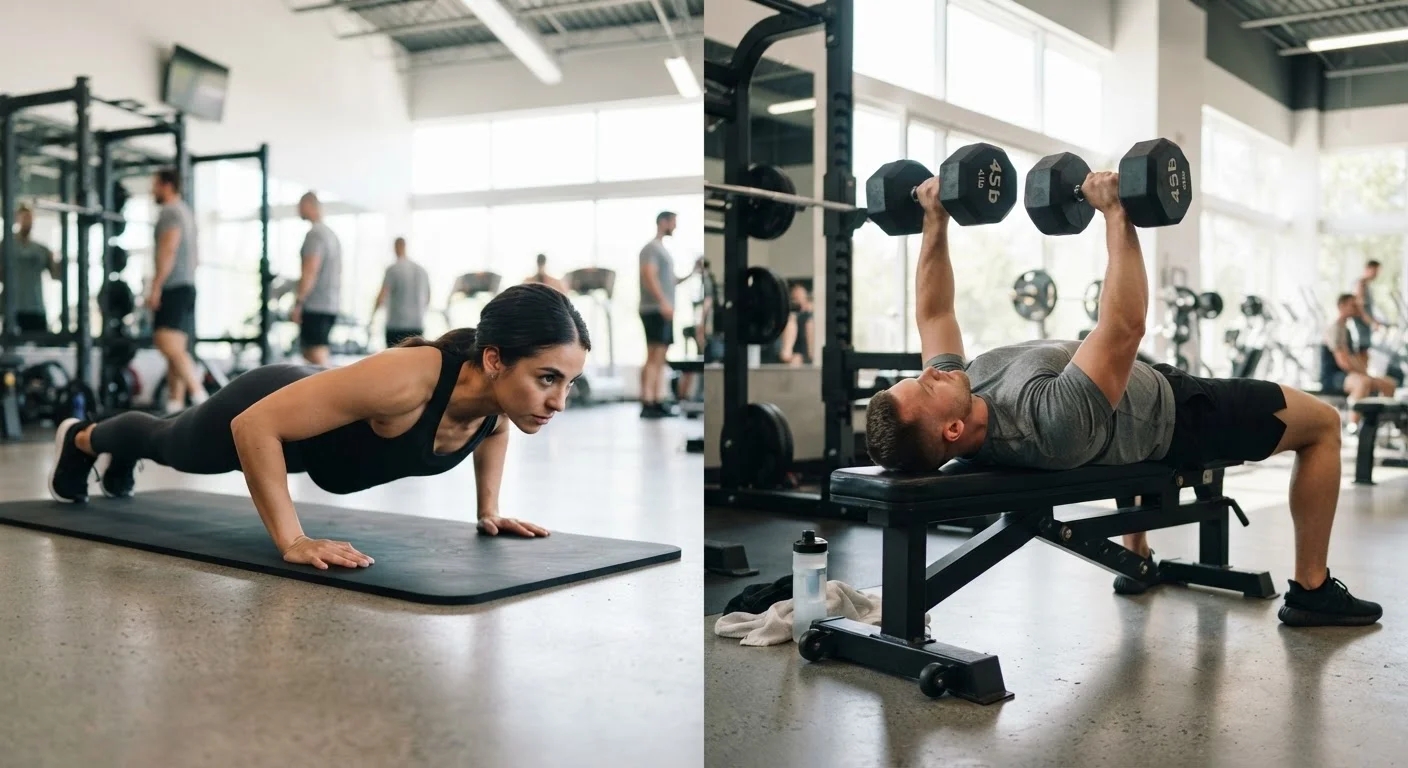
Bodyweight training uses your own mass as resistance. Movements like push-ups, squats, pull-ups, and planks challenge multiple muscle groups simultaneously and demand significant coordination and stability. The nervous system is heavily engaged to control movement quality.
Free weight training uses external loads - dumbbells, barbells, or kettlebells - allowing resistance to be adjusted in small, precise increments. This supports a concept called progressive overload, where you gradually increase the challenge placed on muscles over time. Progressive overload is one of the most well-supported mechanisms behind consistent strength and muscle gains.
Both approaches trigger muscle fiber recruitment and, with adequate recovery and nutrition, lead to strength adaptation. The difference lies in how easily and specifically each method can be scaled.
Where Bodyweight Training Shines
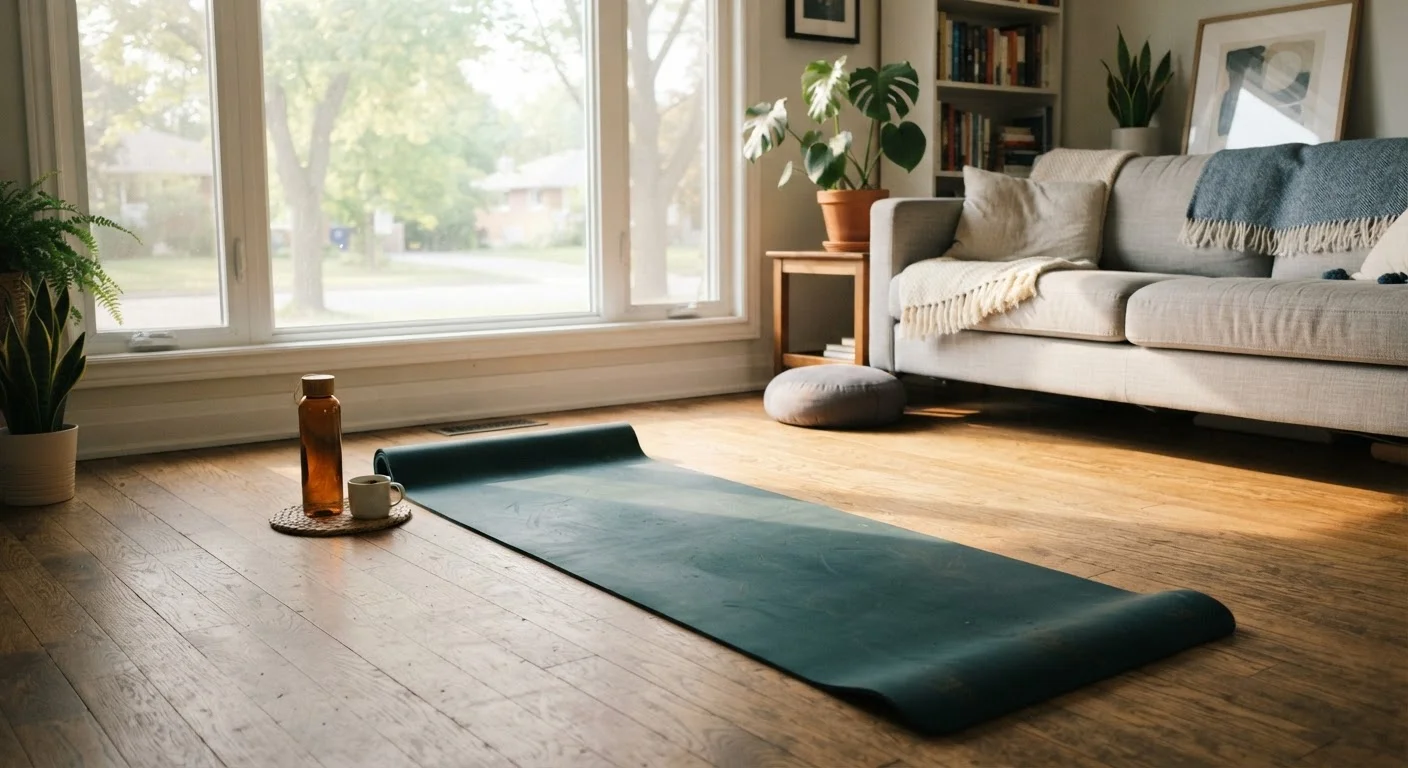
Bodyweight training removes virtually every barrier to getting started. No gym membership, no equipment, no commute - just space and intention. This makes it particularly valuable for beginners or anyone building consistency from scratch. See our guide to building a weekly exercise routine for practical ways to structure early training sessions.
Because bodyweight movements require your body to stabilize itself during exercise, they tend to develop joint stability, balance, and coordination alongside raw strength. Movements like single-leg squats or push-up variations engage deep stabilizing muscles that isolation exercises often miss.
Bodyweight training also scales in complexity rather than just load - you can progress from a standard push-up to an archer push-up to a one-arm variation, each meaningfully increasing difficulty without adding external weight.
Start Where You Are, Not Where You Think You Should Be
If bodyweight movements feel easy, try slowing down reps or reducing your base of support before jumping to weights. If free weights feel intimidating, starting with lighter loads and focusing on movement quality first pays dividends long-term. Consistency and good form matter more than the tool you're using.
Limitation to note: For advanced trainees, making bodyweight exercises difficult enough to continue driving strength gains requires considerable creativity. Exercises like one-arm pull-ups are technically demanding, meaning the path to progressive overload becomes less straightforward over time.
Where Free Weights Have the Edge
Free weights offer a more direct, measurable path to progressive overload. Adding five pounds to a barbell or moving up a dumbbell size is simple and quantifiable - which makes tracking progress and structuring a long-term program more straightforward.
Research on resistance training consistently points to progressive overload as a primary driver of hypertrophy (muscle growth) and strength gains. Free weights make this mechanism easier to apply systematically, particularly for intermediate and advanced exercisers.
Free weights also allow greater specificity. You can isolate muscle groups more deliberately, which can be valuable for rehabilitation, correcting muscular imbalances, or targeted development. For those starting strength training after 40, this ability to carefully control load is often especially useful.
| Bodyweight Training | Free Weight Training | |
|---|---|---|
| Equipment needed | None required | Dumbbells, barbells, or kettlebells |
| Progressive overload | Achieved through movement complexity | Achieved through incremental load increases |
| Beginner accessibility | Very high - low barrier to entry | Moderate - technique learning required |
| Muscle isolation | Limited; mostly compound movements | High; can target specific muscle groups |
| Joint stability development | Strong - demands active stabilization | Moderate - varies by exercise |
| Long-term scalability | More complex at advanced levels | Straightforward with consistent overload |
It's worth noting that free weights require learning proper technique to use safely. Poor form under load - particularly with heavier barbells - raises injury risk. Investing time in learning movement fundamentals before increasing weight is always worth it.
Building a Routine That Uses Both
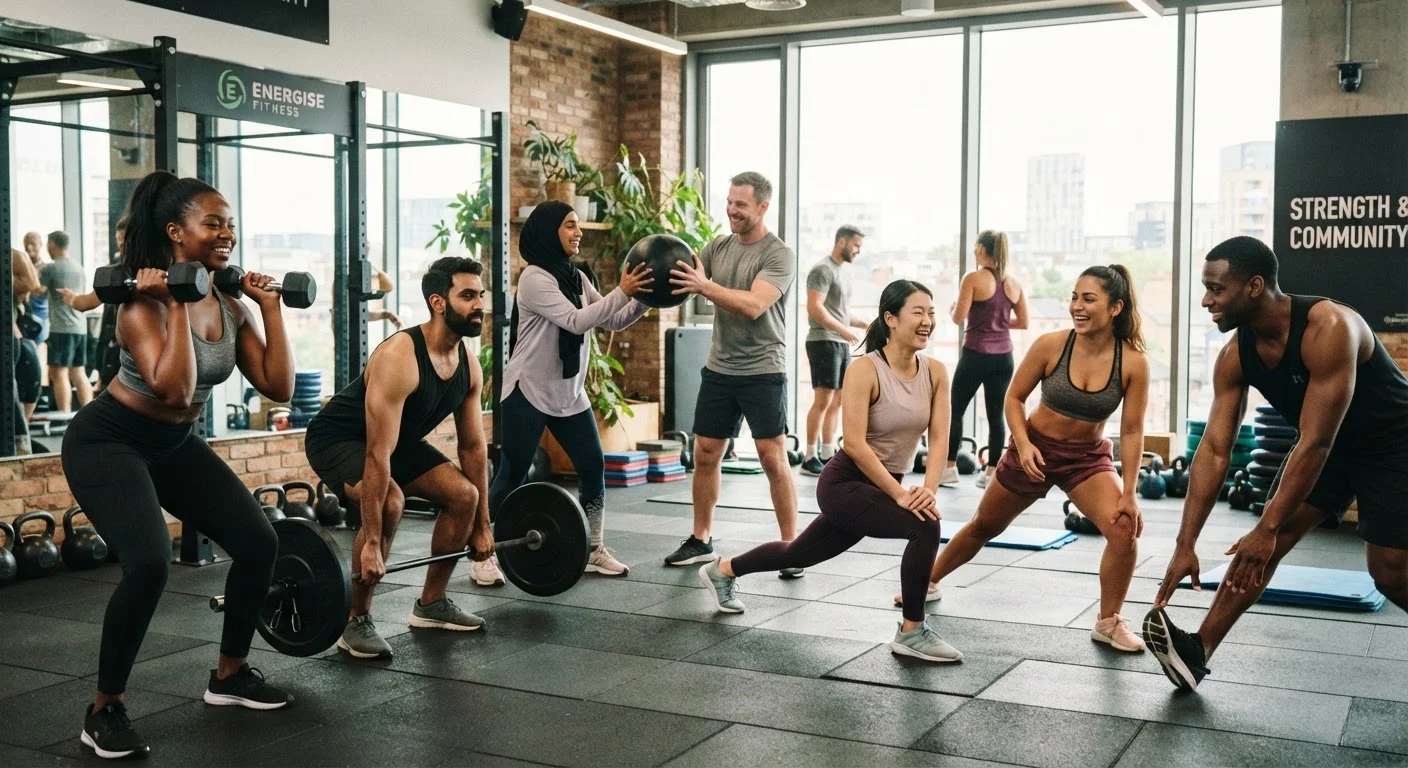
The framing of bodyweight versus free weights can obscure a practical reality: most well-rounded fitness routines incorporate elements of both. A program might use free weight squats and deadlifts as primary strength builders, while relying on push-ups, pull-ups, or planks for accessory work, warm-ups, or travel days.
If you're weighing the broader context of where you'll train, our gym vs. home workout comparison covers the practical trade-offs in detail. And for a wider view of how strength fits into overall health, understanding cardio vs. strength training offers useful context.
The goal is movement that is consistent, appropriately challenging, and sustainable over time. Whether that means a pair of dumbbells, a pull-up bar, or both, the approach that keeps you moving regularly is the one worth building on.
This article is for general informational and educational purposes only and is not a substitute for professional medical or fitness advice. Consult a qualified healthcare provider or certified fitness professional before beginning any new exercise program, particularly if you have existing health conditions or injuries.