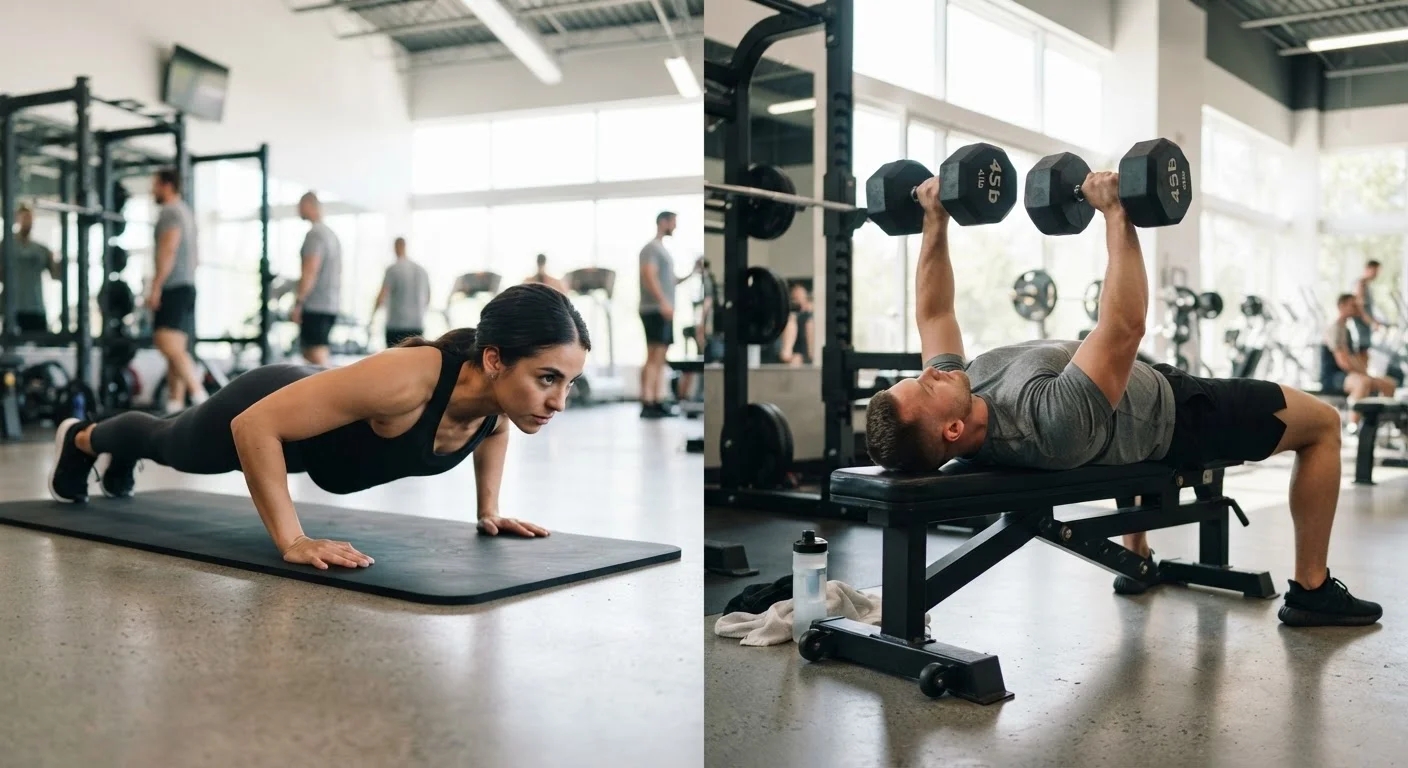
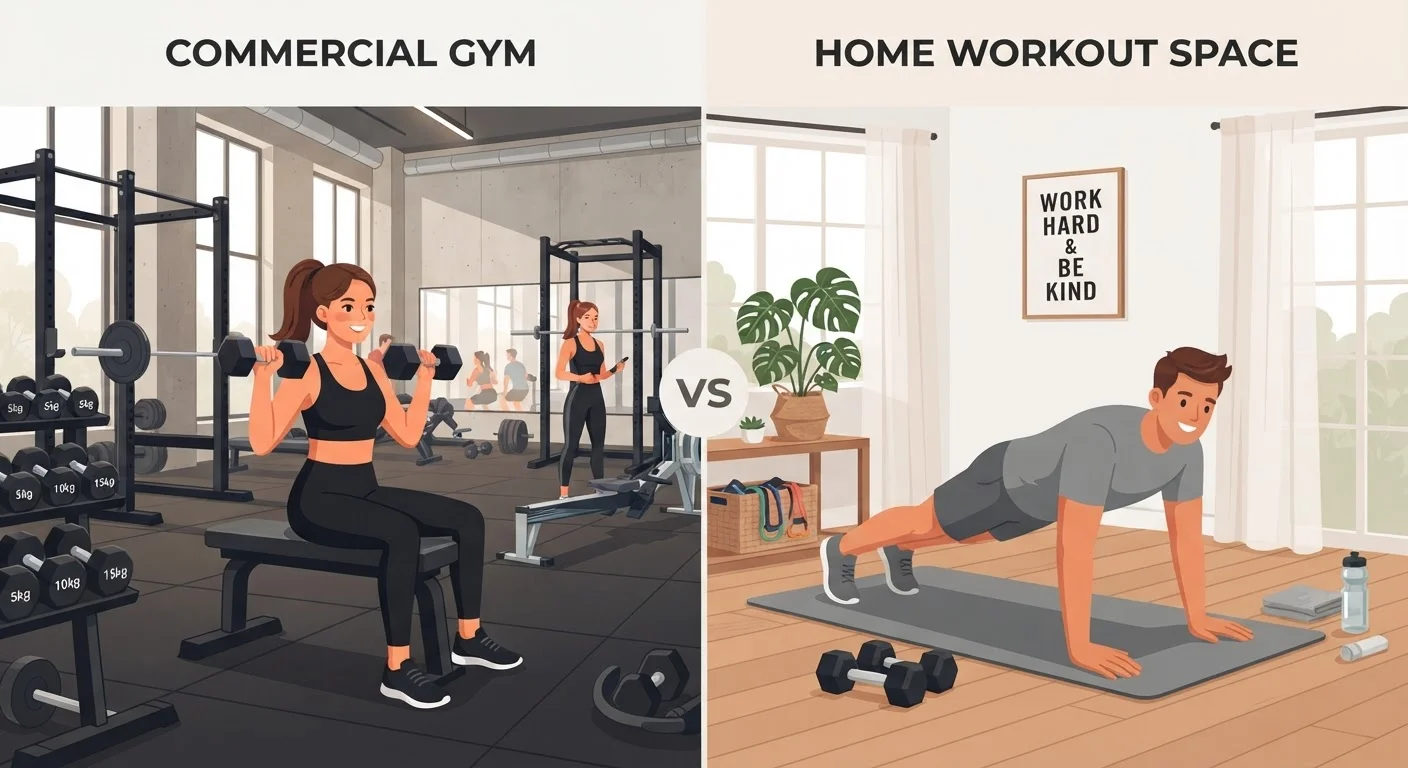
The Real Cost Comparison
Cost is often the first factor people consider - and it's more nuanced than a simple monthly fee. Gym memberships in the U.S. typically range from around $10 per month at budget facilities to $100 or more at premium clubs with amenities like pools, saunas, and personal training. Over a year, that adds up quickly.
Home workouts carry upfront costs instead of recurring ones. A quality yoga mat, a set of resistance bands, and a pair of adjustable dumbbells can serve most fitness goals for years. More elaborate setups - a treadmill, a power rack, or a smart fitness device - can cost several hundred to several thousand dollars, though they're one-time investments.
| Criterion | Gym Membership | Home Workouts |
|---|---|---|
| Typical cost | $10-$100+/month ongoing | One-time equipment investment |
| Equipment variety | Extensive (machines, free weights, cardio) | Limited unless heavily invested |
| Convenience | Requires commute and scheduling | Available anytime, no travel needed |
| Accountability | Social environment supports consistency | Relies on self-motivation |
| Privacy | Shared public space | Fully private |
| Beginner-friendliness | Can feel intimidating at first | Low-pressure starting environment |
| Advanced training potential | High - specialized equipment available | Limited without major investment |
When thinking about value, consider how often you'll realistically use whichever setup you choose. A $30/month gym membership used three times a week costs far less per session than one used twice a month. Similarly, home equipment that gathers dust is no bargain. If you're weighing bigger financial trade-offs in your life, the same kind of cost-per-use thinking applies - much like evaluating different financial accounts before committing to one.
Convenience, Variety, and Accountability
Convenience is where home workouts often pull ahead. There's no commute, no waiting for equipment, and no need to pack a bag. You can exercise in whatever clothes you like, at whatever hour suits you. That flexibility can be especially meaningful for parents, shift workers, or anyone with an irregular schedule.
Gyms, on the other hand, offer variety that's difficult to match at home without significant investment. Cable machines, squat racks, rowing ergometers, group fitness classes, and swimming pools are hard to replicate in a spare bedroom. For people pursuing specific strength, athletic, or rehabilitation goals, that variety matters.
~$800
Average annual U.S. gym membership cost
Industry estimates suggest the average American pays between $40-$70 per month for a gym membership, though many report rarely using it.
~50%
Gym members who stop going within 6 months
Research on exercise adherence suggests roughly half of new gym-goers significantly reduce or stop attendance within the first six months.
150 min
Weekly moderate activity recommended by health guidelines
U.S. physical activity guidelines recommend at least 150 minutes of moderate-intensity aerobic activity per week for most adults - achievable in either setting.
Accountability is where the gym has a genuine edge for many people. The act of leaving home and entering a dedicated fitness space signals to your brain that exercise is the priority. Some people also find the social element motivating - regulars recognize each other, and group classes create a shared sense of effort. Home workouts require you to generate that motivation internally, which is absolutely possible but demands more deliberate habit-building. If you're starting from scratch, our guide on building a weekly exercise routine offers practical structure for either setting.
What You Can Actually Accomplish in Each Setting
A common misconception is that home workouts are inherently less effective. Research consistently shows that bodyweight training, resistance bands, and minimal equipment can deliver meaningful strength, cardiovascular, and mobility improvements when applied with appropriate effort and progressive challenge. Bodyweight and free weight training both build real strength - the method matters less than the consistency.
That said, advanced strength athletes, powerlifters, or those training for specific sports will genuinely need equipment that gyms provide. Barbells loaded with heavy weight, cable systems for targeted muscle work, and specialty machines are difficult to substitute.
A Hybrid Approach Is Always an Option
Many people find that combining both methods works best - using a gym for heavier lifting or group classes a few days a week, and relying on home workouts when time or schedule doesn't allow for a trip. There's no rule requiring an all-or-nothing commitment. Flexibility in your approach often supports better long-term consistency than rigid adherence to one method.
For general fitness - maintaining a healthy weight, improving cardiovascular health, building functional strength, and managing stress - both settings are fully capable of delivering results. The deciding factor tends to be which environment you'll actually show up to, week after week. For a deeper look at how different training styles affect your body, see our breakdown of cardio vs. strength training.
This article is for general informational purposes only and is not a substitute for personalized advice from a qualified fitness or healthcare professional. Consult a professional before starting any new exercise program, especially if you have existing health conditions or injuries.