
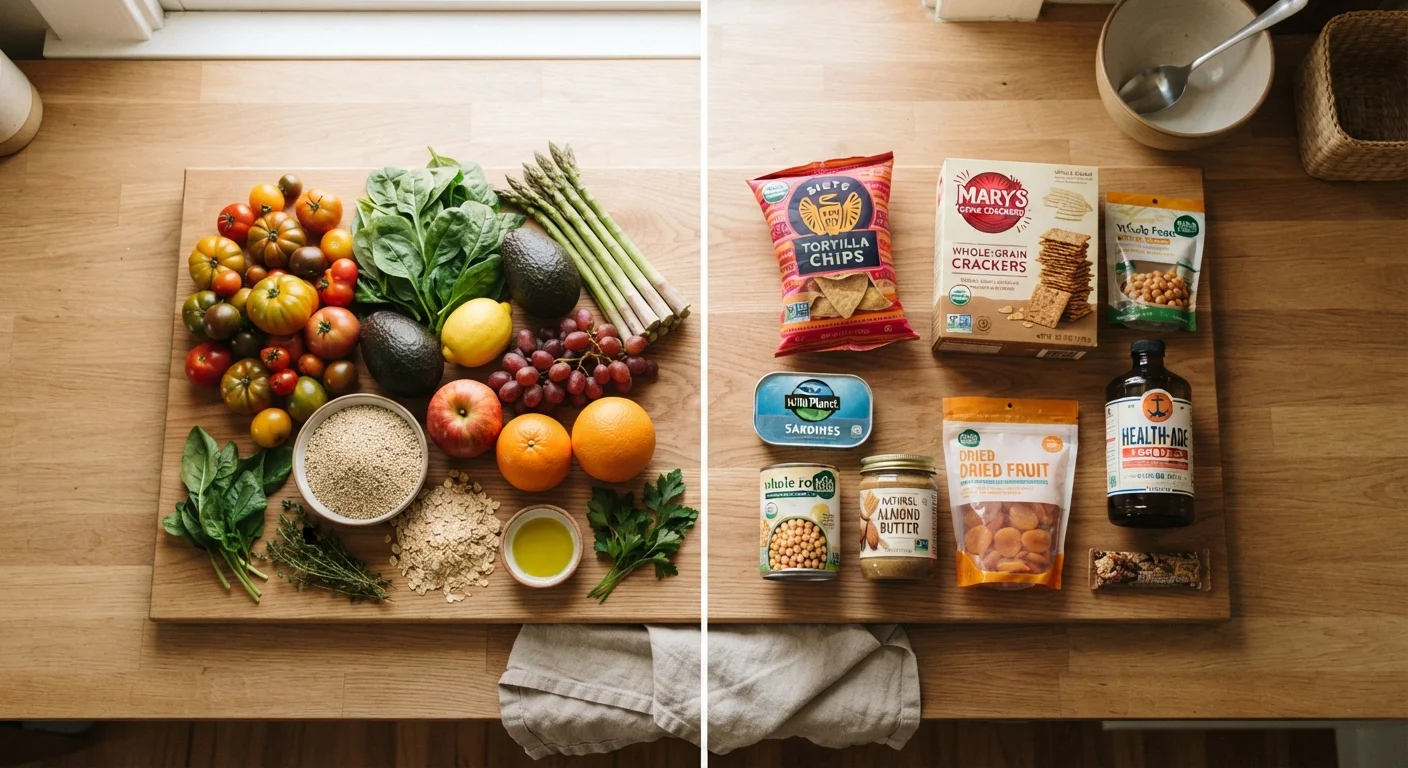
What 'Processed' Actually Means
The word "processed" gets used as a blanket criticism of modern food, but it describes a far wider range than most people realize. By definition, any food that has been altered from its natural state - washed, cut, cooked, frozen, fermented, or packaged - has been processed to some degree. That means pasteurized milk, frozen peas, and canned tomatoes are technically processed foods.
Food scientists and public health researchers often use a classification system called NOVA, which groups foods into four categories based on the extent and purpose of processing: unprocessed or minimally processed foods (fresh produce, plain meats, eggs), processed culinary ingredients (oils, flour, salt), processed foods (canned beans, cheese, cured meats), and ultra-processed foods (packaged snacks, sugary beverages, instant noodles engineered for palatability).
The distinction that matters most for health is not processed vs. unprocessed - it's minimally processed vs. ultra-processed. Ultra-processed products tend to be formulated with industrial additives, preservatives, colorings, and flavor enhancers, and are typically low in fiber and high in added sugars, sodium, and refined fats.
The NOVA Classification Is a Research Tool
The NOVA system was developed by researchers at the University of São Paulo and is used in public health studies to examine links between food processing and health outcomes. It's a useful conceptual framework, not an official dietary guideline from a regulatory body like the FDA or USDA. When researchers reference "ultra-processed food" in health studies, they're typically using NOVA's criteria - which is important context when interpreting headlines about processed food and disease risk.
How Whole Foods Compare Nutritionally
Whole foods - think fresh fruit, vegetables, legumes, whole grains, nuts, seeds, and unprocessed animal proteins - retain their naturally occurring nutrients largely intact. Fiber, phytonutrients, and micronutrients exist in foods in complex combinations that researchers are still working to fully understand.
Processing can alter this profile in meaningful ways. Refining whole wheat into white flour, for example, strips away the bran and germ - removing the majority of the fiber and several B vitamins. Food manufacturers sometimes re-add certain nutrients afterward (this is called fortification), but the overall nutritional matrix may still differ from the original whole grain.
| Criterion | Whole Foods | Processed Foods |
|---|---|---|
| Fiber content | Naturally high; intact | Often reduced or absent |
| Added sugars | None | Common in ultra-processed products |
| Sodium levels | Naturally low | Frequently high in packaged foods |
| Shelf life | Shorter; requires refrigeration | Longer; engineered for stability |
| Convenience | Requires prep time | Ready-to-eat or quick to prepare |
| Nutrient density | High; complex nutrient matrix | Variable; fortification may restore some |
| Ingredient transparency | Single ingredient by nature | Multi-ingredient; additives common |
That said, some processing actually increases nutrient availability. Cooking tomatoes raises the bioavailability of lycopene. Fermenting dairy into yogurt creates probiotics. The relationship between processing and nutrition isn't uniformly negative - which is why looking at specific foods, rather than broad categories, is more useful.
For guidance on reading the details on any package, the nutrition label explainer breaks down what each section of a food label is actually telling you.
Practical Ways to Shift Your Eating Patterns
Improving your diet doesn't require eliminating all packaged food or achieving some idealized version of "clean eating." A more realistic and sustainable approach focuses on proportion - making whole and minimally processed foods the foundation of most meals, while leaving room for more processed options without guilt or rigidity.
A few practical entry points:
- Anchor meals in produce and whole grains. Vegetables, fruits, legumes, and intact grains (like oats, brown rice, or quinoa) naturally crowd out lower-quality options when they take up most of the plate.
- Check ingredient lists, not just front-of-package claims. A short ingredient list of recognizable items is generally a good signal. A long list of additives, emulsifiers, and artificial flavors suggests a more heavily processed product.
- Use minimally processed staples strategically. Canned beans, frozen vegetables, plain Greek yogurt, and canned fish are genuinely nutritious and time-saving - they don't require apology.
- Vary protein sources. The guide to protein across eating styles compares animal and plant proteins to help you find options that fit your diet and lifestyle.
When shopping, a checklist approach can help you stay intentional without overcomplicating things. The smarter grocery shopping guide offers practical steps for evaluating packaged goods before they go in your cart.
57%
Share of US calorie intake from ultra-processed foods
Research published in BMJ Open estimated that ultra-processed foods account for roughly 57% of daily caloric intake among US adults, based on national dietary survey data.
~2,300 mg
Average daily sodium intake in US adults
According to the CDC, the average American consumes approximately 3,400 mg of sodium per day - well above the 2,300 mg daily limit recommended in the Dietary Guidelines for Americans - with packaged and processed foods as the primary source.
This article is for general informational and educational purposes only and does not constitute medical or dietary advice. Consult a qualified healthcare professional or registered dietitian for guidance specific to your health needs.