
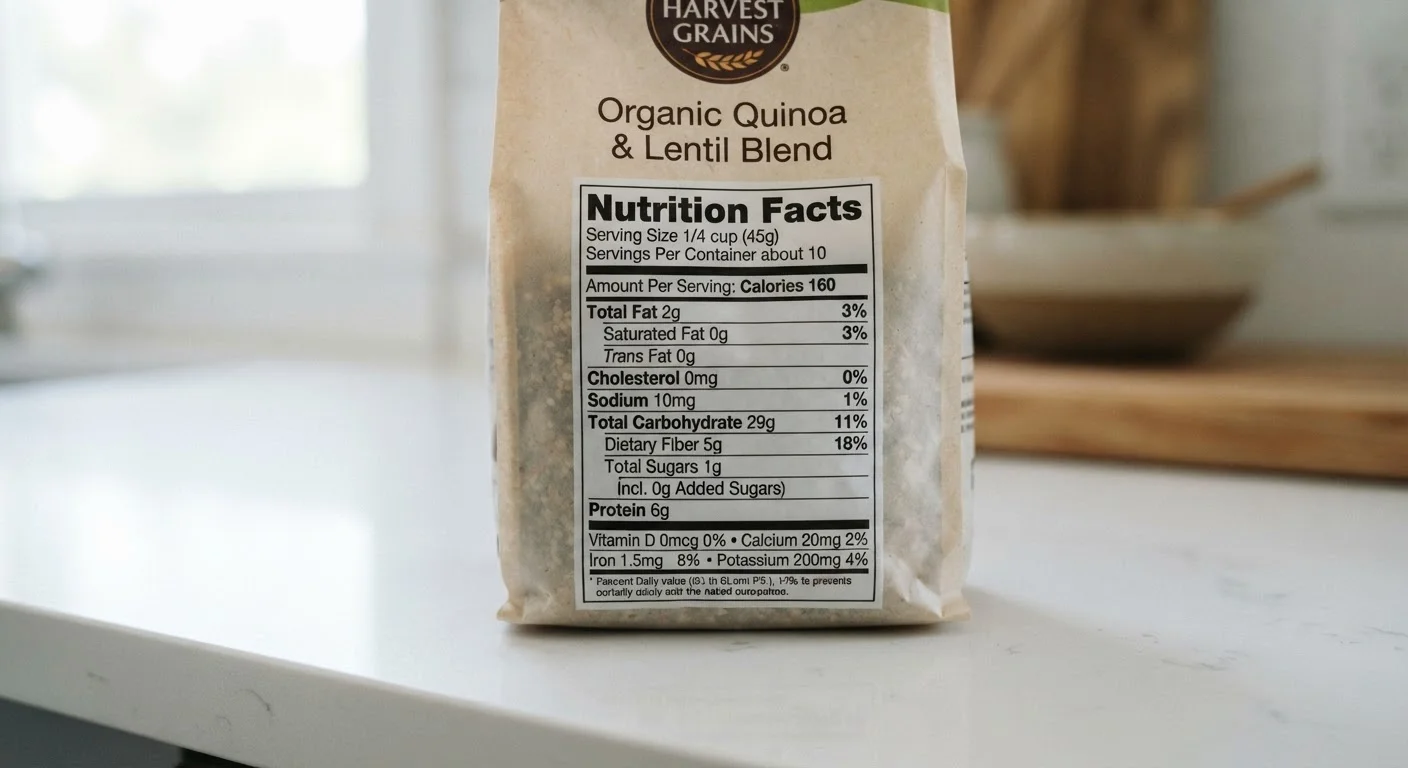
Why the Nutrition Label Exists - and What It Can Tell You
The Nutrition Facts label is a federally regulated format required by the U.S. Food and Drug Administration (FDA) on most packaged foods. Its purpose is to give consumers standardized, comparable information about what they're eating. The current format was updated in 2016 to reflect newer nutritional science - notably adding the Added Sugars line and enlarging the calorie display.
Reading a label well doesn't require a nutrition degree. It requires knowing which numbers matter most for your goals and how to interpret them in context. The label won't tell you whether a food is 'good' or 'bad' - that framing isn't particularly useful anyway - but it will tell you exactly what you're putting into your body.
Labels Inform, They Don't Diagnose
Nutrition labels provide general dietary information, not medical guidance. If you have a specific health condition, food allergy, or are managing a chronic illness, consult a registered dietitian or your healthcare provider before making significant dietary changes based on label reading alone.
Nutrition Facts Label
The FDA-mandated panel on packaged foods that lists serving size, calorie count, macronutrients, micronutrients, and % Daily Values.
Ingredient List
Located below or near the Nutrition Facts panel, it lists every ingredient in descending order by weight.
What you will need
How to Read a Nutrition Label Step by Step
Follow these steps the next time you pick up a packaged food item. With practice, the whole process takes under a minute.
Find the Serving Size and Number of Servings
The very top of the Nutrition Facts panel shows the serving size (e.g., "2 crackers" or "1 cup") and the total number of servings per container. Every single number that follows - calories, fat, sodium, everything - is calculated for one serving, not the whole package.
If a bag of chips lists 3 servings per container and you eat the whole bag, triple every number on the label to understand what you actually consumed.
Check the Calorie Count
Just below the serving information, you'll find Calories displayed in bold, large type. This figure represents the total energy provided by one serving from all three macronutrients: fat, carbohydrates, and protein.
Calories alone don't tell the full nutritional story - a 200-calorie serving of nuts and a 200-calorie serving of candy are nutritionally very different - but the number is a useful starting point for overall energy awareness.
Review Nutrients to Limit
The next section lists nutrients most Americans tend to consume in excess. Pay attention to:
- Saturated fat - linked to cardiovascular health concerns when consumed in high amounts
- Sodium - major dietary contributor to elevated blood pressure in salt-sensitive individuals
- Added sugars - distinct from naturally occurring sugars, these are incorporated during processing and provide calories with little nutritional benefit
The label separates Total Sugars from Added Sugars, which is a meaningful distinction. A plain yogurt may have 10g total sugars from lactose (naturally occurring) but 0g added sugars, while a flavored version may show 15g added sugars.
Look for Nutrients to Get Enough Of
Below the 'limit' nutrients, the label shows nutrients many Americans fall short on. These include:
- Dietary fiber - supports digestive health and may help regulate blood sugar and cholesterol
- Vitamin D
- Calcium
- Iron
- Potassium
For these nutrients, a higher % Daily Value per serving is generally beneficial. See our guide to dietary fiber for a closer look at why fiber deserves special attention.
Interpret the % Daily Value Column
The % Daily Value (%DV) column on the right-hand side shows how much each nutrient in one serving contributes toward a general daily intake reference based on a 2,000-calorie diet. This figure is a benchmarking tool, not a personal target - individual calorie needs vary by age, sex, weight, and activity level.
Still, %DV is one of the fastest ways to compare two products: if cereal A has 15% DV for fiber and cereal B has 4%, the difference is immediately clear without doing any math.
Scan the Ingredient List
The ingredient list appears separately from the Nutrition Facts panel but is equally informative. Ingredients are listed in descending order by weight, meaning the first ingredient makes up the largest proportion of the product.
A product whose first three ingredients are whole grains, water, and nuts is nutritionally different from one whose first three are refined flour, sugar, and partially hydrogenated oil - even if the calorie count is identical.
For more context on how ingredient composition affects food quality, see our article on whole foods vs. processed foods.
Use the 5/20 Rule as a Quick Guide
A % Daily Value of 5% or less is generally considered low for any nutrient; 20% or more is considered high. Use this as a fast reference when scanning labels - aim for higher %DV on nutrients you want more of (like fiber), and lower %DV on those to limit (like sodium and saturated fat).
Don't Confuse 'Per Serving' With 'Per Package'
Many packages contain two, three, or even more servings - but the label only shows numbers for one. Eating the whole package means multiplying every nutrient figure by the number of servings listed. This is one of the most common sources of underestimating calorie and sugar intake.
Putting It Into Practice
Label literacy is a skill that compounds over time. The more often you glance at the panel before putting something in your cart, the faster the key numbers jump out at you. You don't need to memorize daily values or track every gram - the goal is to build a general sense of what you're eating and to notice meaningful differences between products.
If you want to go further, pairing label reading with smart grocery habits adds another layer of awareness. Our guide to unit pricing is a useful complement - understanding true cost per ounce, alongside nutritional content, helps you shop both wisely and healthfully.
This article is for general informational and educational purposes only and is not a substitute for professional medical or dietary advice. Consult a qualified healthcare provider or registered dietitian for guidance specific to your health needs.