
What Bulk Buying Actually Means for Your Wallet
Bulk buying - purchasing goods in larger quantities than you'd need in the short term - is a staple strategy in American consumer culture. Warehouse club memberships have built entire business models around it. The core promise is straightforward: buy more units at once, pay less per unit. But that promise comes with conditions that are easy to overlook at the register.
The per-unit savings are real in many categories. Paper towels, laundry detergent, canned goods, and other non-perishables often do cost meaningfully less per ounce or count when purchased in bulk. To actually verify this, you need to compare unit prices - not sticker prices. Unit pricing breaks down the true cost per ounce, count, or measure and is the only reliable way to confirm you're actually getting a deal.
What bulk buying does not do is guarantee savings automatically. The financial equation depends heavily on whether you'll actually use what you buy, how soon, and what storing it costs you - in space, spoilage risk, and cash tied up in inventory.
Lower cost per unit on staple goods
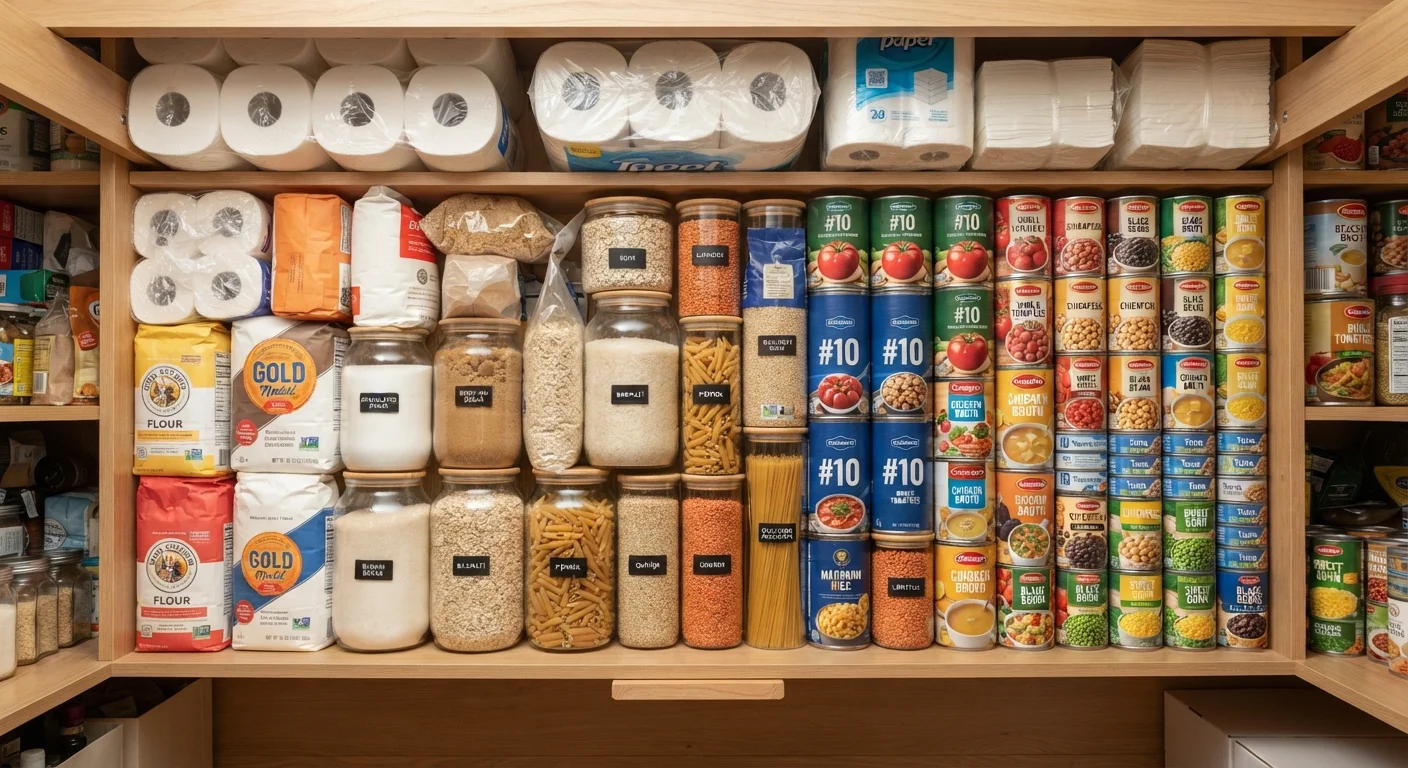
Non-perishables like dish soap, toilet paper, and canned beans consistently show lower unit prices when purchased in bulk, particularly at warehouse clubs. Over time, these differences compound into meaningful household savings.
Fewer shopping trips and less decision fatigue
Keeping a well-stocked pantry of essentials reduces the frequency of routine shopping runs and the mental overhead of constantly reordering the same items.
Buffer against short-term price increases
Stocking up on staples at current prices provides a hedge if prices rise later - a practical advantage for households who track grocery costs closely.
Reduces per-use cost on household consumables
High-use items like laundry detergent, trash bags, and cleaning supplies have predictable consumption rates, making them strong candidates where the per-use cost drops noticeably with bulk sizing.
Where Bulk Buying Works Against You
The risks of bulk buying are underappreciated precisely because the upside is so visible. You see the lower unit price and the big package. What you don't immediately see is the opportunity cost of the cash spent, the shelf space consumed, or the likelihood that half the purchase ends up in the trash.
Upfront cash outlay strains short-term budget
Bulk purchases require spending significantly more in a single transaction. For households managing tight monthly cash flow, this can create gaps elsewhere in the budget even when the long-term math is favorable.
Spoilage and expiration waste negates savings
Perishables and products with finite shelf lives frequently expire before being fully used, turning the apparent savings into a net loss when the wasted product is factored in.
Requires adequate, appropriate storage space
Large quantities need dry, temperature-stable storage - something not all homes have in abundance. Inadequate conditions accelerate degradation of food, cleaning products, and paper goods alike.
Bulk isn't always the lowest unit price
Retailers occasionally price regular or store-brand sizes competitively with bulk, and membership fees at warehouse clubs can reduce or eliminate the effective savings on smaller household purchases.
Increased availability can raise consumption rates
Consumer behavior research suggests people use more of a product when they perceive they have an abundant supply, which can partially or fully offset the savings gained from buying in larger quantities.
Perishables are the clearest trap. Buying a 5-pound bag of salad greens because it was cheaper per ounce only saves money if your household actually eats it before it wilts. Similarly, bulk purchases of items you use infrequently - specialty spices, niche cleaning products, seasonal goods - often sit unused well past their prime. Spoilage and expiration don't just waste product; they waste the entire purchase price.
There's also a subtler financial risk worth flagging: bulk buying can encourage spending beyond what you planned. Large quantities on hand have been shown in consumer research to increase usage rates - people tend to use more when they perceive abundance, which can offset savings.
Membership Fees Change the Calculation
Warehouse club memberships typically run $50-$130 per year depending on the tier. That annual fee is a fixed cost that must be recovered through actual savings before any purchase breaks even. Households that shop infrequently or in small quantities may find that a standard grocery store - especially one with competitive store-brand pricing - offers comparable or better value without the membership overhead. Factor the fee into your annual savings estimate, not just the per-trip unit price.
A Practical Framework for Deciding What to Buy in Bulk
Not every category deserves the same treatment. A reliable way to evaluate any potential bulk purchase is to ask four questions before committing:
- Will we use all of it before it expires or degrades? If the honest answer is uncertain, the bulk size is probably too large.
- Do we have appropriate storage? Bulk goods stored improperly lose quality fast. Storage quality matters - inadequate containers or shelving can lead to waste that erases any savings.
- Is the unit price genuinely lower? Verify against regular retail and store-brand pricing. Store brands at a standard retailer sometimes undercut bulk club pricing without requiring a membership fee.
- Can we absorb the upfront cost without disrupting our budget? Bulk buying is a form of prepayment. It only makes sense within a broader budgeting framework that accounts for lumpy, irregular spending.
~$5,000
Average American household annual food waste cost
The USDA has estimated that American families discard a substantial portion of purchased food annually, with some analyses placing the per-household cost in the thousands of dollars - a risk amplified by over-buying perishables.
10-30%
Typical unit-price savings on bulk non-perishables
Consumer advocacy research generally finds per-unit cost reductions in this range for staple non-perishables at warehouse clubs, though the exact figure varies significantly by product category and retailer.
Applying this framework consistently - rather than defaulting to bulk as a reflex - is what separates strategic stocking up from accidental overspending. For a broader look at smart purchasing habits across categories, see this consumer field guide.