
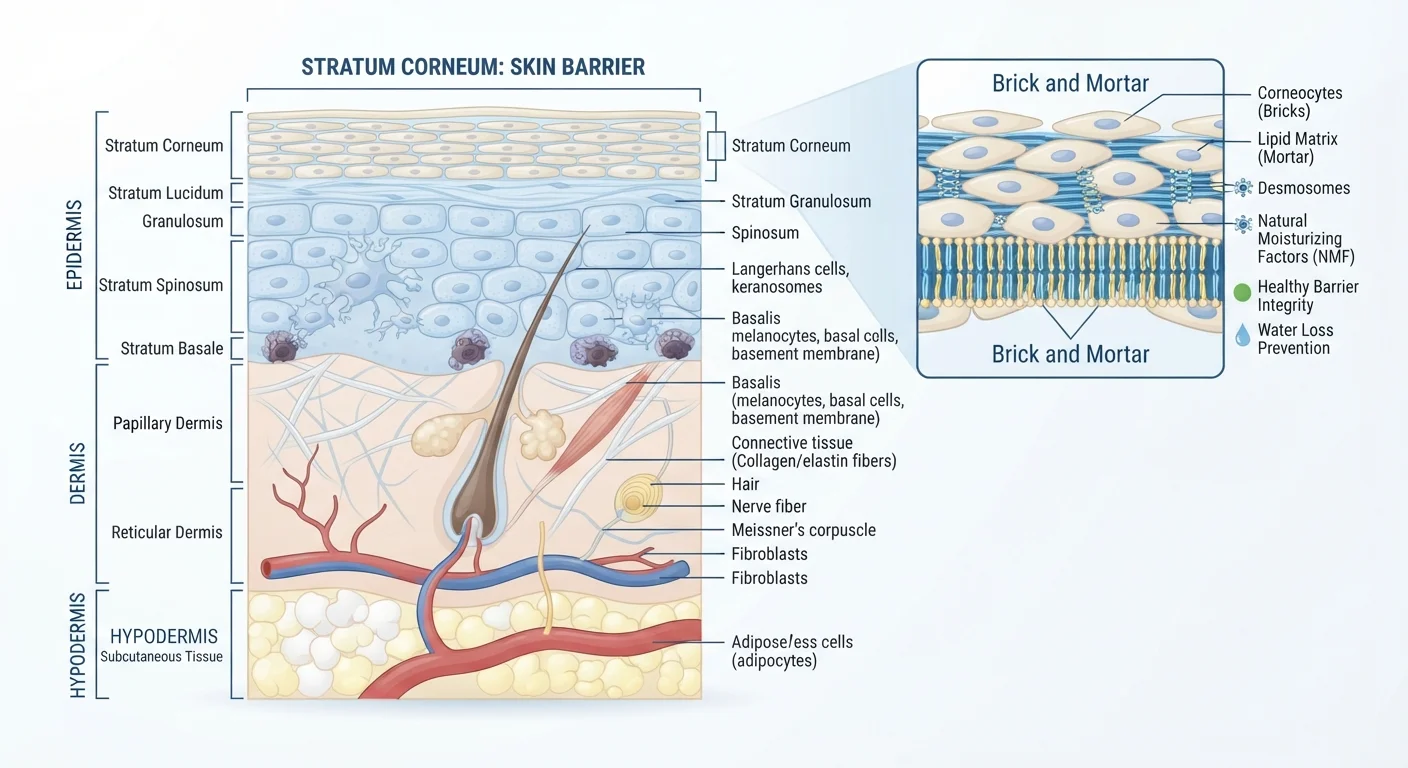
What the Skin Barrier Actually Is
Your skin is made up of several distinct layers, but the one you interact with every day — and the one most affected by your skincare routine — is the outermost layer called the stratum corneum. Scientists often describe its structure using a 'brick and mortar' analogy: the 'bricks' are dead skin cells called corneocytes, and the 'mortar' is a carefully balanced mixture of lipids — specifically ceramides, cholesterol, and free fatty acids.
That lipid mortar is what makes the barrier functional. Without it, moisture evaporates freely from the skin (a process called transepidermal water loss, or TEWL), and external irritants, allergens, and microbes can enter more easily. A well-functioning barrier keeps that exchange tightly regulated.
It's worth noting that the skin barrier isn't static — it constantly renews itself through a natural shedding process called desquamation. Understanding this helps explain why some skincare habits help, and others quietly undermine, its integrity over time.
The Barrier Is Not a Static Wall
It's easy to picture the skin barrier as a fixed structure, but it's actually in a constant state of renewal. Corneocytes are shed and replaced continuously, and the lipid matrix is replenished by the skin's own sebaceous activity as well as topical products. This dynamic quality is why consistent daily habits matter more than any single product intervention.
What Disrupts the Barrier — and Why It Matters
Barrier disruption is more common than most people realize, and everyday habits are often the culprit. The most frequent offenders include:
- Over-cleansing or using harsh surfactants that strip natural lipids
- Over-exfoliating with acids or physical scrubs, which removes too much of the stratum corneum before it can regenerate
- Extreme weather — dry cold air and low humidity accelerate moisture loss
- Fragrance and alcohol-heavy products that irritate or dehydrate the skin's surface
When the barrier is weakened, you may notice dryness, tightness, redness, or unexpected breakouts. Skin can also become reactive to products it previously tolerated. These are signs that the barrier needs support, not more aggressive treatment. If symptoms persist or worsen, a board-certified dermatologist is the right person to consult — not an expanded product arsenal.
Recognizing the warning signs that your routine is causing damage is one of the most underrated skincare skills you can develop.
When in Doubt, Scale Back
If your skin suddenly becomes reactive or irritated, the most evidence-aligned first step is simplifying — not adding new products. A gentle cleanser, a basic moisturizer, and sunscreen is a solid holding pattern while your barrier recovers. Introduce actives one at a time once your skin has stabilized.
How to Support a Healthy Skin Barrier
Supporting your skin barrier doesn't require an elaborate routine — in fact, simplicity is often the point. Dermatology research consistently points to a few evidence-backed principles:
- Cleanse gently. Choose a low-pH, fragrance-free cleanser that removes dirt without stripping lipids. Twice daily is typically sufficient for most people.
- Moisturize strategically. Look for formulations containing ceramides, glycerin, or hyaluronic acid — ingredients that replenish moisture and reinforce the lipid layer.
- Limit exfoliation. One to two times per week is a reasonable general guideline, though the ideal frequency varies by individual skin tolerance.
- Apply sunscreen daily. UV radiation is a well-documented source of barrier stress and cumulative skin damage. Daily sun protection is the most evidence-backed habit in skincare.
Understanding the barrier also puts popular skincare claims into better perspective. For a grounded look at what the evidence actually supports, many widely held beauty beliefs don't hold up to scrutiny.
Once you understand what the barrier needs, building a routine around it becomes more intuitive. Each step in a core skincare routine plays a specific role — and knowing the barrier science helps you evaluate what's worth including.
~20 μm
Thickness of the stratum corneum
Despite being roughly 20 micrometers thin — thinner than a sheet of plastic wrap — the stratum corneum performs the skin's most critical protective functions.
50%
Ceramide share of skin barrier lipids
Research in dermatology literature estimates ceramides make up approximately 50% of the lipid composition in the stratum corneum, making them central to barrier integrity.
2–4 weeks
Typical skin cell turnover cycle
The stratum corneum naturally renews itself roughly every two to four weeks in healthy adults, though this rate slows with age and can be disrupted by environmental stress.
This article is for general informational and educational purposes only and is not a substitute for professional medical or dermatological advice. Consult a qualified healthcare provider for concerns about your skin health.