What We Actually Mean by 'Fitted' and 'Oversized'
In fashion conversations, these two words get thrown around loosely — and that's where confusion starts. Fitted doesn't mean tight or restrictive. It refers to clothing cut close enough to the body that its shape is visible, without pulling, bunching, or compressing. Think a well-cut blazer that skims the shoulders cleanly, or trousers with a tailored leg that follows your silhouette without clinging.
Oversized, meanwhile, means the garment is intentionally larger than your body's measurements — usually by one or more size increments — creating deliberate volume, drape, or a relaxed drop in the shoulders. The operative word is intentionally. A shirt that's simply too big because you bought the wrong size doesn't carry the same visual effect as one chosen for its volume.
Understanding this distinction matters because the goal in either case is the same: clothes that look like you meant to put them on. As our guide on why outfits fall apart explains, unintentional fit problems are almost always what separates a polished look from one that feels off.
The Core Principle: Proportion, Not Rules
Here's the foundational idea that makes both silhouettes work: proportion. When volume appears in one part of an outfit, it reads best when balanced by something more structured or fitted elsewhere. This isn't a rigid formula — it's a visual principle rooted in how the eye moves across a look.
| Criterion | Fitted Clothing | Oversized Clothing |
|---|---|---|
| Visual effect | Defines and follows body shape | Creates volume, softens silhouette |
| Best occasion | Professional, formal, layering | Casual, creative, relaxed settings |
| Layering role | Clean base layer under outerwear | Statement outer layer or relaxed top |
| Fabric sensitivity | Shows fabric quality clearly | Drape depends heavily on fabric weight |
| Proportion pairing | Balances oversized bottoms | Balances slim or fitted bottoms |
| Tailoring potential | High — small tweaks make big impact | Moderate — mainly hems and length |
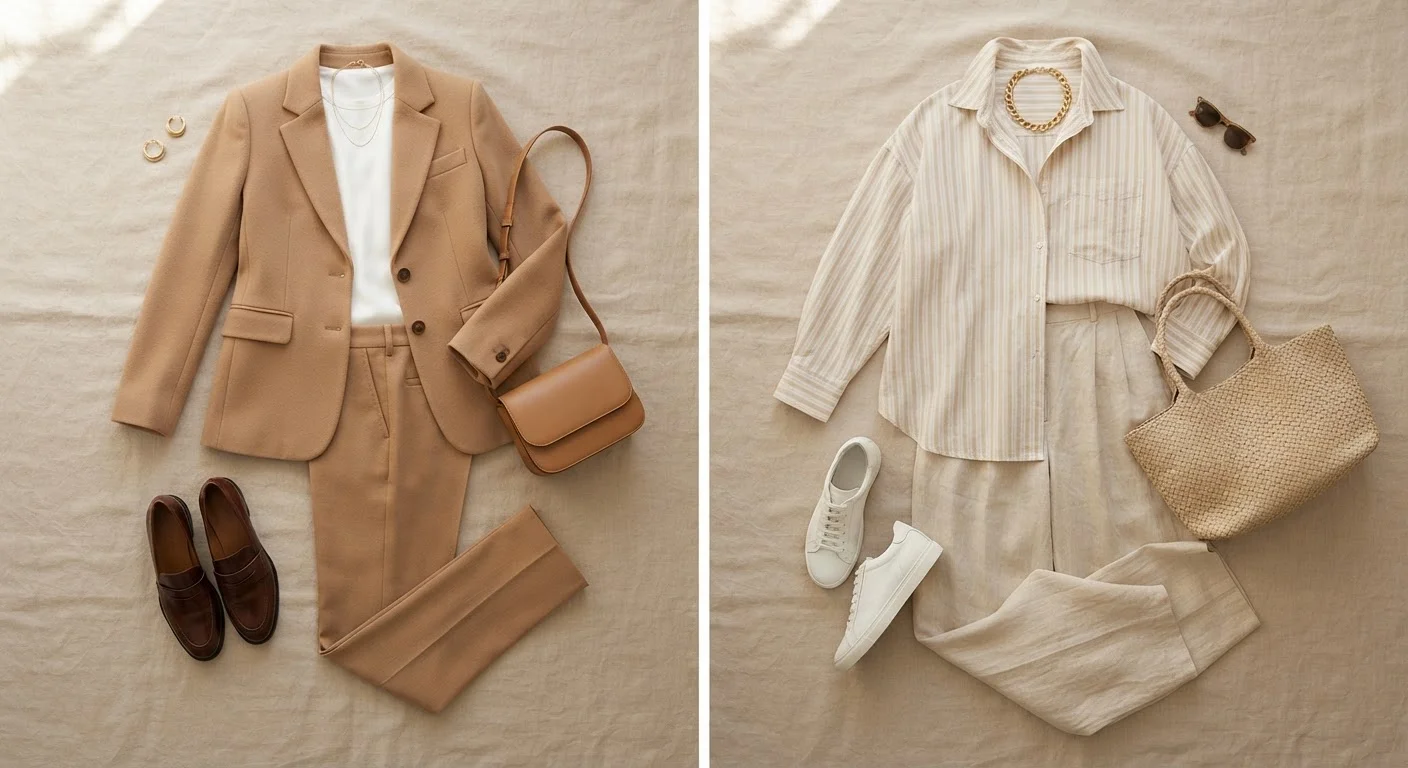
An oversized top naturally draws attention upward and outward. Pairing it with a slim trouser or fitted legging pulls the eye downward and re-anchors the silhouette. Conversely, wide-leg or voluminous trousers tend to look most intentional when the top half is kept relatively close to the body. This is why the classic combination of a tucked-in fitted tee with wide trousers — or an oversized knit with slim ankle pants — shows up across so many well-regarded style guides.
This principle also explains why head-to-toe oversized can be tricky: without any counterbalance, the silhouette can lose definition entirely and read as unintentional rather than effortlessly relaxed. It's not impossible to pull off — proportion can also be managed through color-blocking, belting, or layering — but it requires a deliberate approach.
For a fuller picture of how body shape interacts with these choices, our article on dressing for your body shape offers a balanced, nuanced take on which rules hold up and which ones oversimplify.
When Each Silhouette Earns Its Place
Fitted clothing tends to excel in professional contexts, formal occasions, and layering situations. Close-cut pieces stack cleanly under jackets, coats, or structured outerwear without adding bulk. They also make pattern and texture choices easier to read — a fitted floral blouse communicates its print clearly; the same print in an oversized boxy cut becomes harder to interpret visually.
Oversized clothing shines in casual settings, creative environments, and cool-weather layering. A voluminous coat over a simple fitted outfit can become the whole point of a look. Oversized knitwear, especially, tends to feel both cozy and considered when the rest of the outfit is kept minimal. It also offers practical benefits: looser cuts accommodate layering underneath, and they're generally more forgiving across different points in the day when comfort needs shift.
Fabric plays a major role in how either silhouette behaves. An oversized piece in a stiff, structured fabric (like canvas or a heavy twill) holds its shape and reads very differently than the same cut in a drapey viscose or jersey. If you want to dig deeper into how material affects the final look, our piece on how fabric choices shape clothing is a useful companion read.
A Note on 'Rules' and Body Types
Much traditional style advice frames fitted vs. oversized as a matter of what certain body types 'should' wear. This framing tends to oversimplify — and often reinforces narrow ideals rather than helping people find what they genuinely like. Proportion principles are useful as starting points, not mandates. Wear what feels good, experiment freely, and treat the guidelines as tools rather than restrictions.
Making Adjustments: Where Tailoring Fits In
One underused tool in the fitted-vs-oversized conversation is the tailor. If you love the look of a fitted silhouette but struggle to find pieces that fit your proportions off the rack, targeted alterations — taking in a side seam, adjusting sleeve length, tapering a trouser leg — can bridge the gap without requiring you to buy differently sized garments across the board.
Oversized clothing can also benefit from thoughtful tailoring. Shortening the hem on an oversized coat, for instance, can prevent it from overwhelming a shorter frame, while keeping all the volume that makes the look work. Our detailed guide on getting clothes tailored walks through which alterations have the most impact and how to communicate your needs clearly.
The bottom line: your wardrobe doesn't have to commit to one silhouette exclusively. Most people find that a mix of both — with proportion as the guiding principle — gives them the most flexibility, the most comfort, and the most room to express their personal style across different occasions and moods.
1 rule
Most reliable proportion starting point
Most style educators suggest the one-fitted-one-oversized pairing as the most accessible entry point for balancing a silhouette, regardless of body type.
3–5 alterations
Common tailoring changes for off-rack fit
Hem adjustments, side seams, sleeve length, waist suppression, and trouser tapering are among the most frequently requested alterations at tailoring shops.