The Real Reason Dogs Pull — It's Not What Most People Think
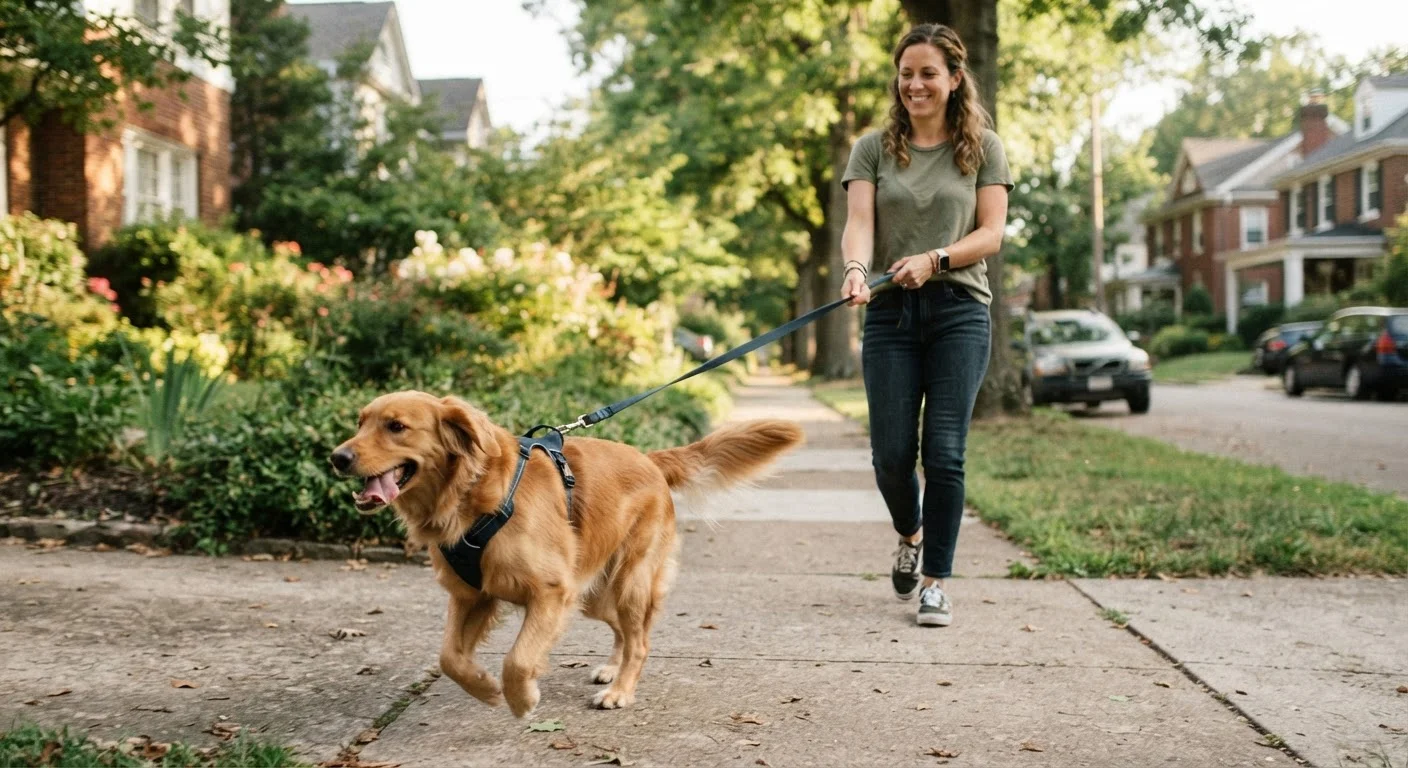
Walk into any dog park or neighborhood and you'll see it constantly: a dog straining forward, owner in tow, leash taut as a guitar string. The instinct is to label this stubbornness, excitement, or — a persistent myth — dominance. But what's actually happening is something far more straightforward: pulling works.
From the dog's perspective, forward motion has been reliably rewarded every time the owner followed. That pattern, repeated across hundreds of walks, becomes deeply ingrained. In learning-science terms, the behavior is maintained by negative reinforcement — the uncomfortable pressure of the collar or harness is relieved the moment the owner steps forward. The dog didn't plan this. It simply learned it.
Understanding what your dog is communicating through body language can help you recognize whether your dog is pulling out of excitement, anxiety, or something else entirely — each calls for a slightly different response.
“Dogs pull on leashes because it has worked for them. The leash goes tight, the owner follows, and the dog reaches what it wanted. That's not stubbornness — that's learning.”
— Dr. Karen Overall, Veterinary behaviorist and author of works on clinical behavioral medicine in animals
The Nose Knows: How Scent Drives the Urgency
A dog's sense of smell is estimated to be tens of thousands of times more sensitive than a human's. Every walk is, for the dog, a layered landscape of information — who passed by, what they ate, whether another animal is in heat, how long ago a squirrel crossed the path. That olfactory pull is powerful and immediate.
When a dog catches a compelling scent, dopamine-related reward circuits activate in anticipation of investigating it. The brain essentially signals: get there fast. The leash creates friction between that impulse and reality. Rather than interpreting the tension as a cue to slow down, a dog that hasn't been trained otherwise simply increases effort — pulling harder.
#1
Most reported dog behavior complaint
Leash pulling consistently ranks as the top behavioral issue reported by dog owners in surveys conducted by veterinary and trainer organizations in the US.
~100,000
Estimated annual leash-related owner injuries
A study published in JAMA Surgery estimated roughly 100,000 Americans sought emergency treatment for dog-leash injuries between 2001 and 2017, with falls being the most common cause.
This is why training in low-distraction environments first is so important. Asking a dog to practice loose-leash walking past a dog park before the skill is reliable is like teaching someone to parallel park on a crowded city street on day one.
How Pulling Gets Accidentally Reinforced
Most leash pulling problems are owner-created — not through negligence, but through normal human behavior. When a dog lunges toward a fire hydrant and the owner follows rather than stops, pulling just paid off. When the pace quickens because the owner wants to get the walk over with, the dog learns that surging forward accelerates progress.
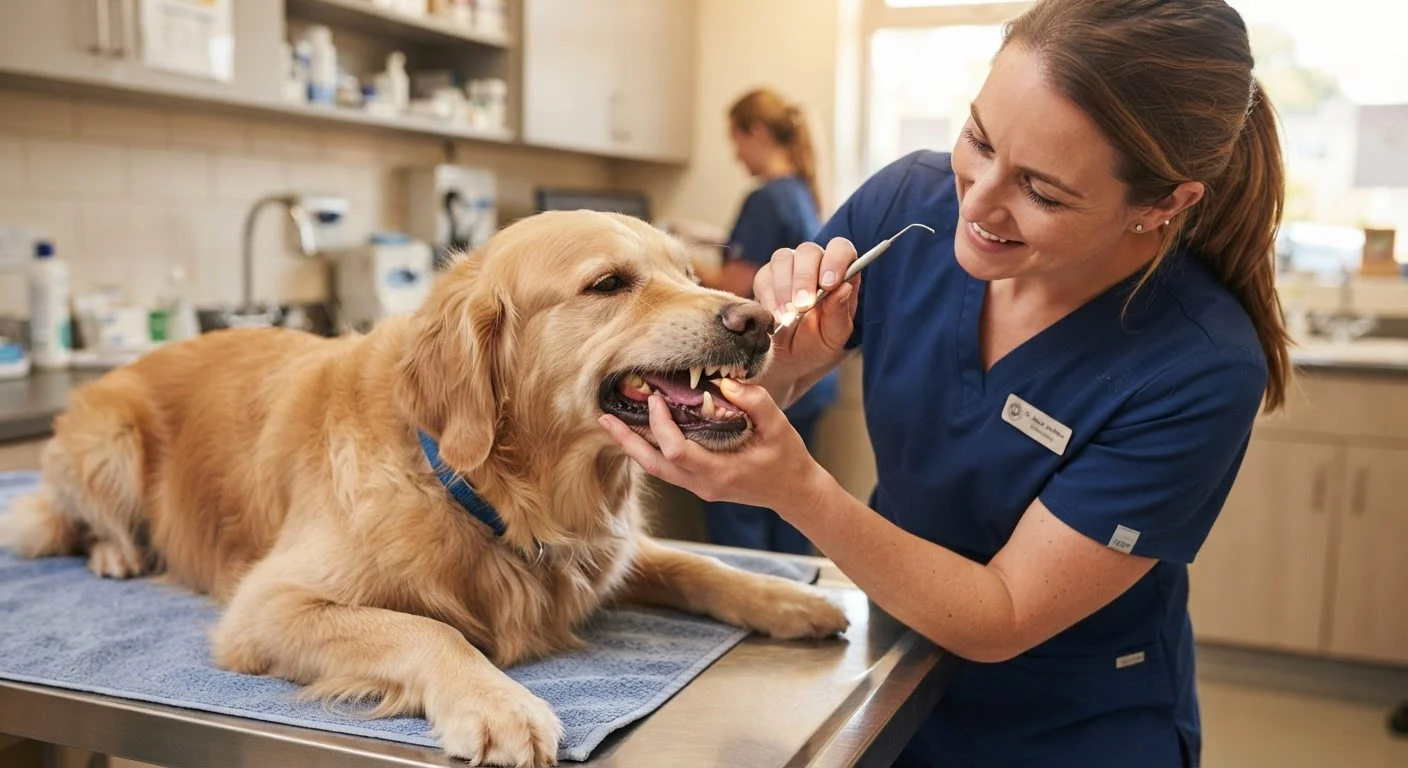
Even well-intentioned responses can backfire. Jerking the leash may briefly startle the dog but doesn't communicate what to do instead — and in sensitive dogs, it can introduce anxiety that complicates training. It's worth checking whether a sudden change in leash behavior might have a physical cause, too: problem behavior is sometimes a medical issue and pain or neurological changes can alter how a dog moves and responds on the leash.
Stop Before You Correct
When your dog pulls, resist the urge to yank or scold. Simply stop moving and wait for the leash to slacken — even slightly — before continuing. This single habit, applied consistently across every walk, begins to shift what the dog learns about which behavior moves the walk forward.
Training Principles That Actually Address the Root Cause
Effective loose-leash training works by changing what the dog finds rewarding. The core principle is simple: a tight leash makes all forward progress stop; a loose leash keeps the walk moving. When applied consistently, even across dozens of short sessions, the dog begins to understand that staying near the handler — or at least keeping the leash slack — is the behavior that gets results.
Reward placement matters more than many owners realize. Delivering a treat at the handler's hip or thigh encourages the dog to check in at that position, gradually building the habit of staying close rather than surging ahead. Variety in reinforcement — praise, play, sniff breaks — keeps the dog engaged rather than focused solely on food.
Dogs experiencing separation anxiety or high baseline arousal may find walks particularly over-stimulating, which can intensify pulling. Addressing the underlying arousal state often makes leash training significantly easier. Similarly, watch for stress signals during training sessions — a dog that is shutting down or panting heavily isn't in a state to learn new behaviors.
Management Tools While You Train
Front-clip harnesses and head halters can make walks more comfortable while formal training is underway. These tools reduce the mechanical advantage of pulling but don't teach the skill on their own. Think of them as scaffolding — useful during construction, but not the finished building. Always introduce head halters gradually to avoid discomfort or negative associations.
This article is for general informational and educational purposes only and does not constitute professional veterinary or training advice. Consult a qualified trainer or veterinary behaviorist for guidance tailored to your dog's specific needs.