Why Portion Size Is Harder to Get Right Than It Looks
Ask most pet owners whether they feed appropriate portions and the answer is almost always yes. Yet veterinary clinics consistently document that a majority of their patients arrive overweight. The gap between perceived and actual portion accuracy is one of the most consequential disconnects in everyday pet care.
Portion size sits at the intersection of several variables — calorie density of the food, the pet's energy requirement, the number of feeding occasions, and the calorie contribution of extras like treats and toppers. Misjudge any one of them and the cumulative effect compounds over months and years. The result isn't dramatic overnight; it's a slow, nearly invisible drift toward excess weight that carries real clinical consequences. Pet obesity has well-documented links to serious conditions including joint disease, metabolic disorders, and shortened lifespan.
Understanding where portioning goes wrong — and why — is the first step toward correcting it.
Obesity Has Real Clinical Consequences
Excess weight in dogs and cats is linked to conditions including osteoarthritis, diabetes, urinary disease, and reduced life expectancy. Portion control is not a cosmetic concern — it is a measurable health intervention. Consult your veterinarian to establish your individual pet's appropriate calorie target.
The Most Common Portioning Mistakes — and How to Fix Them
The errors below are among the most frequently observed in veterinary nutrition practice. None require expensive equipment or dramatic lifestyle changes to address — they require awareness and a small adjustment in habit.
Treating the feeding guideline on the bag as the correct dose for every pet.
Why it happens: Bag guidelines are calculated for a notional average animal of a given weight. They do not account for whether a pet is spayed or neutered, how active it is, or its individual metabolism.
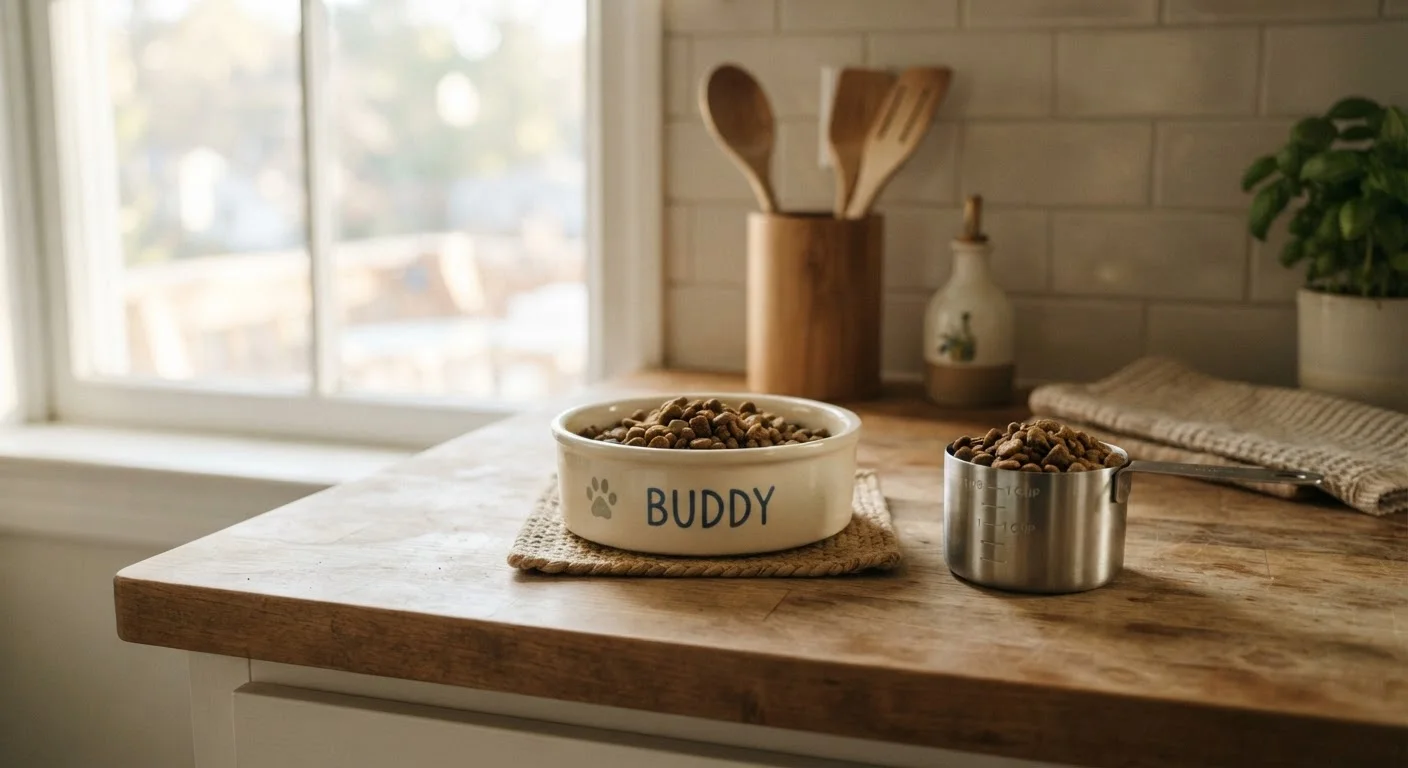
Measuring by a coffee mug, scoop, or 'handful' rather than a calibrated measuring cup or kitchen scale.
Why it happens: Casual scooping feels accurate but introduces variability of 20–30% with each pour, and calorie density varies significantly between food formulas.
Failing to count treats, food toppers, pill pockets, and table scraps as part of the daily calorie budget.
Why it happens: These additions feel minor individually, but in a small dog or cat, even 50 extra calories per day can represent 10–15% above their maintenance requirement.
Keeping the same portion constant as a pet ages, changes activity level, or recovers from illness.
Why it happens: Owners establish a routine that feels right and don't revisit it, even as a dog becomes less active in its senior years or gains weight after being spayed.
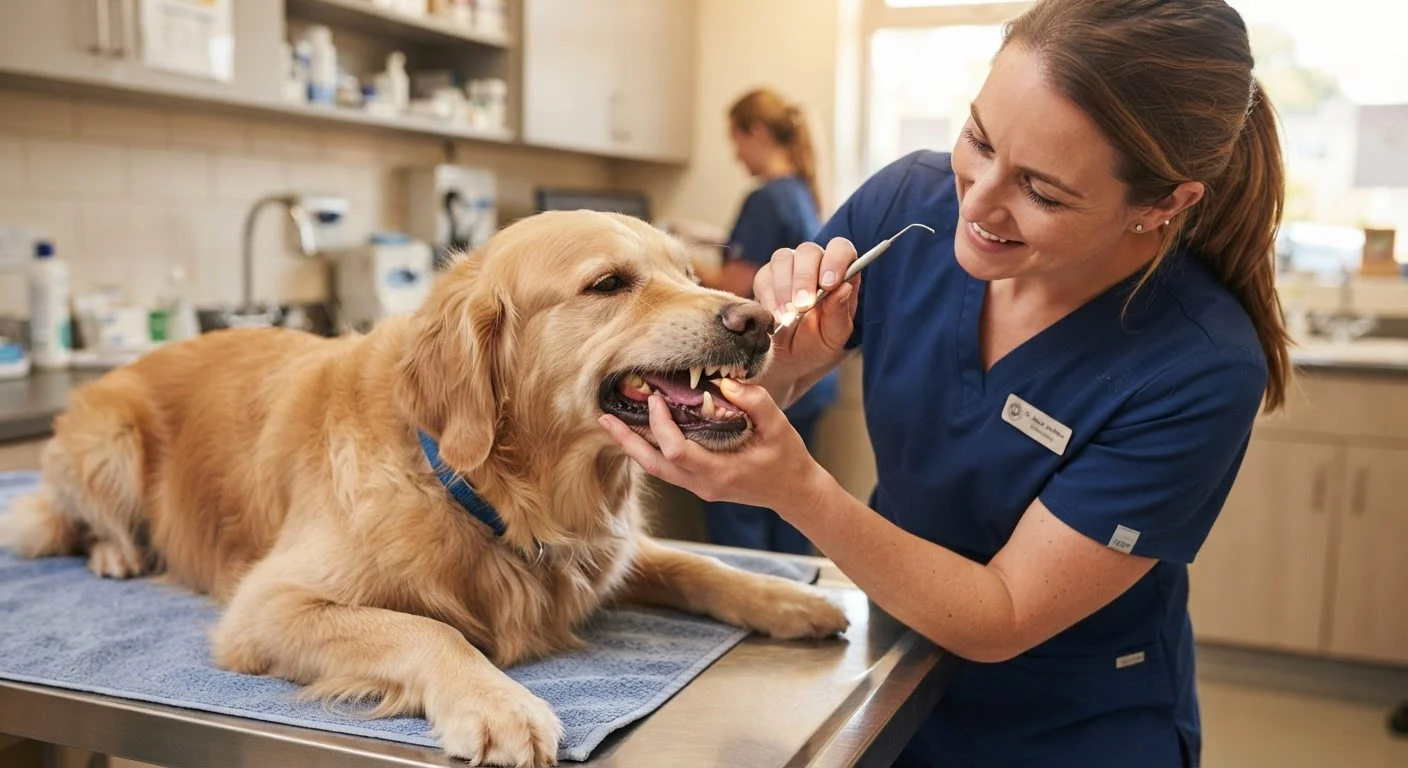
Eyeballing body condition instead of learning to assess it systematically.
Why it happens: Owners often normalize a pet's current weight as 'normal' because they see the animal daily, making gradual weight gain invisible.
Never Switch Portions Abruptly
If you discover your pet has been significantly overfed, resist the urge to cut portions drastically overnight. Sudden caloric restriction — especially in cats — can trigger serious metabolic conditions such as hepatic lipidosis. Work with your veterinarian to reduce intake gradually over several weeks.
For a deeper look at how food label feeding guidelines are constructed — and what their limitations are — see our guide to reading a pet food label without getting lost in the fine print.
Building a More Accurate Feeding Routine
~59%
US dogs and cats classified overweight or obese
According to the Association for Pet Obesity Prevention's annual surveys, more than half of American pets are estimated to be carrying excess body weight.
20–30%
Calorie variation from casual scooping
Veterinary nutrition researchers have documented that informal measuring methods — using mugs or heaped scoops — can introduce this level of daily calorie variance compared to weighing.
New pet owners are particularly vulnerable to establishing habits early that are difficult to recalibrate later. Our broader guide on what new pet owners often get wrong in the first year covers portioning alongside other common early missteps.
Feeding your pet well doesn't mean feeding generously by feel — it means feeding accurately by design. The most reliable measure of success is a stable, healthy body weight sustained over time, confirmed by a veterinarian who knows your animal.
This article is for general informational and educational purposes only. It is not a substitute for professional veterinary advice, diagnosis, or treatment. Consult a licensed veterinarian for guidance tailored to your individual pet's health and nutritional needs.