What Raw Feeding Actually Involves
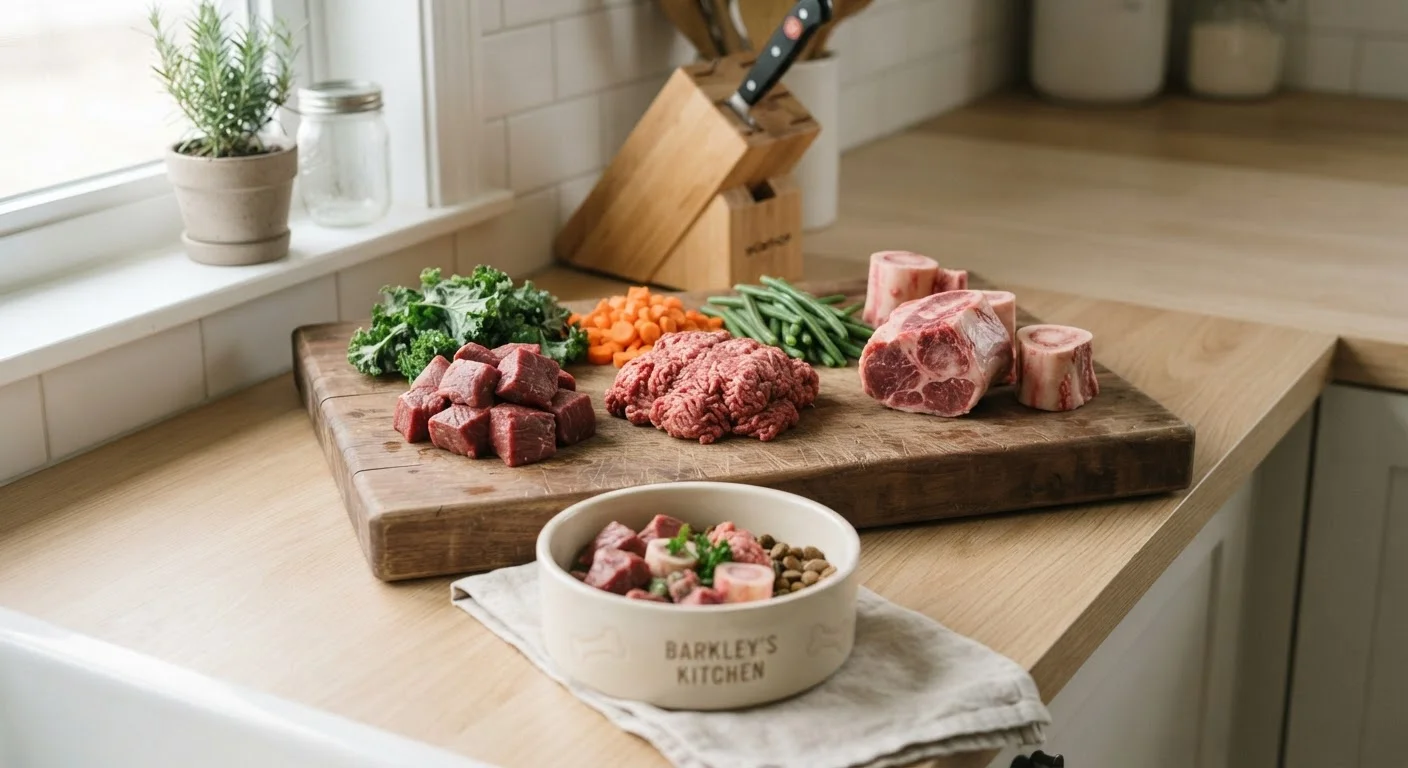
Raw diets for pets typically consist of uncooked muscle meat, raw meaty bones, organ meat, and — depending on the philosophy — eggs, dairy, or produce. They can be home-prepared or purchased as commercially frozen or freeze-dried raw products.
The practice has grown considerably in popularity, driven partly by owner concern over commercial pet food recalls and a broader cultural interest in minimally processed food. But enthusiasm among some pet owners contrasts sharply with the cautionary stance of mainstream veterinary medicine. Understanding both perspectives requires looking beyond anecdote.
For a grounding in what balanced pet nutrition actually requires, see our guide on how canine and feline nutritional needs differ.
What 'BARF' and 'Prey Model' Mean
Raw feeding is not a single approach. The two most common frameworks are 'BARF' (Biologically Appropriate Raw Food), which includes meat, bones, organs, and some fruit and vegetables, and the 'Prey Model,' which aims to replicate whole-prey proportions with little or no plant matter. Neither has a universally agreed-upon formulation, which contributes to the wide variation in nutritional outcomes reported in the literature.
The Case in Favor: What Advocates Argue
Proponents of raw feeding point to a range of potential benefits — improved coat quality, better digestion, smaller stool volume, and enhanced energy levels. While many of these reports are owner-observed rather than clinically verified, they are not implausible given the nutritional differences between raw and heat-processed food.
Potentially improved coat and skin condition
Some owners and veterinary practitioners report shinier coats and reduced skin irritation after switching, possibly linked to higher-quality fats in unprocessed meat. However, these observations are largely anecdotal and not confirmed by controlled clinical trials.
Higher moisture content aids hydration
Raw meat naturally contains significant water, which may support kidney and urinary tract health, particularly in cats who often drink too little on dry-food diets.
Fewer ultra-processed ingredients
Raw diets avoid the high-heat extrusion process used in kibble manufacturing, which some researchers suggest may degrade certain heat-sensitive nutrients.
Potential dental health benefits from raw bones
Appropriate raw meaty bones can provide mechanical abrasion that may reduce tartar buildup — though this must be weighed carefully against bone fracture and choking risks.
Greater owner involvement in ingredient sourcing
Preparing raw food at home gives owners direct visibility into every ingredient, which some find reassuring given periodic commercial pet food recalls.
It is worth noting that some of these benefits, such as hydration and ingredient transparency, can also be achieved through high-quality commercial wet foods without the associated handling risks. If you are monitoring your pet for nutritional gaps, our overview of signs a pet's diet may be falling short can help frame what to watch for.
The Case Against: What Veterinary Bodies Warn
The objections from veterinary organizations are not theoretical. Both the FDA and the AVMA have published guidance discouraging raw meat-based diets, grounded in documented cases of human and animal illness linked to contaminated raw pet food.
Significant pathogen contamination risk
Studies have detected Salmonella, Listeria, E. coli, and Campylobacter in commercially prepared raw pet food. These pathogens can infect both pets and the humans handling the food, a particular concern for young children, the elderly, or immunocompromised household members.
High risk of nutritional imbalance
Home-formulated raw diets frequently fail to meet established nutritional standards. Research published in veterinary journals has found calcium-to-phosphorus imbalances and deficiencies in key micronutrients in homemade raw recipes — even those sourced from popular online guides.
Bone-related injuries are documented
Whole or large raw bones carry real risks of fractured teeth, esophageal obstruction, intestinal perforation, and constipation. Emergency veterinary visits related to bone feeding are not uncommon.
Opposed by major veterinary organizations
The American Veterinary Medical Association (AVMA), the FDA, and the American Animal Hospital Association (AAHA) all advise against raw meat-based diets, citing consistent evidence of pathogen risk outweighing proposed benefits.
Difficult to ensure long-term completeness
Even when following veterinary-formulated recipes, achieving consistent nutritional completeness over months and years requires precise sourcing and preparation — errors accumulate and may not manifest as visible illness until deficiencies are advanced.
Parasite transmission is a real concern
Raw or undercooked meat can harbor parasites such as Toxoplasma gondii and Neospora caninum, some of which are zoonotic — meaning they can also infect people.
74%
Of raw dog food samples testing pathogen-positive
A study published in Preventive Veterinary Medicine found that 74% of raw commercial dog food samples tested positive for Enterobacteriaceae, with Salmonella detected in a meaningful proportion.
60%+
Of homemade raw recipes nutritionally inadequate
Multiple peer-reviewed analyses have found that a majority of home-formulated raw diet recipes do not meet AAFCO nutritional guidelines for complete and balanced feeding.
Cats, despite being obligate carnivores, are not automatically safe candidates for unregulated raw feeding. Our detailed look at common raw diet misconceptions for cats separates the evidence from the myths.
Making an Informed Decision
If you are seriously considering a raw diet for your pet, the most important first step is a consultation with a board-certified veterinary nutritionist — not a general internet search or social media community. A professional can assess your individual animal's health status, life stage, and any immune vulnerabilities before any transition begins.
Before any diet change, use a structured evaluation process. Our checklist for evaluating a new pet food outlines what to assess for AAFCO compliance, ingredient quality, and life-stage suitability. You may also find it useful to understand how to read a pet food label before comparing raw formulations against commercial alternatives.
Households with infants, elderly residents, or anyone undergoing immunosuppressive treatment should weigh the zoonotic risk particularly carefully — this is a public health consideration, not only a pet health one.
This article provides general educational information about pet nutrition and is not a substitute for personalized veterinary advice. Always consult a licensed veterinarian or board-certified veterinary nutritionist before making significant changes to your pet's diet.