
Why Graduated Licensing Exists
Motor vehicle crashes remain a leading cause of death among teenagers in the United States. New drivers - regardless of age - lack the experience to consistently recognize and respond to road hazards. For teenagers specifically, that inexperience is compounded by still-developing judgment and a documented tendency to take greater risks when peers are present.
Graduated Driver Licensing programs address this by structuring the path to full driving privileges in phases. Rather than moving directly from no license to unrestricted driving, teens advance through defined stages that progressively lift restrictions as they accumulate real-world experience. This approach reflects decades of traffic safety research and is now standard across all 50 states and the District of Columbia - though what each state's program actually requires varies considerably.
Understanding defensive driving principles alongside GDL requirements helps teen drivers build habits that go beyond simply passing each stage.
The Three Stages of a GDL Program
While specifics differ by state, virtually all U.S. GDL systems share a common three-stage framework:
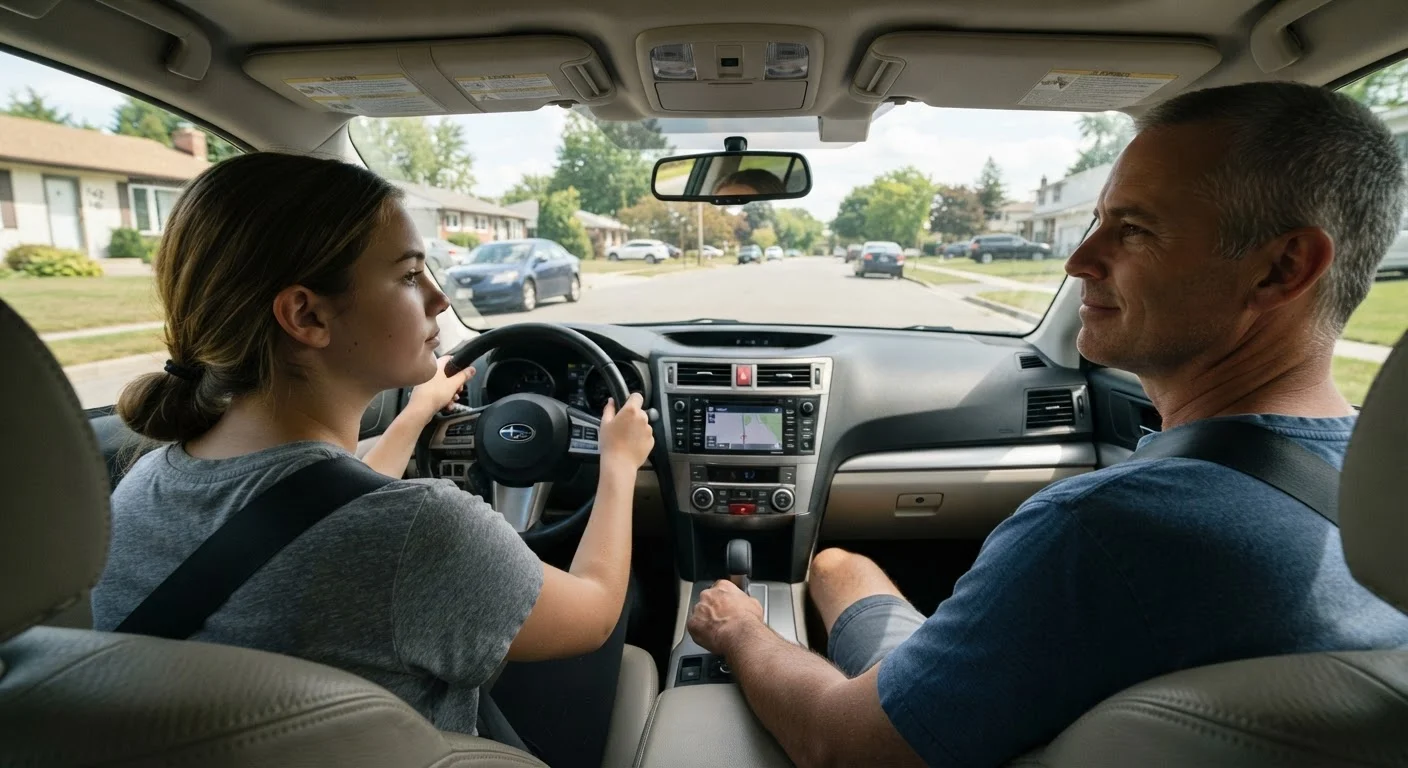
- Learner's Permit Stage: The teen may drive only when supervised by a licensed adult - typically a parent, guardian, or driving instructor - who meets a minimum age threshold set by the state. Most states require the permit to be held for at least six months and mandate a minimum number of supervised practice hours, often ranging from 40 to 60 hours. Some states require a portion of those hours to be completed at night.
- Intermediate (Provisional) License Stage: The teen may drive unsupervised under defined conditions. This stage almost universally includes a nighttime driving curfew and restrictions on the number of young passengers allowed in the vehicle. The intermediate stage typically lasts until the driver turns 17 or 18, depending on the state.
- Full Unrestricted License Stage: All GDL restrictions are lifted once the driver meets the age requirement and has maintained a clean driving record. In most states this occurs at 17 or 18 years old.
~50%
Reduction in fatal crash risk for 16-year-olds
Research published by the Insurance Institute for Highway Safety (IIHS) associates comprehensive GDL laws with roughly a 50% reduction in fatal crash rates among 16-year-old drivers compared to single-stage licensing systems.
3x
Crash risk increase with teen passengers present
Studies cited by the CDC indicate teen driver crash risk approximately triples when multiple teenage passengers are in the vehicle, supporting GDL passenger restrictions.
All 50
U.S. states with some form of GDL
As of current data, every U.S. state and the District of Columbia has enacted a graduated driver licensing system, though program strength and specific requirements vary widely.
Violations of GDL conditions - such as driving past curfew without a valid exception - can reset progress, impose fines, or trigger a license suspension depending on state law.
What the Research Shows
The traffic safety evidence supporting GDL programs is substantial. The Insurance Institute for Highway Safety (IIHS) and the Centers for Disease Control and Prevention (CDC) have both documented associations between comprehensive GDL laws and lower crash and fatality rates among teen drivers. Studies have found that states with stronger GDL provisions - including longer learner periods, lower nighttime curfew thresholds, and stricter passenger limits - tend to see greater reductions in crashes among 16-year-olds.
“Graduated licensing systems are the most effective policy tool we have for reducing crashes among the youngest drivers. The evidence accumulated over decades is remarkably consistent.”
— Anne McCartt, Senior Vice President for Research, Insurance Institute for Highway Safety (IIHS)
Passenger restrictions are particularly significant. Research consistently finds that crash risk for teen drivers increases with the number of teenage passengers in the vehicle, likely because peer presence can increase distraction and risk-taking behavior. Night restrictions address the elevated crash risk that occurs in low-visibility, higher-speed conditions that new drivers are least equipped to handle.
Teen driving risk also shifts depending on environment. The challenges of highway driving versus city driving illustrate why incremental exposure to different road types matters during the learning phase.
What Varies by State - and What Parents Should Know
No two state GDL programs are identical. Key variables include the minimum age for a learner's permit (ranging from 14 to 16), required supervised hours (from as few as 20 to as many as 65), nighttime curfew hours, passenger limits, and the age at which full privileges are granted. Some states have also added cell phone prohibitions specifically for provisional license holders, layered on top of existing distracted driving statutes.
For a broader view of how phone restrictions interact with teen driving rules, see how distracted driving laws vary across U.S. states.
Go Beyond the Minimum Practice Hours
Most GDL programs set a floor, not a ceiling, on supervised practice. Traffic safety experts consistently recommend logging more hours than required, specifically in conditions teens find challenging - night driving, highway merging, and heavy rain. The supervised stage is the lowest-risk opportunity to build those skills before restrictions are removed.
Parents and guardians should consult their state's Department of Motor Vehicles (DMV) directly for the current requirements, as GDL laws are updated periodically. Staying involved beyond the legal minimums - logging extra practice hours in varied conditions - gives teen drivers a meaningful safety advantage before restrictions are lifted.
This article provides general educational information about graduated driver licensing programs and is not a substitute for your state's official DMV requirements. Always verify current laws with your state licensing authority.