Why Nighttime Driving Is Statistically More Dangerous
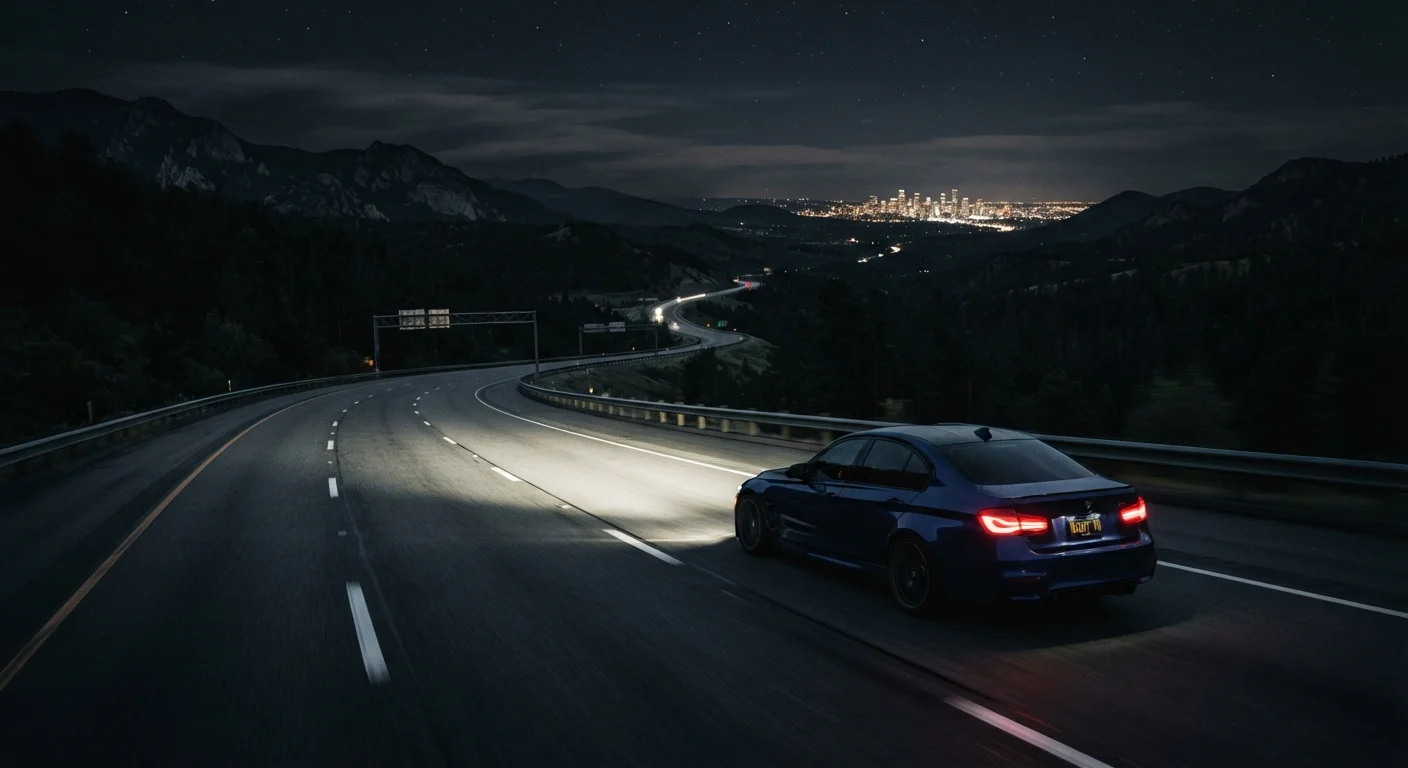
Darkness fundamentally changes the driving environment. The NHTSA has consistently found that a disproportionate share of fatal crashes occur after dark, despite significantly lower traffic volumes at night. Three core factors drive that risk: reduced visibility that limits how far and how clearly you can see, driver fatigue that slows reaction time, and a higher prevalence of impaired drivers sharing the road.
Human eyes require time to adapt when moving between lit and dark environments - a process that takes several minutes - and depth perception, peripheral vision, and color recognition all degrade in low light. Combined with glare from oncoming headlights, these biological limitations make nighttime road hazards harder to detect and respond to in time. Understanding these challenges is the first step toward managing them.
~3×
Higher fatal crash rate at night vs. daytime
According to NHTSA data, fatal crash rates per mile driven are approximately three times higher during nighttime hours despite lower overall traffic volume.
160-200 ft
Typical low-beam headlight illumination distance
Standard low-beam headlights illuminate roughly 160 to 200 feet ahead - a distance that can be shorter than a vehicle's stopping distance at highway speeds.
~50%
Of all fatal crashes occur at night or in low light
The NHTSA has reported that roughly half of all traffic fatalities occur during nighttime or low-light conditions, including dusk and dawn.
Evidence-Based Habits for Safer Night Driving
The following practices are grounded in established road safety research and defensive driving principles. None of them require special equipment - just deliberate choices each time you get behind the wheel after dark. For a broader foundation, see our guide on defensive driving principles that apply across all conditions.
Reduce your speed to match your sight distance, not the posted limit alone.
Headlights on low beam typically illuminate about 160-200 feet ahead, but stopping distance at highway speeds can exceed that. Driving at a speed where you could stop within your visible range - sometimes called driving within your headlights - prevents crashes with unexpected obstacles. Speed limits are set for ideal conditions; nighttime is not ideal.
Use high beams on unlit roads and dim them promptly for oncoming traffic.
High beams nearly double effective sight distance on dark roads, yet many drivers underutilize them out of habit. Equally important is switching back to low beams when another vehicle is within 500 feet approaching you - failure to do so can temporarily blind the other driver. Most states require dimming at that distance by law.
Increase your following distance to at least four seconds behind the vehicle ahead.
The standard three-second following distance is a daytime baseline. At night, reduced visibility means hazards appear with less warning, and brake lights give you the same signal but less context about what lies ahead. Adding an extra second of buffer provides meaningful additional reaction time.
Avoid looking directly into oncoming headlights; use the right edge line as a guide.
Glare from oncoming high beams can cause temporary vision loss lasting several seconds - long enough to drift out of your lane. Shifting your gaze to the white edge line on the right side of the road keeps your path reference intact without exposing your eyes to the light source directly.
Scan intersections more deliberately before proceeding, even on a green light.
Pedestrians, cyclists, and cross-traffic are harder to spot at night. A green signal confirms your right of way, not that the path is clear. A brief check left and right before fully committing to an intersection catches hazards that aren't yet in your headlight beam.
Keep your windshield and headlight lenses clean before nighttime trips.
Interior windshield film and dirty headlight covers scatter light, creating glare halos and reducing throw distance by a significant margin. A clean interior glass surface reduces incoming glare from other vehicles; clean exterior lenses ensure your headlights project as designed.
Before You Leave: Pre-Drive Checks That Matter Most at Night
A few minutes of preparation before a nighttime trip can significantly extend your ability to see and be seen. Start with your headlights: clean the lenses with a damp cloth, since even a thin film of road grime can scatter light and reduce throw distance. Check that both low and high beams function correctly, along with brake lights and turn signals - a burned-out bulb is far more consequential at night.
Inside the car, clean the inside of the windshield. Grease, fingerprints, and dust that are barely noticeable during the day create significant glare from oncoming lights. Dim your instrument cluster and infotainment screen to a comfortable level so they don't wash out your night vision. These habits complement each other and take less than five minutes combined.
Clean Lenses Make a Measurable Difference
Headlight lenses that have yellowed or hazed over from UV exposure can reduce light output substantially - some studies suggest by more than 50%. Many auto parts stores carry headlight restoration kits, or a professional detailer can restore clarity. If lenses are severely degraded, replacement may be the more cost-effective long-term solution. Either way, this is one of the highest-impact maintenance items for nighttime driving safety.
Night driving shares meaningful overlap with other reduced-visibility situations. Our companion piece on driving in rain, snow, and fog covers how to adapt your technique when poor weather compounds darkness.
Managing Fatigue: The Risk You Can't Always Feel
Drowsy driving is particularly dangerous because impairment often precedes awareness of it. Research from the AAA Foundation for Traffic Safety suggests that missing even one to two hours of sleep meaningfully increases crash risk, and that drivers frequently underestimate how impaired they are. The hours between midnight and 6 a.m. align with the human body's lowest alertness period, making late-night driving inherently higher risk.
Practical fatigue management starts before you leave. Avoid driving during hours when you would normally be asleep, and if a long trip is unavoidable, schedule a break every two hours or 100 miles - whichever comes first. If you notice lane drift, difficulty focusing on signs, or repeated yawning, treat those as genuine warning signals. Pulling over safely is always the right call. For additional habits worth reinforcing across all types of driving, see our roundup of road safety habits worth building.
Caffeine Helps Temporarily - It's Not a Fix
Caffeine can provide a short-term boost in alertness and may help during a brief lapse, but it does not reverse sleep deprivation or restore full cognitive function. Research from the National Sleep Foundation indicates that even moderate sleep loss significantly impairs judgment and reaction time in ways drivers often don't perceive. If fatigue is severe, stopping and resting is the only genuinely safe option.