The Problem Hiding in Plain Sight
Tire pressure is one of those maintenance items that feels trivial right up until it isn't. Unlike a check engine light or a grinding brake, low tire pressure rarely announces itself dramatically. Tires lose air gradually - typically 1-3 PSI per month under normal conditions - and most drivers don't notice until handling feels sluggish or a warning light appears.
The consequences, however, are anything but subtle. Underinflated tires flex more with each rotation, generating excess heat. Heat is the primary cause of tire blowouts and tread separation, both of which can cause loss of vehicle control at highway speeds. Properly maintained tire pressure is genuinely a safety issue, not just a fuel economy footnote.
Check Pressure When Tires Are Cold
Always measure tire pressure before driving or at least three hours after the vehicle has been parked. Driving heats the air inside tires and temporarily raises pressure readings by 4-6 PSI, which can make an underinflated tire appear normal. Morning checks before your first trip of the day give the most accurate baseline.
What Actually Happens Inside an Underinflated Tire
When a tire is properly inflated, it maintains a consistent shape that evenly distributes the vehicle's weight across the tread. Drop the pressure significantly and the tire's sidewalls begin to bow outward, causing the outer edges of the tread to carry disproportionate load. This produces two problems simultaneously: accelerated wear on the shoulders of the tire, and reduced handling precision because the contact patch becomes unstable.
Braking distance also increases. A tire that can't maintain firm, even contact with the road surface takes longer to transfer braking force effectively. In an emergency stop, even a few extra feet of stopping distance can be the difference between a near miss and a collision. This is why tire condition is a core component of defensive driving practice.
~1 PSI
Pressure lost per 10°F temperature drop
This relationship is widely cited by tire manufacturers and the U.S. Tire Manufacturers Association as a key reason seasonal checks are important.
25%
Below spec before TPMS warning triggers
Federal regulations require TPMS systems to alert drivers when pressure falls 25% below the vehicle's recommended PSI - meaning the light is a lagging, not leading, indicator.
0.2%
Fuel economy lost per PSI below spec
According to the U.S. Department of Energy, this loss compounds across all four tires, making even modest underinflation a measurable fuel cost over time.
Reading the Right Number - and Where to Find It
One of the most persistent misconceptions about tire pressure is that the number molded into the tire sidewall is the target PSI. It isn't. That figure - often 44, 51, or even 65 PSI - is the maximum pressure the tire structure can safely hold. Operating at that level is not recommended and will cause overinflation problems including center tread wear and a harsh, bouncy ride.
Your vehicle's recommended PSI is on a sticker adhered to the driver's side door jamb, or in the owner's manual. Front and rear tires sometimes carry different recommended pressures, particularly on vehicles with rear-wheel drive or specific load ratings. Always reference the vehicle sticker, not the tire.
Nitrogen vs. Regular Air: A Practical Note
Some dealerships and tire shops offer nitrogen inflation, citing slower pressure loss over time. While nitrogen does permeate rubber slightly more slowly than compressed air, the practical difference for most daily drivers is small. Regular air is universally available and entirely adequate for maintaining correct tire pressure with monthly checks.
Checking Pressure the Right Way
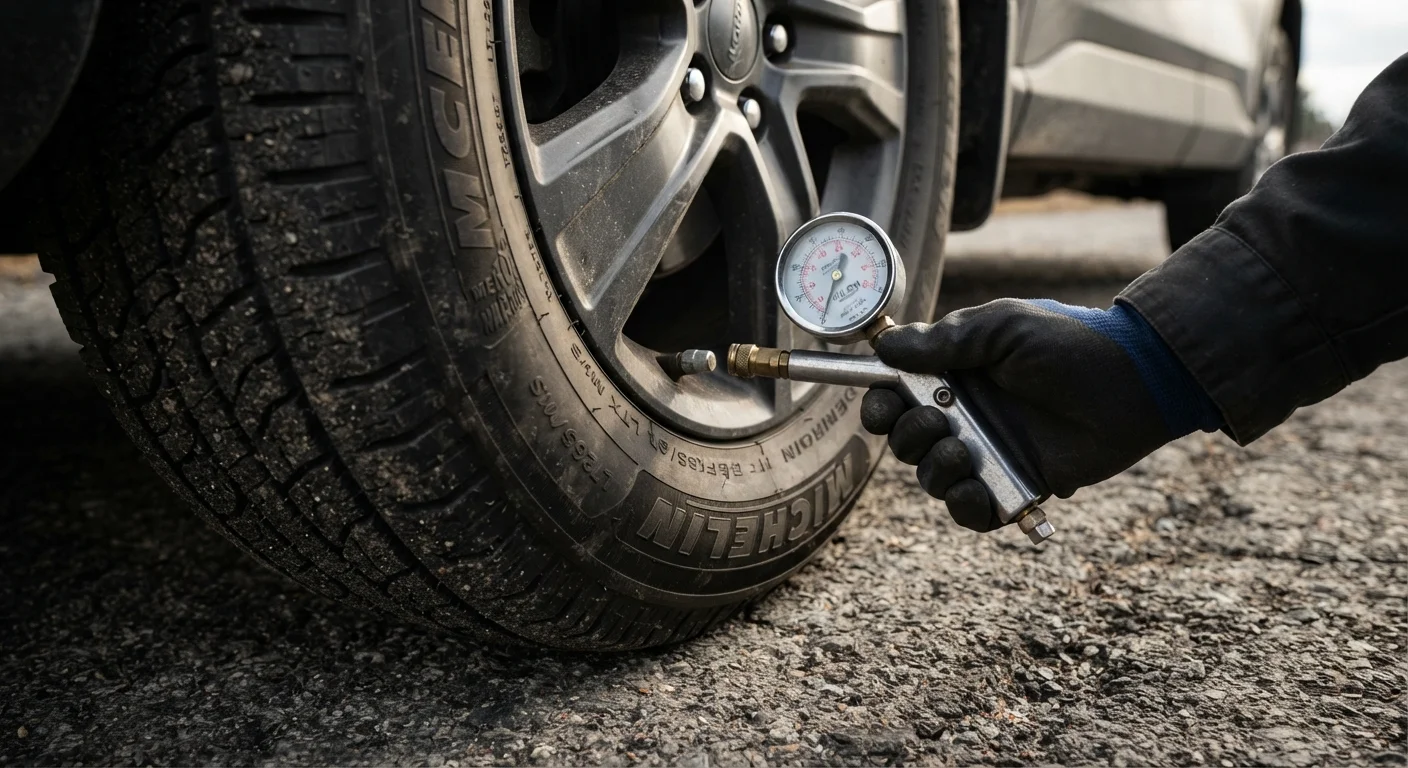
Tire pressure should always be measured when tires are cold - meaning the vehicle has been stationary for at least three hours or driven fewer than a mile at low speed. Driving heats the air inside the tire, expanding it and giving a falsely elevated reading. A quality digital gauge costs very little and delivers accurate readings you can act on.
Check all four tires plus the spare if your vehicle carries a full-size spare. Write down the readings and compare them against the door jamb specification. If any tire is more than 2-3 PSI off, inflate or release air accordingly. This whole process typically takes under five minutes.
Regular pressure checks complement other tire maintenance services. Understanding how inflation fits alongside tread wear and wheel geometry is easier with a full picture - our guide on tire rotation, balancing, and alignment explains those related services clearly.
Tire Pressure and the Bigger Cost Picture
Consistently low tire pressure accelerates wear unevenly, often shortening tire lifespan well before the tread depth reaches a safe minimum. Replacing tires is one of the larger recurring ownership costs most drivers underestimate - a reality covered in depth in our look at ongoing maintenance costs most drivers underestimate.
Fuel costs add up as well. The U.S. Department of Energy estimates that for every 1 PSI drop in pressure across all four tires, fuel economy decreases by roughly 0.2%. That may sound modest, but a driver running tires 8 PSI low could see a meaningful efficiency hit over tens of thousands of miles. Keeping tires properly inflated is one of the simplest, lowest-cost maintenance habits that reliably pays for itself.