The Moment You Drive Off the Lot
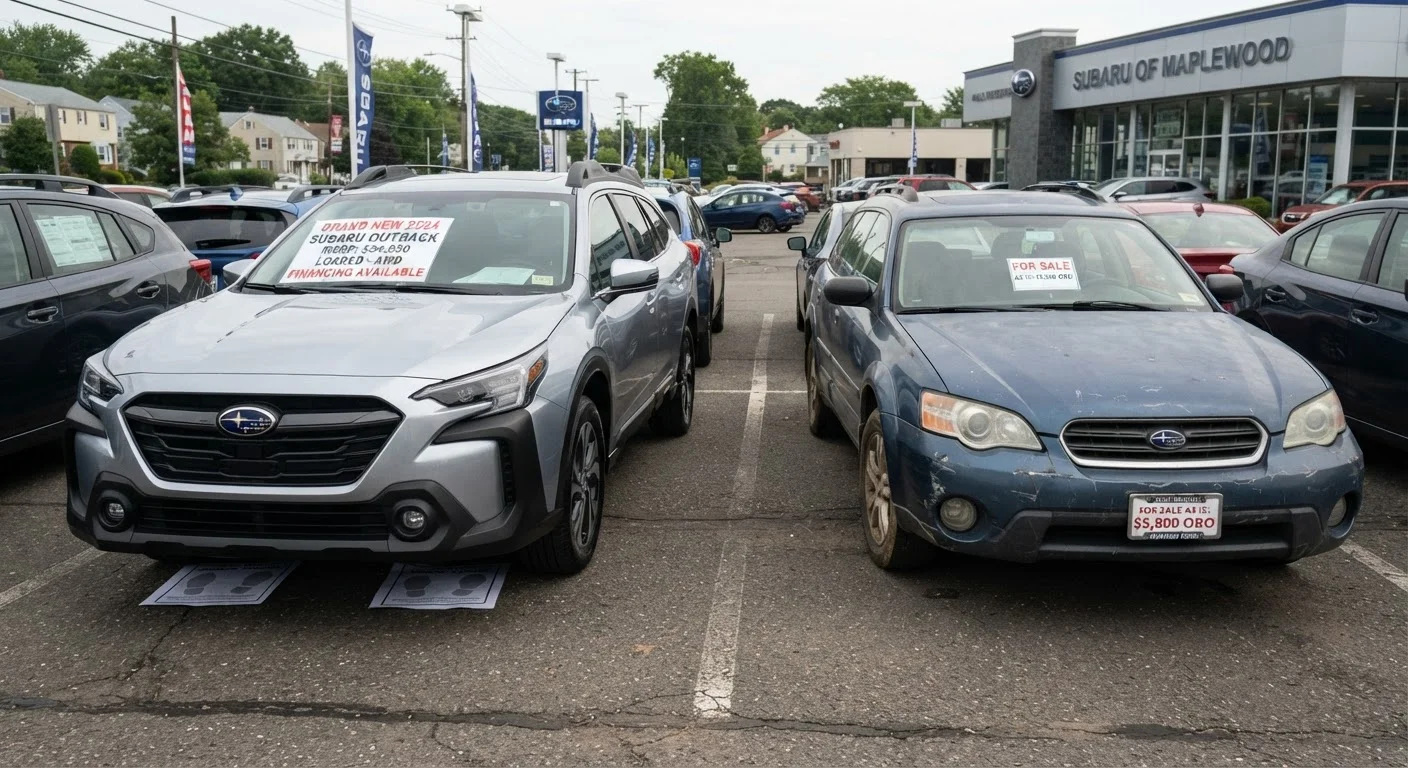
New car depreciation begins almost immediately. The moment a vehicle is registered and driven off the dealership, it transitions from "new" to "used" in the eyes of the market - and its resale value drops accordingly. This initial hit can amount to several thousand dollars before you've made a single loan payment.
This early loss is driven largely by supply-and-demand dynamics. A buyer purchasing from a dealer gets a warranty, the latest model year, and the assurance of an untouched vehicle. A private seller cannot offer the same certainty, so the market prices used cars lower as compensation for that uncertainty - even if the car is only weeks old.
Understanding this dynamic is a critical first step. As outlined in our full breakdown of vehicle ownership costs, the sticker price is only the beginning of what you'll actually spend.
~20%
Average first-year value loss for new vehicles
Industry data consistently shows new cars lose roughly 15-25% of their value in the first 12 months of ownership.
50-60%
Typical value lost by year five
Most passenger vehicles depreciate to roughly 40-50% of their original purchase price by the end of the fifth year.
#1
Depreciation's rank among ownership costs
For many new-car owners, depreciation exceeds fuel, maintenance, and insurance as the largest single component of total ownership cost.
What Drives Depreciation - and What Slows It
Depreciation isn't random. Several well-documented factors accelerate or moderate how quickly a vehicle loses value:
- Mileage: Higher mileage signals more wear and reduces the pool of potential buyers, pushing resale value down.
- Brand and model reputation: Vehicles with strong reliability records and loyal consumer followings tend to retain more value over time.
- Market demand: Trucks and certain SUVs have historically held value better than sedans in the U.S. market, largely because demand for them remains high.
- Condition: Accident history, interior wear, and deferred maintenance all weigh on what a buyer will pay.
- Fuel type and technology: Rapid advances in electric vehicle technology, for example, can accelerate depreciation of older EV models as newer, longer-range options enter the market.
Conversely, keeping meticulous service records, avoiding unnecessary mileage, and maintaining the vehicle's exterior and interior can meaningfully slow value loss over time.
Consider Buying One or Two Years Used
Purchasing a vehicle that is one to two years old allows a previous owner to absorb the steepest portion of early depreciation. You may pay significantly less for a car with low mileage and modern features, while still benefiting from remaining manufacturer warranty coverage in many cases. This is one of the most straightforward ways to reduce the depreciation cost built into your purchase.
Depreciation as a Real Budget Line Item
Because no invoice arrives for depreciation, it's easy to overlook when budgeting for a car. But financially, it is very much a cost - typically the largest single expense of car ownership over a multi-year period, often exceeding fuel, insurance, and maintenance combined.
A practical approach is to estimate your vehicle's likely resale value at the point you intend to sell or trade it in, subtract that from what you paid, and divide the difference by the months of ownership. That monthly figure is your effective depreciation cost and deserves a place in any realistic car budget.
Our guide to building a realistic annual car budget walks through how to incorporate depreciation alongside other expenses so you're never caught off guard.
“Depreciation is the cost most car buyers never see coming - not because it's hidden, but because it never shows up as a line on a monthly statement. Building it into your budget from day one changes how you think about every vehicle purchase.”
— Cars & Driving Editorial Team, Automotive consumer finance editorial
How Depreciation Affects Your Insurance Decisions
Vehicle depreciation has a direct bearing on insurance strategy. Insurers use a vehicle's actual cash value (ACV) - its current market value, not what you paid - to calculate payouts for total-loss claims. As depreciation erodes ACV, the maximum potential payout shrinks.
This matters when deciding whether to carry comprehensive and collision coverage. On a newer vehicle, full coverage protects a substantial asset. As the car ages and its ACV falls, the math changes: premiums may represent a large share of what the insurer would actually pay out. For guidance on when this shift becomes significant, see our article on when it may make sense to drop comprehensive and collision coverage.
Tracking depreciation is also a reason to revisit your overall vehicle budget regularly. Our annual car ownership cost review checklist can help you reassess coverage levels and other expenses as your car ages.
Gap Insurance and Depreciation
If you finance a new vehicle with a small down payment, depreciation can create a situation where you owe more on the loan than the car is currently worth - commonly called being "underwater" or "upside-down." Gap insurance is designed to cover the difference between the ACV and the remaining loan balance if the vehicle is totaled. Whether gap coverage makes sense depends on your loan terms, down payment, and the specific vehicle. Consult your insurance agent for guidance on your situation.