
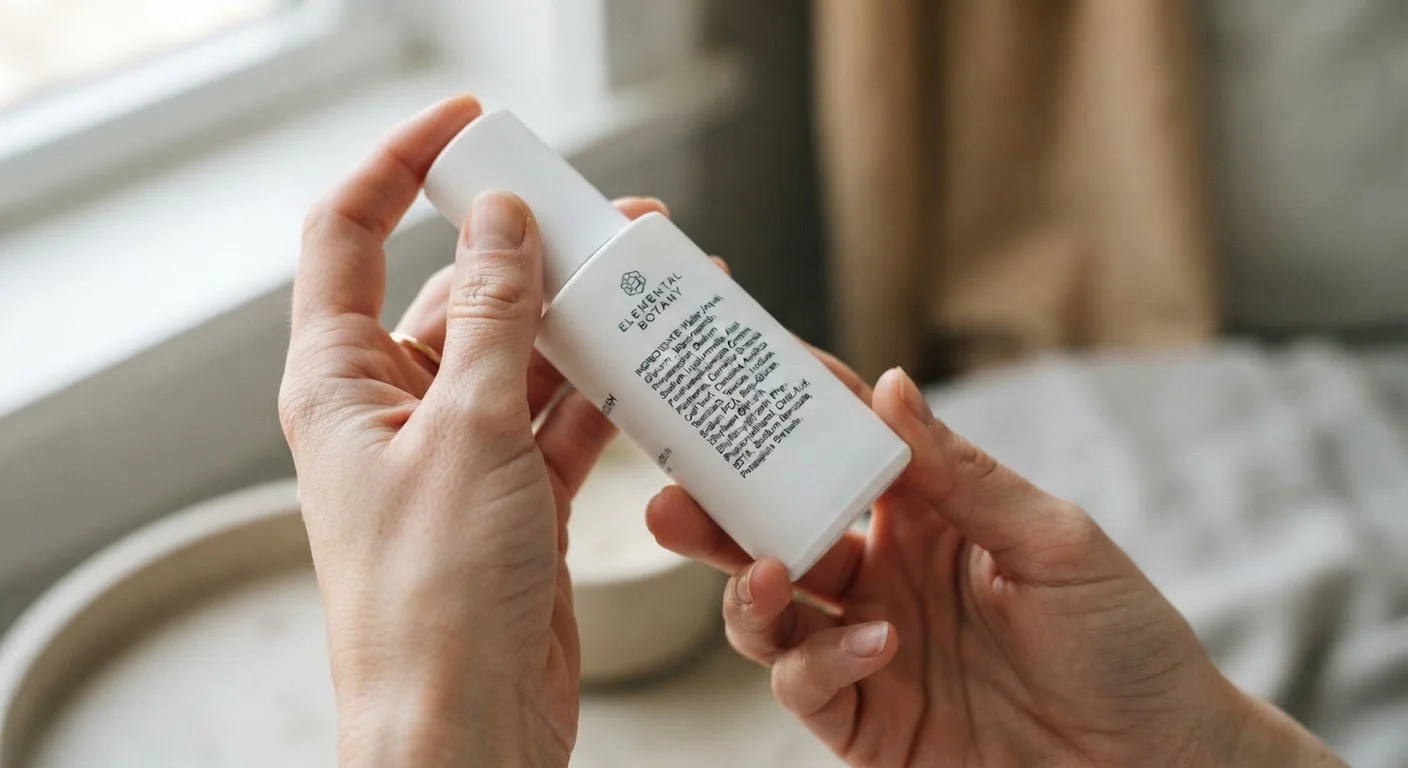
Why the Ingredient List Is Worth Reading
Beauty product claims on the front of a package — "deeply hydrating," "age-defying," "clinically proven" — are largely unregulated in the U.S. The ingredient list, however, is regulated. It's the one part of the label that has to tell you what's actually inside.
Reading it doesn't require a chemistry degree. It requires knowing a few structural rules and a handful of recurring terms. Once those click, you can evaluate almost any product — whether it's a drugstore moisturizer or a high-end serum — with real confidence.
This same skill of reading structured labels translates broadly. If you've ever tried to decode a nutrition label or a pet food label, many of the underlying principles — order, proportion, standardized terminology — apply here too.
What you will need
How to Read the List
Follow the steps below using any product you have on hand. A moisturizer or serum with a moderately long ingredient list is a good starting point — it will give you enough to practice with across all five steps.
The product's packaging or insert
The ingredient list (INCI list) is printed here — this is your primary source of information.
A cosmetic ingredient database (e.g., a general INCI reference site)
Helps translate unfamiliar chemical or Latin names into plain descriptions of function.
Find the INCI list on the packaging
Look for the section labeled "Ingredients" on the back or bottom of the product. This is the INCI list — a globally standardized way of naming cosmetic ingredients. It's required by U.S. FDA regulations on cosmetic labeling.
On small packaging, it may be in very fine print or on an inner leaflet. If you're shopping online, look for a dedicated "Ingredients" tab on the product listing page — and check our guide on questions worth asking about any product listing for tips on evaluating what's disclosed.
Understand the order of ingredients
Ingredients are listed from highest to lowest concentration. The first five or so ingredients typically make up the bulk of the formula — usually water (listed as Aqua), followed by emollients, humectants, or base agents.
An active ingredient like niacinamide or hyaluronic acid appearing near the top signals a meaningful concentration. The same ingredient appearing near the bottom may be present largely for marketing or labeling reasons.
Don't fear the Latin or chemical names
INCI names use Latin botanical names and chemical nomenclature. Butyrospermum Parkii is shea butter. Tocopherol is vitamin E. Sodium Hyaluronate is a salt form of hyaluronic acid.
A long, unfamiliar name is not an indicator of harm — it's just standardized scientific labeling. If a name is unfamiliar, a general cosmetic ingredient database can help you identify its common name and function quickly.
Identify the functional categories
Learning a few broad categories makes any list easier to parse:
- Humectants (e.g., glycerin, hyaluronic acid): draw moisture into skin
- Emollients (e.g., squalane, cetyl alcohol): soften and smooth skin texture
- Occlusives (e.g., dimethicone, petrolatum): seal moisture in
- Emulsifiers (e.g., cetearyl alcohol): help oil and water blend together
- Preservatives (e.g., phenoxyethanol, ethylhexylglycerin): prevent microbial growth and extend shelf life
- Actives (e.g., retinol, vitamin C derivatives, AHAs): ingredients targeted at a specific skin concern
Flag ingredients relevant to your skin concerns
Once you understand the structure of the list, you can scan purposefully. Looking for hydration? Check how early glycerin or hyaluronic acid appear. Concerned about sensitivity? Look for fragrance (Parfum) or essential oils, which are common irritants for reactive skin types.
If you have known allergies or sensitivities, review the full list carefully and consult a dermatologist or allergist when uncertain — especially for products applied near the eyes or left on the skin for long periods.
Cross-Check Ingredients Before You Buy
If you're shopping online, the full ingredient list isn't always prominently displayed. Before purchasing, check the brand's official site or a retailer that provides complete INCI disclosure. Our guide on evaluating online product listings covers what to look for when information feels incomplete.
Ingredient Lists Don't Tell the Whole Story
The INCI list shows what's in a product but not the exact concentration of each ingredient — only the relative order. Two products with identical ingredients in the same sequence can still perform differently based on formulation techniques, pH, and manufacturing process. Use the list as a useful starting signal, not a complete guarantee of how a product will perform on your skin.
This article provides general beauty and skincare education. It is not medical or dermatological advice. If you have skin conditions, allergies, or sensitivities, consult a qualified dermatologist or healthcare professional before introducing new products.