The Myth vs. the Reality of Older Dog Training
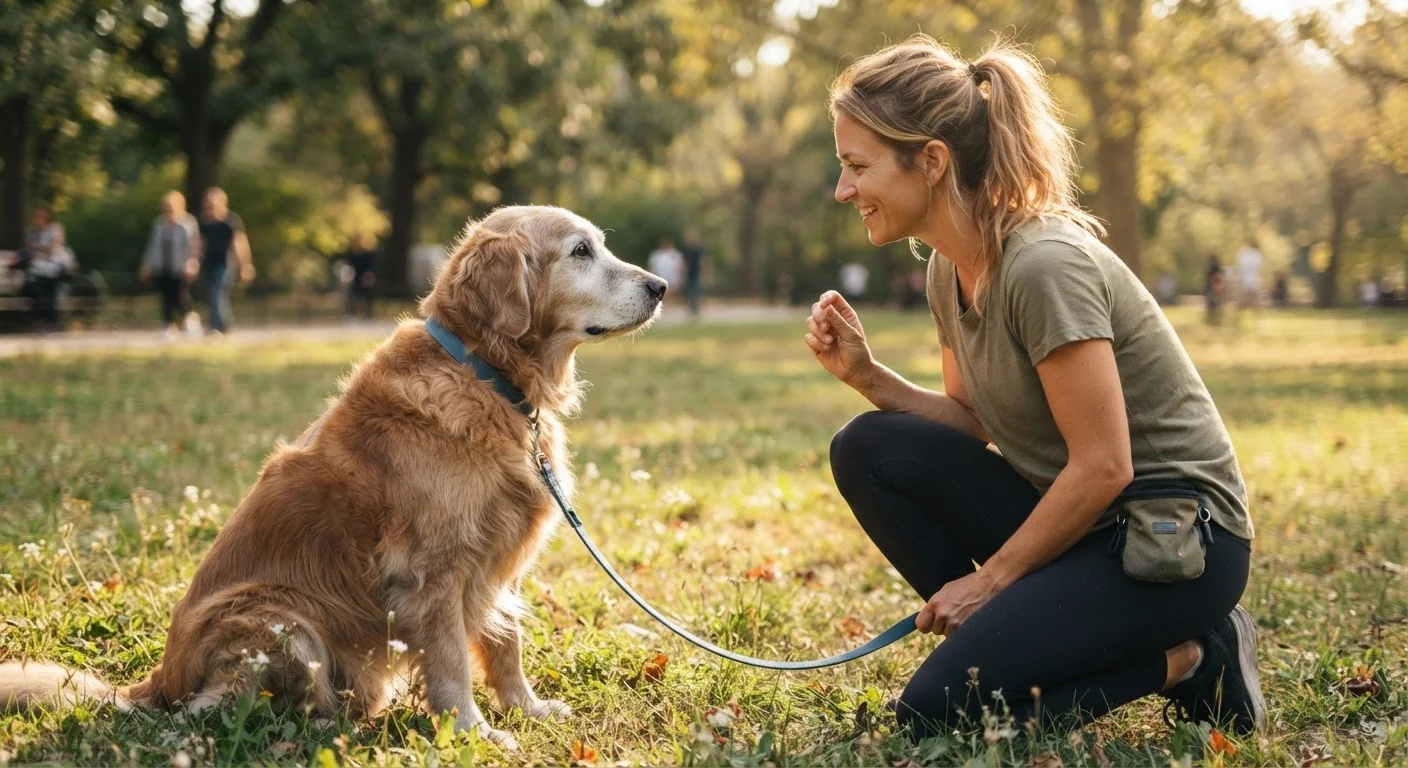
The phrase 'you can't teach an old dog new tricks' has persisted for centuries, but it doesn't hold up to scrutiny. Dogs retain the capacity for associative learning — connecting a behavior with a consequence — throughout their lives. What changes with age is how learning happens most efficiently, not whether it can happen at all.
Older dogs typically arrive with an existing behavioral history. Some habits are deeply ingrained, which means more repetition is needed to establish new patterns. But many adult dogs also bring advantages: they're less easily distracted than puppies, can tolerate the frustration of repetition better, and often have an established relationship with their owner that makes communication clearer. Compare this to the challenges covered in puppy training from day one, where focus and impulse control are still developing.
What Changes as Dogs Age
Before adjusting your training approach, it helps to understand the physiological shifts that occur in older dogs. These aren't reasons to stop training — they're reasons to train smarter.
~7–8 years
Typical senior dog threshold for large breeds
Veterinary organizations generally classify large and giant breed dogs as seniors around age seven to eight, though individual variation is significant.
~50%
Senior dogs estimated to show cognitive changes
Research published in veterinary behavioral journals estimates that roughly half of dogs over eleven years old show at least one sign of canine cognitive dysfunction.
Physical stamina declines. Arthritis, muscle loss, and reduced cardiovascular endurance are common in senior dogs. Long sessions involving repetitive physical movements — sit, down, stay cycles — can cause discomfort that the dog may express as disengagement or avoidance, not stubbornness. Training on padded or grass surfaces eases joint stress.
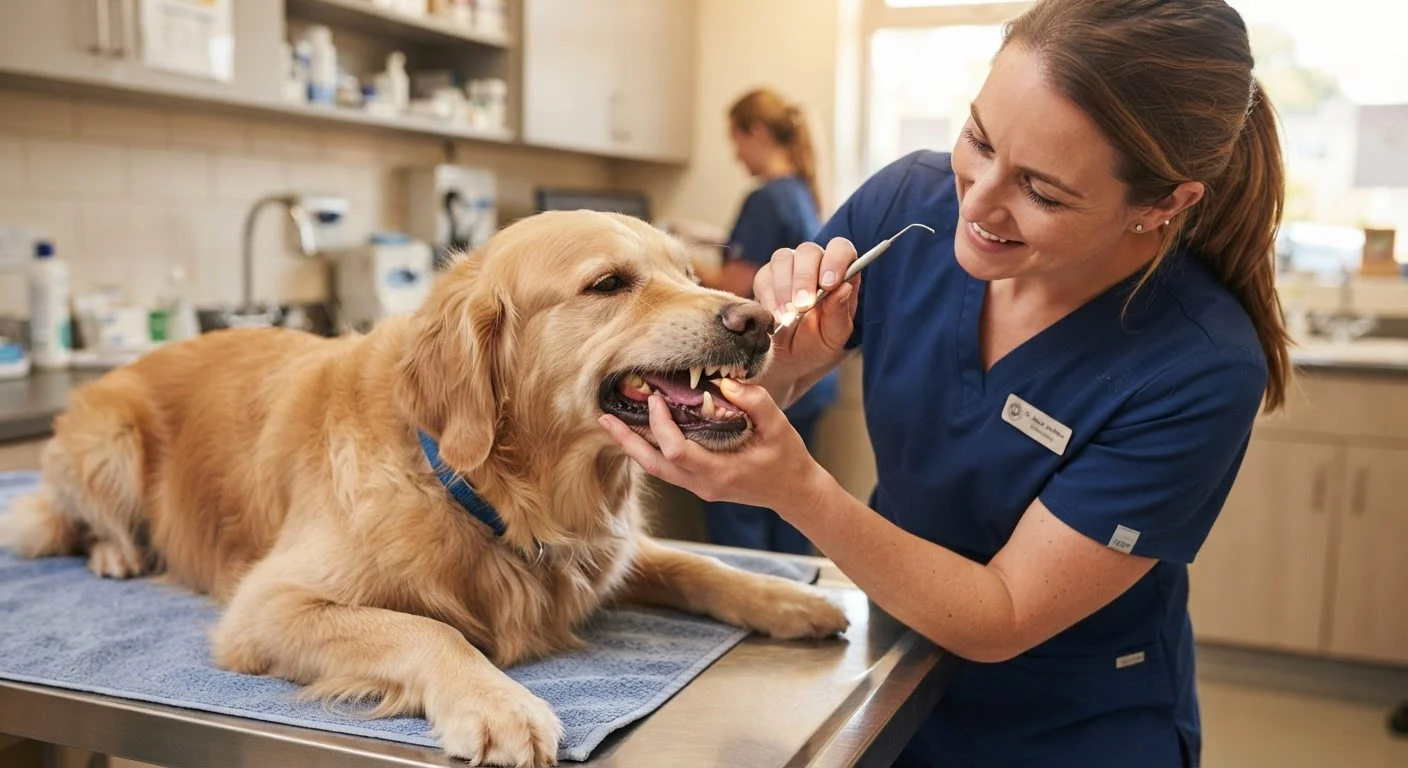
Sensory changes affect responsiveness. Hearing and vision loss are common in dogs over eight years old. A dog that seems to be ignoring verbal cues may simply not be hearing them clearly. Transitioning to hand signals, which many older dogs can learn reliably, is a practical workaround. A veterinary exam helps distinguish training challenges from underlying health issues — see how health needs shift as animals age for a broader view of senior dog care.
Cognitive changes are possible but not universal. Canine cognitive dysfunction (a syndrome with similarities to dementia in humans) can affect learning in some senior dogs. Signs include disorientation, disrupted sleep, and reduced responsiveness. A veterinarian can assess whether cognitive changes are a factor and guide expectations accordingly.
Schedule a Vet Check Before You Begin
If your older dog has recently developed behavioral changes — reluctance to obey familiar cues, increased anxiety, or altered sleep patterns — a veterinary examination is the right first step. Pain, hearing loss, thyroid dysfunction, and cognitive changes can all present as training or behavior problems. Addressing underlying health issues often resolves or significantly eases the behavioral concern before formal training even begins.
What Stays the Same: Core Training Principles
Despite the adjustments required, the scientific foundation of effective dog training doesn't change with age. Positive reinforcement — rewarding desired behaviors to increase their frequency — remains the most evidence-supported and humane approach for dogs of all ages.
Better focus than puppies or adolescents
Adult and senior dogs typically have lower baseline arousal and are less reactive to environmental distractions, making it easier to hold their attention during sessions.
Established bond aids communication
Dogs with a long history with their owner often respond to subtle cues — tone of voice, body posture — that a new puppy hasn't yet learned to read.
Impulse control is generally more developed
Older dogs are less prone to the frantic, impulsive behavior common in puppies, which can make teaching stay, leave it, and calm greetings more straightforward.
Existing vocabulary to build from
Most adult dogs already know basic cues, which gives trainers a foundation to add new skills or refine existing ones rather than starting from zero.
Timing still matters enormously. Rewards delivered within one to two seconds of a behavior are far more effective than delayed ones, because dogs associate the reinforcer with whatever they were doing at that precise moment. The same applies to marker training (using a clicker or verbal marker like 'yes'). For a detailed breakdown of session structure, see getting training sessions right.
Consistency across household members also remains non-negotiable. If one person allows a behavior and another discourages it, the dog receives conflicting information regardless of age.
Practical Adjustments for Training Older Dogs
Adapting your methods doesn't mean lowering expectations — it means working with your dog's current biology rather than against it.
Ingrained habits require more repetition to change
Behaviors practiced for years have strong neural pathways. Replacing them takes consistent, patient work over a longer period than modifying a younger dog's newer habits.
Physical limitations affect what can be trained
Joint pain, reduced endurance, or balance issues may make certain behaviors — such as prolonged downs on hard floors — genuinely uncomfortable, requiring modified criteria or alternative cues.
Sensory decline can mimic non-compliance
Partial deafness or vision loss can cause a dog to appear unresponsive to cues, leading owners to misread the situation as stubbornness when a sensory workaround is what's needed.
Motivation may shift with age
Some senior dogs become less food-motivated or play-motivated. Identifying what the dog currently values — rest, gentle praise, sniffing opportunities — is essential to finding effective reinforcers.
Keep sessions to five to ten minutes and schedule them when the dog is alert but not freshly exercised. Use high-value, easily chewable treats for dogs with dental sensitivity — food motivation often persists even when physical stamina doesn't. Because older dogs' caloric needs and dietary tolerances may shift, it's worth reviewing treat choices alongside any broader nutritional adjustments, as covered in adjusting what you feed as your pet ages.
End every session on a successful behavior the dog knows well. This builds positive association with training itself and keeps motivation high for the next session. Progress may be slower than with a puppy, but incremental gains add up — and the behavioral changes that result are just as durable.