Why This Question Matters for Preventive Care
Whether a cat lives entirely indoors, roams freely outside, or experiences some combination of both shapes nearly every dimension of its health — from parasite burden and injury risk to weight, stress levels, and lifespan. Veterinary organizations including the American Veterinary Medical Association (AVMA) and the American Association of Feline Practitioners (AAFP) generally recommend keeping cats indoors or providing carefully supervised outdoor access, citing mortality and disease data. Understanding the evidence on both sides helps owners make a genuinely informed choice rather than a reflexive one.
For context on how a cat's biology shapes its care needs more broadly, see our article on how feline nutritional needs differ from dogs'.
10–15 yrs
Typical indoor cat lifespan
Veterinary sources commonly cite 12–18 years as achievable for well-cared-for indoor cats, compared to median estimates of 2–5 years reported for free-roaming outdoor cats in some studies.
~60%
Estimated US cat obesity rate
The Association for Pet Obesity Prevention has estimated that a majority of domestic cats in the United States are overweight or obese, a condition more prevalent in sedentary indoor cats.
The Case for Keeping Cats Indoors
Indoor cats are shielded from the most statistically significant threats to feline survival. Traffic collisions alone account for a substantial share of outdoor cat deaths and serious injuries in suburban and urban settings. Beyond vehicles, free-roaming cats encounter predators, exposure to feline infectious peritonitis (FIP), feline leukemia virus (FeLV), and feline immunodeficiency virus (FIV) through contact with other cats, as well as accidental ingestion of rodenticides, antifreeze, and other environmental toxins.
Eliminates traffic collision risk entirely
Vehicle strikes are among the leading causes of traumatic injury and death in outdoor cats. Indoor living removes this risk completely, regardless of the surrounding neighborhood.
Dramatically reduces infectious disease exposure
FeLV, FIV, and upper respiratory infections spread primarily through contact with other cats. Indoor cats who don't encounter strays or other outdoor cats have substantially lower exposure rates.
No access to environmental toxins
Rodenticides, antifreeze (ethylene glycol), certain garden plants, and pesticide-treated lawns pose serious poisoning risks to roaming cats. Indoor environments allow owners to control what their cat contacts.
Lower parasite burden overall
Fleas, ticks, intestinal parasites, and ear mites are far less common in cats without outdoor access, though veterinarians still recommend preventive treatment for indoor cats in many regions.
Longer average lifespan supported by veterinary data
Multiple studies have found a notable longevity gap between indoor and outdoor cats, attributed primarily to the cumulative reduction in traumatic and infectious hazards.
Lifespan differences are frequently cited in veterinary literature, with indoor cats often living into their mid-to-late teens, while outdoor cats' median lifespan is considerably shorter — though precise figures vary by study design and geography. The absence of external hazards is the primary driver of that gap.
The Risks That Come With Indoor-Only Life
Indoor living is not without its own documented health challenges. Without deliberate enrichment, cats confined indoors are prone to sedentary behavior, which contributes to feline obesity — a condition linked to diabetes, joint disease, and shortened lifespan. Stress and boredom can also manifest as overgrooming, inappropriate elimination, redirected aggression, and stress cystitis (inflammation of the bladder triggered by psychological stress).
Higher risk of obesity and related disease
Without the physical activity that outdoor exploration provides, indoor cats are more prone to weight gain. Feline obesity is associated with diabetes mellitus, hepatic lipidosis, and osteoarthritis.
Boredom and psychological stress are genuine risks
Cats are predatory animals with strong instincts to stalk, hunt, and explore. An unstimulating indoor environment can produce chronic stress, manifesting as overgrooming, aggression, or stress-related urinary disease.
Litter box hygiene becomes critical
Indoor cats depend entirely on their litter boxes, and inadequate hygiene is a leading cause of house-soiling and lower urinary tract issues. The rule of thumb is one box per cat plus one extra.
Enrichment demands active owner investment
Unlike outdoor cats who self-direct activity, indoor cats require deliberate provision of play, climbing opportunities, and mental stimulation — a responsibility that demands consistent time and effort from owners.
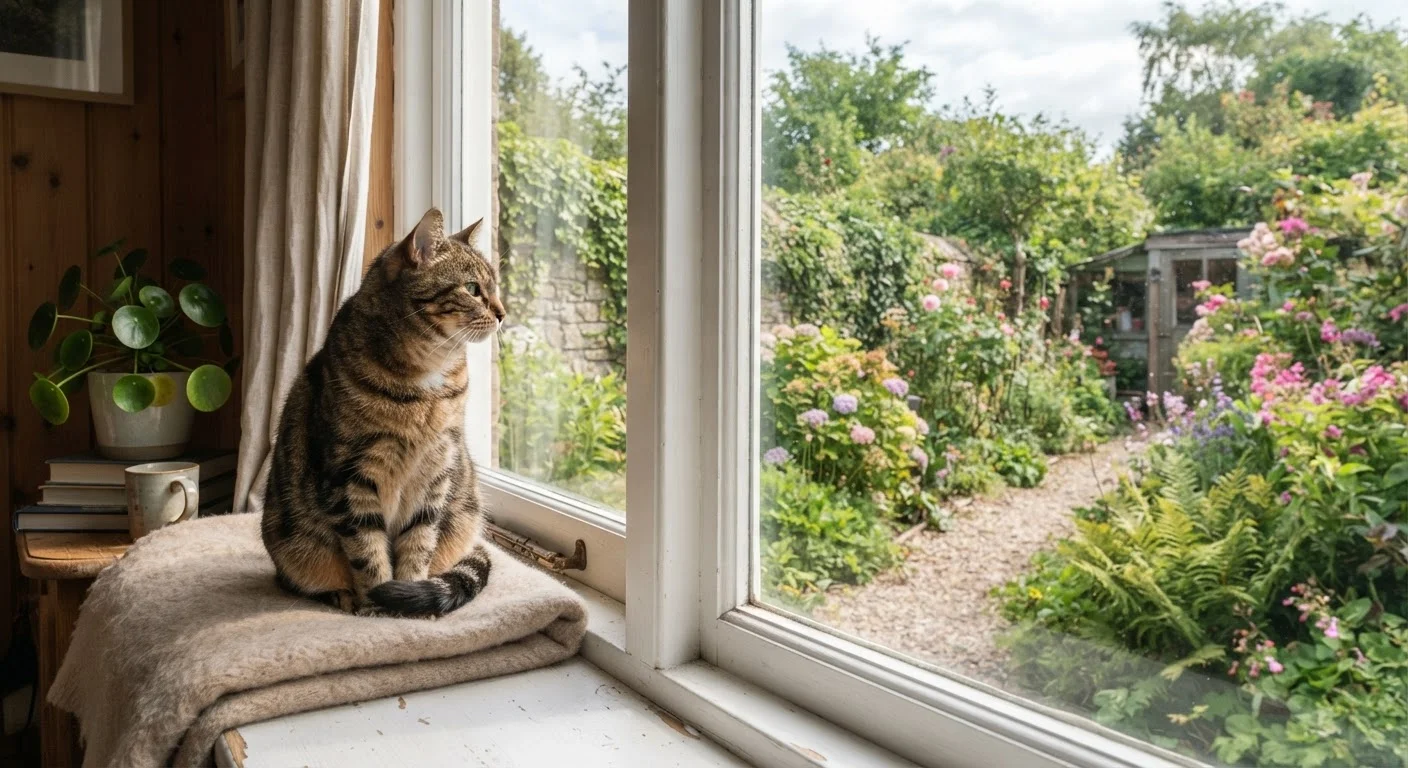
Owners who choose indoor-only care carry an active responsibility to compensate for the stimulation a cat would otherwise find outside. Puzzle feeders, climbing structures, window perches, interactive play sessions, and — where appropriate — a second cat companion are all tools that veterinary behaviorists recommend. For cats entering later life, enrichment needs may shift; see how health needs change as cats age for guidance on adapting care over time.
Middle-Ground Options: Supervised and Enclosed Outdoor Access
A growing body of cat owners and veterinary practitioners have turned to compromise arrangements that preserve outdoor stimulation while controlling the most dangerous exposures. The most common approaches include:
- Catios — enclosed outdoor structures that allow fresh air, sights, and scents without free-roaming risk.
- Leash and harness walks — suitable for cats acclimated to a harness from kittenhood, allowing supervised exploration.
- Enclosed garden fencing systems — specialized fence toppers and barriers designed to prevent cats from leaving a yard.
Each approach carries a different cost, space, and training burden. Cats introduced to outdoor stimulation early in life generally adapt to these arrangements more readily than adult cats accustomed to unsupervised roaming. Even with managed outdoor access, keeping vaccinations current, maintaining flea and tick prevention, and scheduling regular veterinary checkups remain essential — not optional extras.
Outdoor Access and Wildlife Impact
Free-roaming cats are also significant predators of native birds and small mammals. The American Bird Conservancy and several ecological studies have documented substantial wildlife mortality attributable to outdoor cats. This environmental consideration is separate from the cat's personal health risk but is increasingly factored into policy recommendations by wildlife organizations. Enclosed outdoor solutions such as catios address both the cat's safety and its ecological footprint simultaneously.
Making the Decision for Your Cat
There is no universal correct answer. A confident, high-energy cat living in a low-traffic rural area faces a different risk profile than an anxious cat in a city apartment. Relevant factors to weigh with your veterinarian include the cat's age and socialization history, local hazards such as traffic density and wildlife, the owner's capacity to provide enrichment, and the cat's current health status.
Routine preventive care — vaccinations, parasite control, and annual or biannual wellness exams — is non-negotiable regardless of lifestyle. Understanding your cat's individual behavior and learning needs can also make indoor life more rewarding; common cat training myths are worth reviewing before assuming an indoor cat can't be engaged and stimulated.
This article provides general educational information about cat health and is not a substitute for personalized veterinary advice. Consult a licensed veterinarian for guidance specific to your cat's health, temperament, and environment.