How Credit Scores Are Built
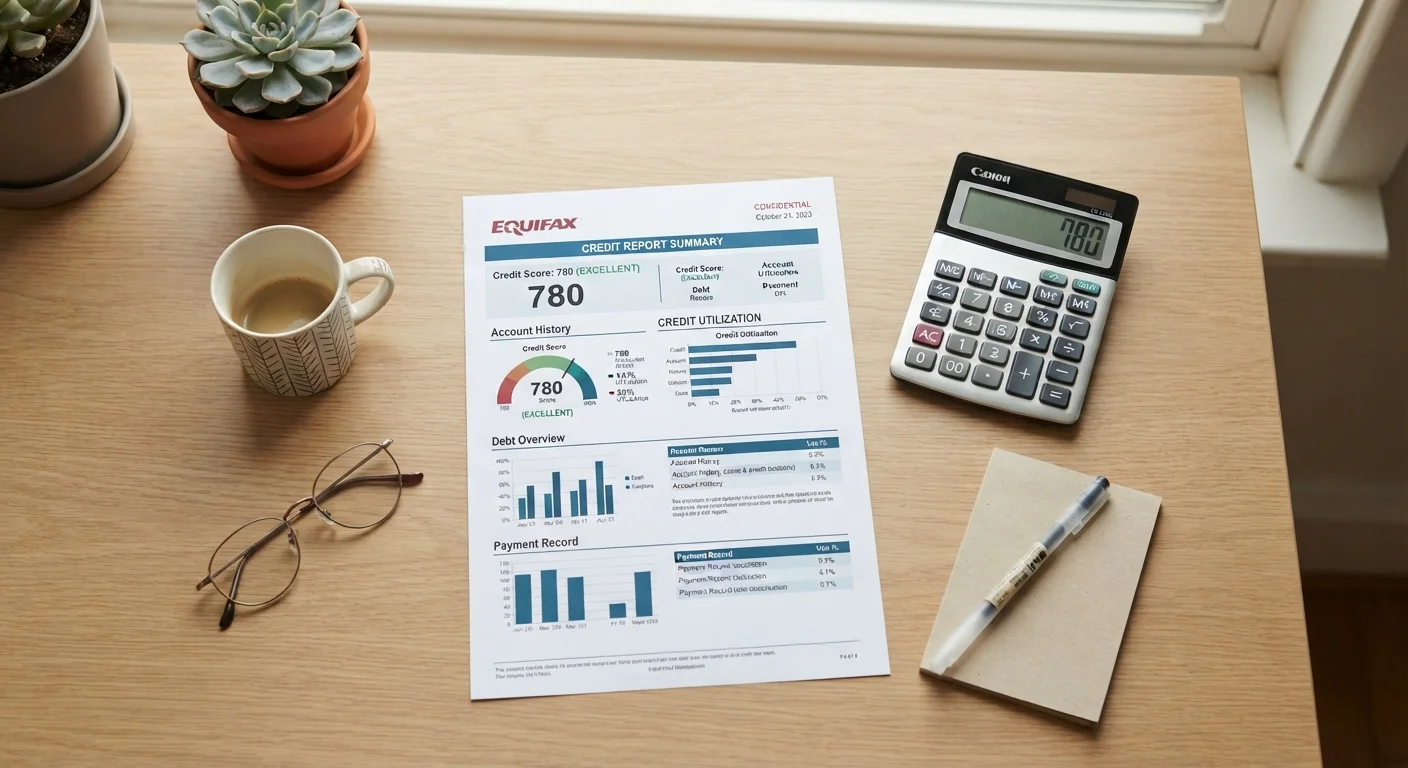
Your credit score — most commonly a FICO score, which ranges from 300 to 850 — is not a single snapshot but a weighted formula drawing on five distinct categories of information from your credit report. Each category carries a different share of influence over your final number. Understanding what those categories are, and how heavily each one weighs, is the foundation of any strategy to improve or protect your score.
This article breaks down each of the five factors as defined by the FICO scoring model, which is the model most widely used by US lenders. VantageScore, another common model, uses similar inputs with slightly different weighting. For broader context, see Credit Scores Explained.
The Five Factors, One by One
1. Payment History — 35%
The single largest factor, payment history answers one fundamental question: do you pay your debts on time? Late payments, collections, charge-offs, and bankruptcies all live in this category and can significantly drag down your score. A single 30-day late payment can remain on your credit report for up to seven years, though its impact generally diminishes over time as positive history accumulates.
2. Amounts Owed (Credit Utilization) — 30%
This factor measures how much of your available revolving credit you are currently using — known as your credit utilization ratio. Lenders interpret high utilization as a sign of financial stress. Most credit professionals suggest keeping utilization below 30% across all cards combined, though lower is generally better for scoring purposes. Paying down balances rather than simply moving them between accounts has the most direct effect here.
3. Length of Credit History — 15%
Scoring models reward a longer track record. This category considers the age of your oldest account, the age of your newest account, and the average age of all accounts. This is one reason that closing an old, unused credit card can sometimes hurt your score — it can shorten your average account age and reduce your total available credit. Learn more about this and other common misconceptions in Things People Get Wrong About Credit Scores.
4. Credit Mix — 10%
Lenders like to see that you can responsibly manage different types of credit — revolving accounts (credit cards, lines of credit) and installment accounts (auto loans, mortgages, student loans). A diverse mix can provide a modest scoring boost, but this factor carries the least weight. You should never take on unnecessary debt just to improve your mix.
5. New Credit (Recent Inquiries) — 10%
Each time you apply for new credit, a hard inquiry is recorded on your report, which can cause a small, temporary dip in your score. Opening several new accounts in a short period also lowers your average account age. Rate-shopping for mortgages or auto loans within a focused window — typically 14 to 45 days depending on the scoring model — is generally treated as a single inquiry. For a full breakdown, see What Happens to Your Credit When You Apply for New Accounts.
Credit Utilization Ratio
The percentage of your total available revolving credit that you are currently using. It is calculated by dividing your total balances by your total credit limits across revolving accounts.
Hard Inquiry
A formal review of your credit report triggered when you apply for new credit. Hard inquiries can cause a small, temporary decrease in your credit score and remain on your report for two years.
Revolving Credit
A type of credit account — such as a credit card or line of credit — where the borrower has a set limit, can borrow and repay repeatedly, and carries a variable balance.
Installment Credit
A loan with a fixed repayment schedule and a defined end date, such as a mortgage, auto loan, or student loan. Monthly payments are typically consistent throughout the term.
FICO Score
The most widely used credit scoring model in the United States, developed by Fair Isaac Corporation. Scores range from 300 to 850 and are generated from data in your credit report.
Putting the Factors to Work
Because payment history and utilization together account for 65% of a typical FICO score, those two areas deserve the most immediate attention for anyone looking to build or repair credit. Setting up automatic minimum payments eliminates accidental late payments, while paying balances down aggressively improves utilization quickly — often within a single billing cycle.
The remaining 35% — length of history, credit mix, and new inquiries — tend to improve gradually and organically as you maintain responsible habits over time. Forcing changes in these areas rarely produces outsized results and can backfire.
It is also worth remembering that your credit score is only one piece of what lenders evaluate. Your debt-to-income ratio plays an equally important role in major borrowing decisions like mortgages. And for a deeper look at exactly what data feeds these calculations, Understanding Your Credit Report walks through every section of the document lenders actually see.
This article is for general informational and educational purposes only and does not constitute personalized financial or legal advice. Consult a qualified financial professional regarding your individual circumstances.