Where Your Credit Score Comes From
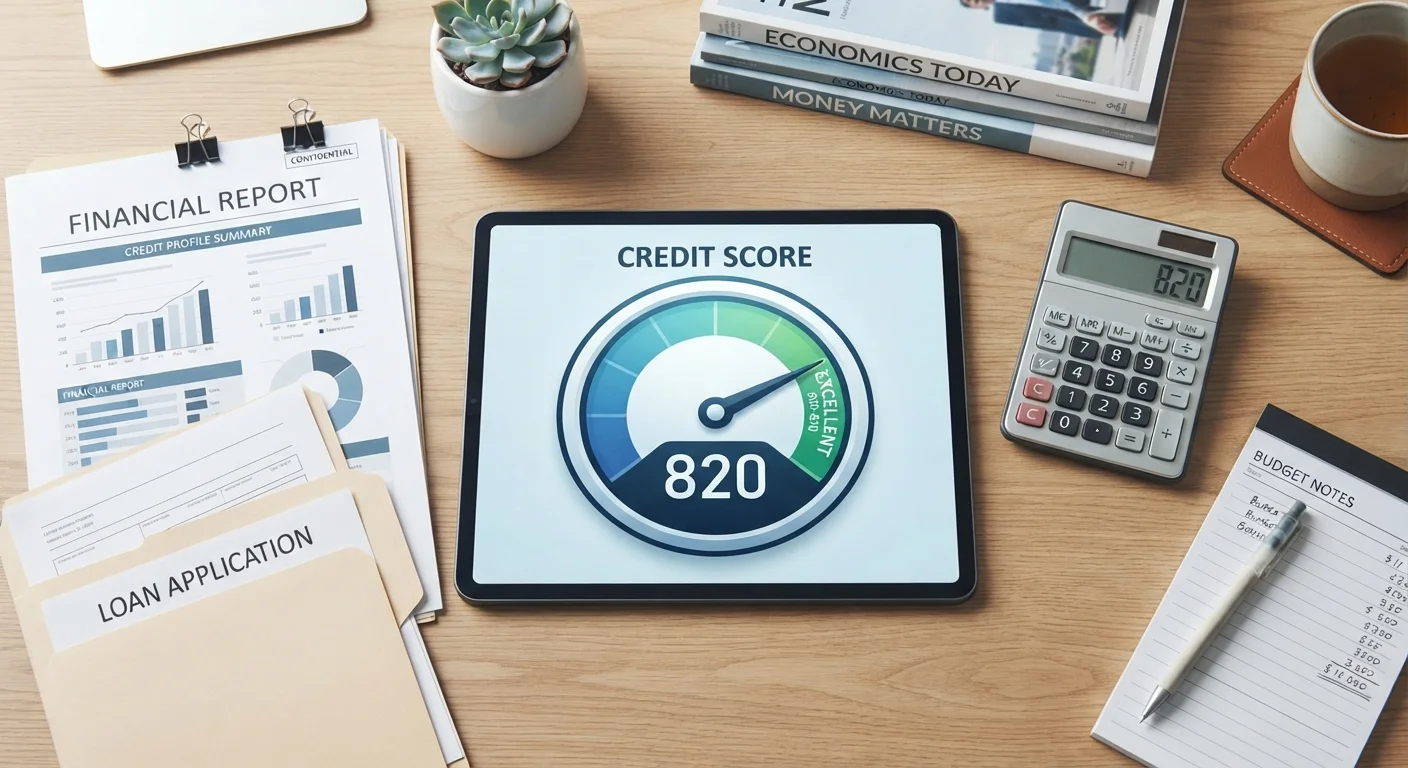
Your credit score isn't guesswork — it's a calculated output derived from the data sitting inside your credit report. Three major credit bureaus (Equifax, Experian, and TransUnion) collect information from your lenders and creditors: how much you owe, whether you pay on time, how long your accounts have been open, and more. A scoring algorithm — most commonly a FICO® Score model — reads that data and produces a single number between 300 and 850.
Because each bureau may hold slightly different information, you technically have multiple credit scores at any given moment. Lenders often pull one or more of these when evaluating an application. For a deeper look at what your credit file actually contains, see our field guide to your credit report.
716
Average U.S. FICO Score
According to FICO's public data, the average American credit score has hovered in the 'good' range, reflecting broad improvement in consumer credit health over the past decade.
35%
Weight of payment history in FICO Score
FICO's published scoring model breakdowns show payment history is the single largest component, making on-time payments the highest-leverage habit for score improvement.
~200M
Americans with a scoreable credit file
The Consumer Financial Protection Bureau (CFPB) has estimated that the vast majority of U.S. adults have enough credit history to generate a score, though millions remain 'credit invisible.'
What the Number Actually Signals
A credit score condenses years of borrowing behavior into a single risk signal. To a lender, a high score suggests you consistently meet your obligations; a low score raises the question of whether extending credit is prudent. The score doesn't reveal why your history looks the way it does — just the net result of it.
Score ranges, while not universal across all models, generally break down as follows:
- 800–850: Exceptional — access to the most favorable terms
- 740–799: Very Good — strong approval odds, competitive rates
- 670–739: Good — broadly acceptable to most mainstream lenders
- 580–669: Fair — approval possible but terms may be less favorable
- 300–579: Poor — limited options; secured products or credit-building accounts may apply
It's worth noting that a credit score is only one piece of the picture. Lenders also weigh factors like income and total debt load. Our article on why your debt-to-income ratio matters explains how these factors interact.
“Credit scores are not a measure of your worth as a person — they are a statistical tool designed to predict the likelihood of repayment. Understanding that distinction helps consumers engage with the system strategically rather than emotionally.”
— Consumer Financial Protection Bureau, U.S. federal agency overseeing consumer financial products and education
The Key Factors That Shape Your Score
While the exact formula is proprietary, FICO has disclosed the general weight of each factor in its widely used scoring model:
- Payment history (≈35%): Whether you pay on time is the dominant input. A single missed payment can cause a meaningful drop.
- Amounts owed / credit utilization (≈30%): How much of your available credit you're using. Keeping utilization below 30% is a commonly cited guideline, though lower is generally better.
- Length of credit history (≈15%): Older accounts and a longer average age of accounts tend to help.
- Credit mix (≈10%): Having a variety of account types — revolving credit and installment loans — can be a modest positive.
- New credit (≈10%): Recent applications and newly opened accounts. For more on this, see what happens to your credit when you apply.
For a full breakdown of each factor, the five factors behind your credit score goes deeper into how each element is measured and weighted.
Check Your Credit Report Regularly
You're entitled to a free credit report from each of the three major bureaus at AnnualCreditReport.com. Reviewing your report periodically helps you catch errors — such as accounts you don't recognize — that could be dragging your score down without your knowledge. Disputing inaccuracies with the relevant bureau is a straightforward process and can result in corrections that improve your score.
Common Misconceptions Worth Clearing Up
Several persistent myths cause people to make decisions that actually harm their scores. Closing an old credit card, for example, can raise your utilization ratio and shorten your average account age — both potentially negative outcomes. Similarly, many people believe carrying a small balance month to month helps their score; in reality, it typically just means paying interest unnecessarily.
Another widespread misunderstanding: your income, savings account balance, and net worth are not part of any credit score calculation. A high earner with poor payment habits can have a lower score than someone with modest income who pays every bill on time. For more on what gets misunderstood, see common credit score myths.
This article is for general informational and educational purposes only and does not constitute personalized financial or credit advice. Consult a qualified financial professional for guidance specific to your situation.