Why Credit Score Myths Are So Costly
Credit scores influence whether you qualify for a mortgage, the interest rate on a car loan, and sometimes even a landlord's decision to rent to you. Despite their importance, widespread myths lead millions of Americans to make decisions that quietly damage their scores or leave money on the table.
Understanding what actually drives your score — and what doesn't — is foundational to managing credit well. For a deeper look at how scores are built, see our credit scores explained guide and our breakdown of the five factors behind your credit score.
Myth
Checking your own credit score will lower it.
Fact
Checking your own score is a soft inquiry and has zero effect on your credit score.
Credit inquiries come in two types: hard and soft. Hard inquiries occur when a lender reviews your credit as part of a credit application — these can trim a few points from your score. Soft inquiries, which include checking your own score, employer background checks, and pre-qualification screenings, are never factored into score calculations. Regularly monitoring your own credit is actually a recommended financial habit, not a risk. You can check your reports for free at AnnualCreditReport.com without any scoring consequence.
Myth
Closing old or unused credit cards will improve your credit score.
Fact
Closing cards typically hurts your score by reducing your total available credit and potentially shortening your credit history.
Two important score factors are directly affected when you close a card: credit utilization (the ratio of your balances to your total available credit) and length of credit history. Closing a card reduces your total available credit, which can spike your utilization ratio if you carry any balances elsewhere. It may also shorten your average account age over time. Unless a card carries a fee you can't justify, keeping it open and occasionally using it for small purchases is generally better for your score than closing it.
Myth
Carrying a small balance on your credit card helps build your score.
Fact
Paying your balance in full every month is better for your score than carrying any balance — and saves you interest.
This myth likely originated from a misunderstanding of how utilization and payment history work. Lenders do like to see that you use credit, but they don't reward you for paying interest. What matters is that you use credit responsibly and pay on time. Carrying a balance increases your utilization ratio, which can lower your score, and costs you money in interest charges. See our related piece on myths about carrying credit card debt for more on this misunderstanding.
Myth
Your income directly affects your credit score.
Fact
Income is not a factor in any major credit scoring model — your score reflects borrowing and repayment behavior only.
Credit scores from FICO and VantageScore are calculated using data from your credit report: payment history, amounts owed, length of credit history, credit mix, and new credit. None of these include your salary, assets, or employment status. A high earner with missed payments will score lower than someone with modest income who consistently pays on time. Income may be considered separately by lenders when underwriting a loan, but it plays no role in the score itself.
Myth
You only have one credit score.
Fact
You have many credit scores — different models and bureaus produce different numbers from the same underlying data.
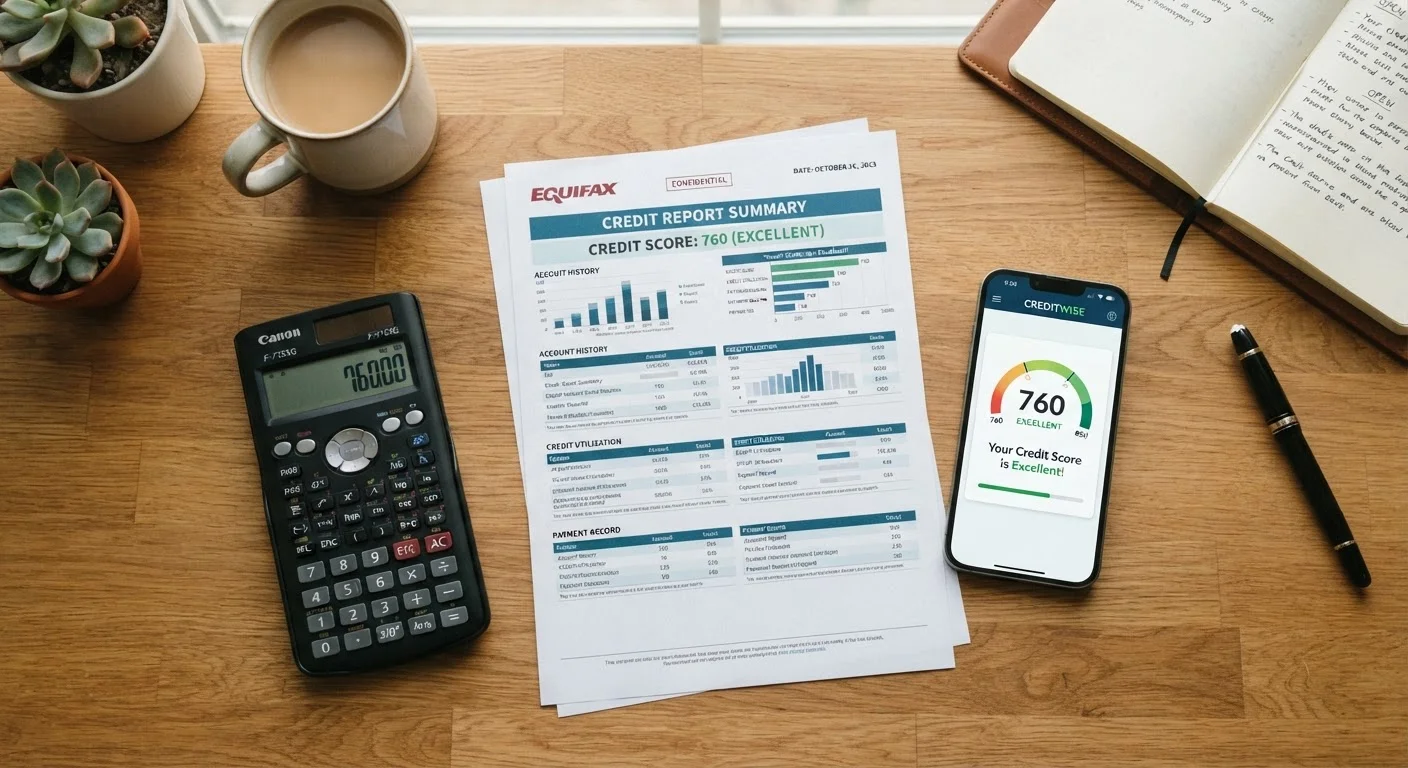
FICO alone has dozens of scoring models, and VantageScore is an entirely separate model used by many lenders. Each of the three major credit bureaus — Equifax, Experian, and TransUnion — maintains its own credit file, and minor differences between those files mean scores can vary by bureau. Industry-specific versions (such as auto-enhanced or mortgage scores) weight factors differently. The score you see through a free monitoring app may not match the score a lender pulls for a specific loan product, which is normal and expected.
Making Smarter Credit Decisions
Correcting these misconceptions isn't just academic — it changes real behavior. Consumers who understand how credit works are less likely to close old accounts unnecessarily, more likely to dispute errors, and better positioned when applying for new credit.
1 in 5
Americans with a credit report error
According to a Federal Trade Commission study, approximately one in five consumers had an error on at least one of their three credit reports.
~100 pts
Potential score drop from a single missed payment
FICO research indicates that a single 30-day late payment can lower a score by roughly 60 to 110 points, depending on the starting score.
If you're concerned about what's actually on your report, the process for challenging inaccuracies is more straightforward than most people realize. Our article on disputing credit report errors walks through the formal steps. And if you've recently opened new accounts, what happens to your credit when you apply explains the short- and long-term effects in detail.
Late Payments Have Lasting Consequences
Payment history is the single largest factor in most credit scoring models, accounting for roughly 35% of a FICO score. A payment reported as 30 days late can remain on your credit report for up to seven years. If you're struggling to keep up with payments, contacting your creditor proactively — before missing a due date — may open options such as hardship programs or modified payment plans.
This article is for general informational purposes only and does not constitute personalized financial or credit advice. Consult a qualified financial professional for guidance specific to your situation.