Why the Format of Your Budget Actually Matters
A budget only works if you use it consistently. That makes format — not just figures — one of the most practical decisions in personal finance. Research in behavioral economics has long suggested that the friction involved in recording an expense influences how closely people track their spending. Writing something by hand tends to create a stronger cognitive impression than tapping a screen, yet apps remove barriers that cause many people to quit tracking altogether.
If you're just getting started, our plain-English budget walkthrough covers the foundational steps regardless of which format you choose. The format question comes second — habit comes first.
The Case for Budgeting on Paper
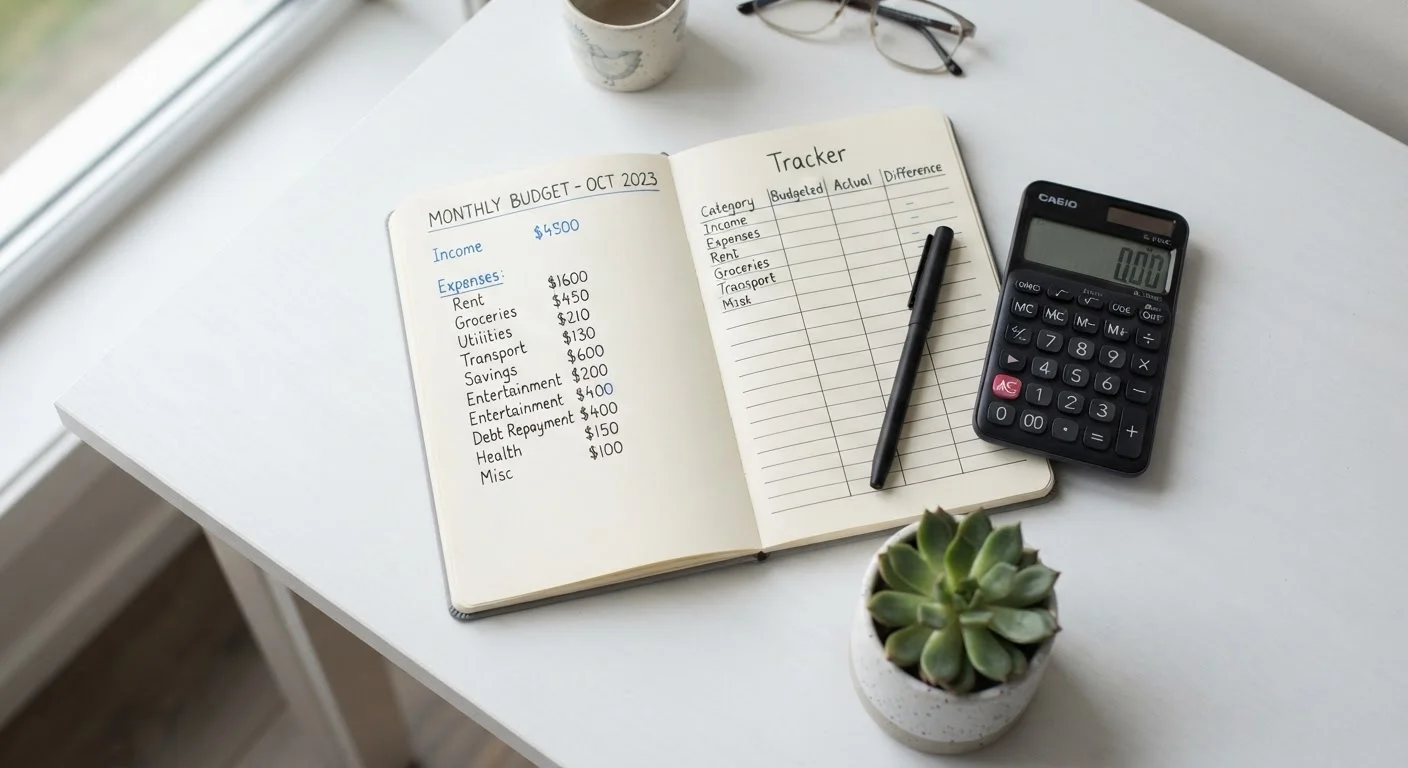
Pen-and-paper budgeting has outlasted every productivity trend for a straightforward reason: it works for a large number of people with no software, subscription, or learning curve required.
No cost — just paper and a pen
Paper budgeting requires zero financial outlay, making it accessible to anyone regardless of income or tech access.
Writing reinforces financial awareness
Manually recording expenses creates a stronger cognitive connection to spending decisions than passive digital tracking.
Works without internet or a device
A notebook functions anywhere, never crashes, and doesn't require software updates or account logins.
Total privacy — no data sharing required
No account linking means sensitive financial data stays entirely offline and under your control.
The physical act of writing income and expense categories forces you to confront numbers directly. There's no auto-sync to quietly absorb a restaurant charge — you record it, or it disappears from your plan. That accountability loop is genuinely powerful for building spending awareness in the early stages of financial management.
Paper also travels without a battery and never gets locked behind a forgotten password. For households that share one budget, a notebook on the kitchen counter is more universally accessible than an app account.
Where Paper Budgeting Falls Short
The same deliberateness that makes paper effective can also make it burdensome. Manual entry is time-consuming, and a single skipped week can leave the ledger so far behind that catching up feels pointless.
Time-consuming to maintain manually
Every transaction must be recorded by hand, and a few missed days can leave the budget hopelessly out of date.
No real-time alerts or automated tracking
Paper offers no mid-month warning when a spending category is running over, making overspending easy to miss until month-end.
Prone to arithmetic errors
Manual addition and subtraction introduces risk of mistakes that silently distort the accuracy of the entire budget.
Difficult to scale with financial complexity
Multiple accounts, variable income, or numerous expense categories quickly become unwieldy to track by hand.
Paper budgets also struggle with complexity. If you have multiple income streams, several credit cards, or variable pay, reconciling everything by hand each month is a significant time investment. Arithmetic errors compound, and there's no built-in alert when a category runs over budget mid-month.
Paper vs. App Isn't About Willpower
Choosing paper over an app — or vice versa — is a practical decision, not a moral one. Neither format makes you more or less disciplined with money. What matters is whether the method reduces enough friction that you return to it consistently. If a notebook sits unopened for weeks, an app may genuinely serve you better, and vice versa.
For people managing tight margins, our guide on budgeting paycheck to paycheck addresses how to stay consistent when every dollar is already allocated — regardless of the format you use.
The Case for Budgeting with an App
Budgeting apps address the single biggest reason people abandon paper: the labor of manual entry. Most apps link directly to bank and credit card accounts, importing transactions automatically and sorting them into categories.
~75%
Adults who say they budget inconsistently
According to recurring consumer surveys by the National Foundation for Credit Counseling, a large majority of Americans report not following a budget on a consistent basis, underscoring the importance of choosing a format you'll actually stick with.
3–5 min
Average daily time to maintain a paper budget
Financial educators commonly cite that a simple handwritten budget requires only a few minutes of daily entry — a low bar that many people still find difficult to sustain over months.
This automation is valuable for households with multiple accounts, irregular income, or subscription charges spread across several cards. Apps can surface patterns — like a gradual rise in dining spending over three months — that would take significant effort to spot in a handwritten ledger. Many also offer bill-due alerts, goal-tracking features, and monthly summaries that provide a real-time picture of where you stand.
If you're comparing structured frameworks to pair with your app, see our breakdown of popular budgeting methods compared to find a system that fits how you earn and spend.
Where Apps Can Let You Down
Apps introduce their own friction points. Account syncing breaks, transactions miscategorize, and subscription fees add up — some of the most capable budgeting platforms carry annual costs that can feel ironic when you're trying to cut expenses.
There's also a passive engagement risk. When an app does the heavy lifting, it's easy to glance at a dashboard without truly processing what the numbers mean. Automation can create a false sense of control: the app is tracking, so everything must be fine. That detachment is the opposite of the deliberate awareness that makes budgeting effective.
Privacy is another consideration. Linking financial accounts to a third-party platform means sharing sensitive data, and users should review the privacy policy and security practices of any app before connecting accounts.
Choosing the Right Approach — or Combining Both
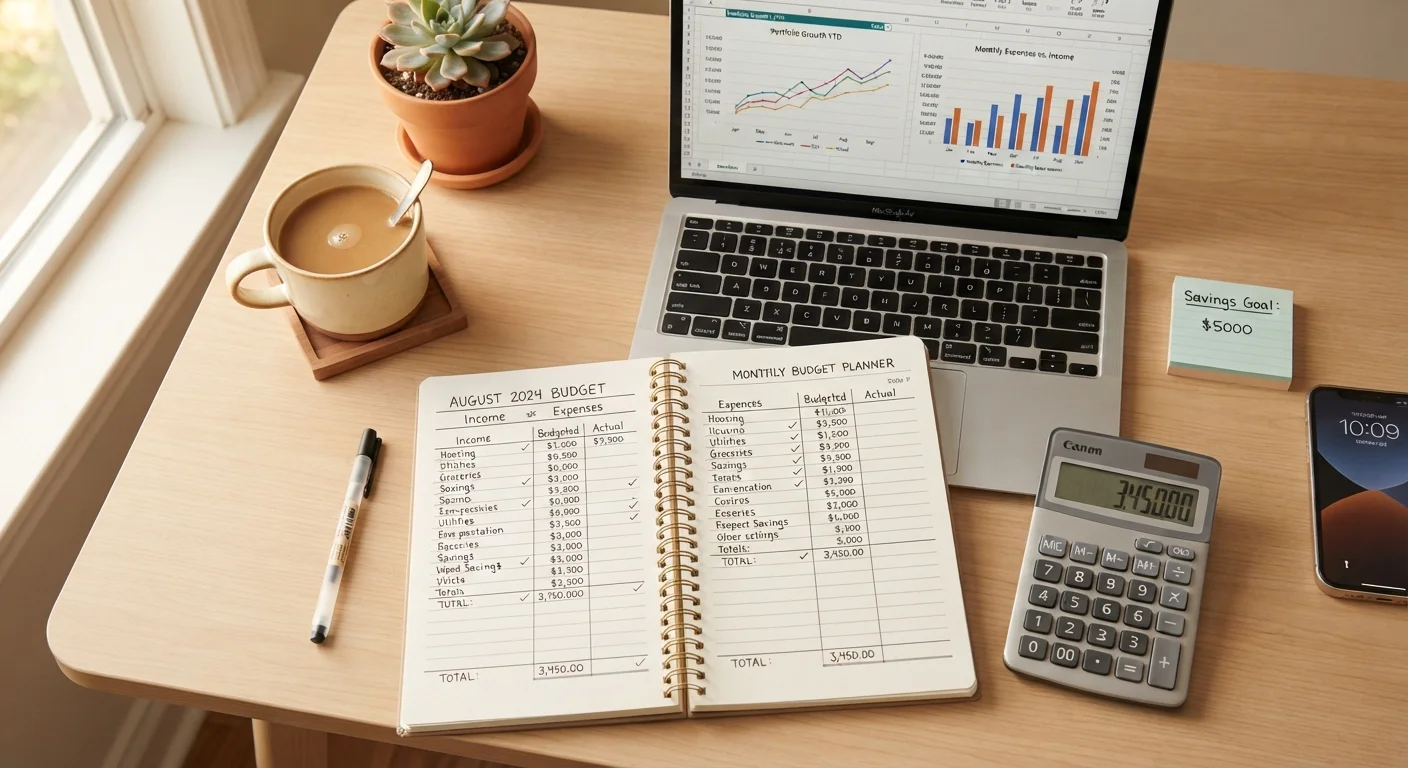
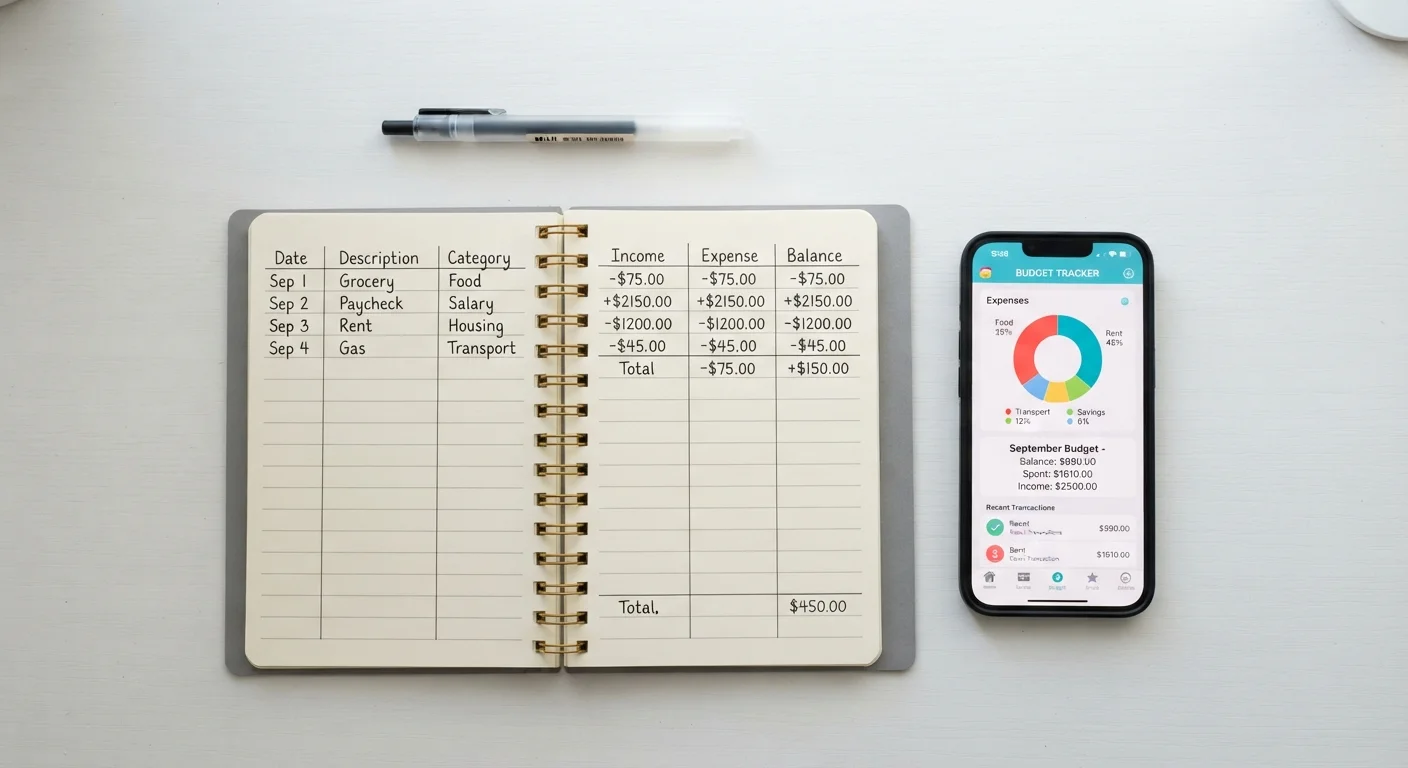
The most pragmatic answer for many people isn't an either/or choice. A hybrid approach — using an app to capture daily transactions automatically, then reviewing and reconciling totals in a simple spreadsheet or notebook each week — blends automation with deliberate reflection.
Whichever method you choose, a regular review is non-negotiable. Our monthly budget review checklist gives you a structured process for comparing your plan to actuals and adjusting before the next month starts. The format is secondary to that habit.
This article is for general informational and educational purposes only and does not constitute personalized financial advice. Consult a qualified financial professional for guidance specific to your situation.