
Why Budgeting Language Matters
Walking into personal finance without knowing the vocabulary is like reading a recipe in a language you don't speak — the steps are there, but the meaning gets lost. Budgeting has its own shorthand, and even common words like "income" or "expenses" carry specific meanings that shape how you build a spending plan.
This reference defines the terms you'll encounter most often, whether you're opening a budgeting app for the first time or working through your first full budget. Bookmark it and return whenever a term trips you up.
This article is for general informational purposes only and does not constitute personalized financial advice. Consider consulting a licensed financial professional for guidance specific to your situation.
Gross income
The total amount you earn before any taxes, insurance premiums, or other deductions are subtracted. Gross income is the starting figure on a pay stub but is not what you actually take home.
Net income
The amount left after all deductions — taxes, Social Security, Medicare, and any pre-tax benefits — are removed from gross income. Net income is the real number your budget is built on, because it reflects actual take-home pay.
Fixed expenses
Costs that stay the same amount every billing period, such as rent, mortgage payments, or a car loan installment. Because these amounts don't change, they're the easiest to plan for in a budget.
Variable expenses
Costs that fluctuate month to month, such as groceries, utilities, and gas. Variable expenses require more active tracking because the amount you spend can shift significantly based on behavior or circumstances.
Discretionary income
Money remaining after paying for necessities like housing, food, and transportation. Discretionary income covers wants — dining out, entertainment, hobbies — and is typically the first place budgets are adjusted when spending needs to be trimmed.
Emergency fund
A dedicated pool of savings set aside exclusively for unexpected financial shocks — job loss, medical bills, major car repairs. A common general guideline is three to six months of essential expenses, though the right amount depends on individual circumstances.
Sinking fund
A savings category built intentionally over time for a predictable future expense, such as an annual insurance premium, a vacation, or holiday gifts. By spreading the cost across many months, a sinking fund prevents large purchases from disrupting the rest of a budget.
Budget deficit
The condition when spending exceeds income in a given period. A recurring deficit means expenses are outpacing earnings and typically requires either cutting costs, increasing income, or both.
Budget surplus
The amount remaining when income exceeds expenses for a period. A surplus can be directed toward savings, debt repayment, or a sinking fund rather than left to be spent without intention.
Pay yourself first
A savings approach in which a set amount is transferred to savings immediately when income arrives, before any other spending occurs. This makes saving automatic and reduces the temptation to spend that money elsewhere.
Cash flow
The movement of money in and out of your personal finances over a period — essentially, income minus expenditures. Positive cash flow means more money is coming in than going out; negative cash flow is the reverse.
Spending categories
The labels used to group expenses within a budget, such as housing, food, transportation, and entertainment. Clear categories make it easier to see where money is going and identify where adjustments can have the most impact.
Core Budgeting Concepts at a Glance
Before diving into individual definitions, it helps to see the key numbers that any budget relies on. The quick-reference card below captures the metrics most beginners need to understand first.
| Budget starting point | Net (after-tax) income |
| Common savings guideline (50/30/20) | 20% of net income toward savings or debt (General financial planning guidance; individual circumstances vary) |
| Emergency fund target range | 3–6 months of essential expenses (Widely cited general guideline; not a guarantee or personalized recommendation) |
| Fixed vs. variable split | Varies by household; tracking both is essential |
| Zero-based budget end balance | $0 unallocated (every dollar assigned a purpose) |
| Sinking fund use case | Predictable future expenses spread over time |
With those anchors in place, the glossary terms above gain practical context. For example, knowing your net income is the starting line from which you subtract fixed and variable expenses to arrive at what's left for savings or discretionary spending.
If debt repayment is already part of your picture, the debt and savings term reference pairs well with this glossary — it covers concepts like APR, principal, and amortization that interact directly with your budget.
Budgeting Frameworks Built on These Terms
Knowing individual terms is useful; understanding how they connect inside a real budgeting framework is where the knowledge becomes actionable. Three widely discussed approaches illustrate how these concepts work together:
- 50/30/20 rule: Allocates roughly 50% of after-tax income to needs (fixed and essential variable expenses), 30% to wants (discretionary spending), and 20% to savings or debt payoff. These percentages are guidelines, not guarantees — your situation may call for different ratios.
- Zero-based budgeting: Every dollar of net income is assigned a purpose — expenses, savings, or debt — so the budget "zeros out" at month's end. Nothing is left unallocated.
- Envelope method: Cash or digital equivalents are divided into spending categories (envelopes). When an envelope is empty, spending in that category stops for the period.
Each framework uses the same vocabulary — income, fixed costs, discretionary spending, sinking funds — but arranges priorities differently. Choosing one is less important than actually using it consistently. For a deeper walkthrough, the complete guide to personal budgeting covers each layer in detail.
If every dollar already feels spoken for before you start, budgeting on tight financial margins addresses that specific challenge directly. And if you've picked up misconceptions along the way, common budgeting myths debunked separates fact from fiction.
These Terms Apply Across Tools and Methods
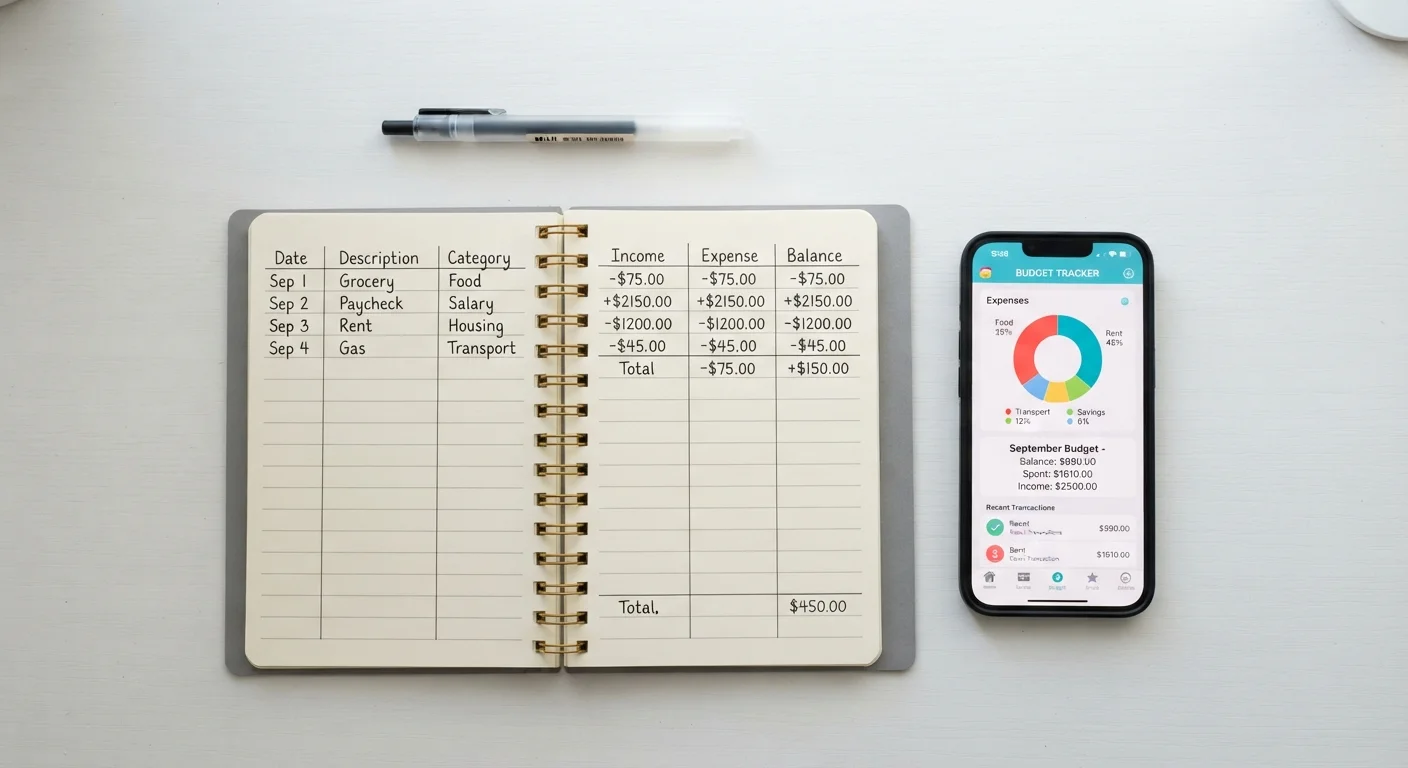
Whether you use a spreadsheet, a budgeting app, or pencil and paper, the vocabulary in this glossary applies universally. App interfaces may label categories differently, but the underlying concepts — net income, fixed costs, discretionary spending, sinking funds — remain the same. Understanding the terms makes it easier to switch tools or methods without starting over conceptually. For broader context on what a budget actually represents, see what a personal budget really is.