
Why a Monthly Budget Review Matters
Creating a budget is only the beginning. The real financial work happens when you sit down each month to measure what actually occurred against what you planned. Without that regular comparison, even a well-structured budget quietly drifts out of alignment with your real life — and the gap tends to widen over time.
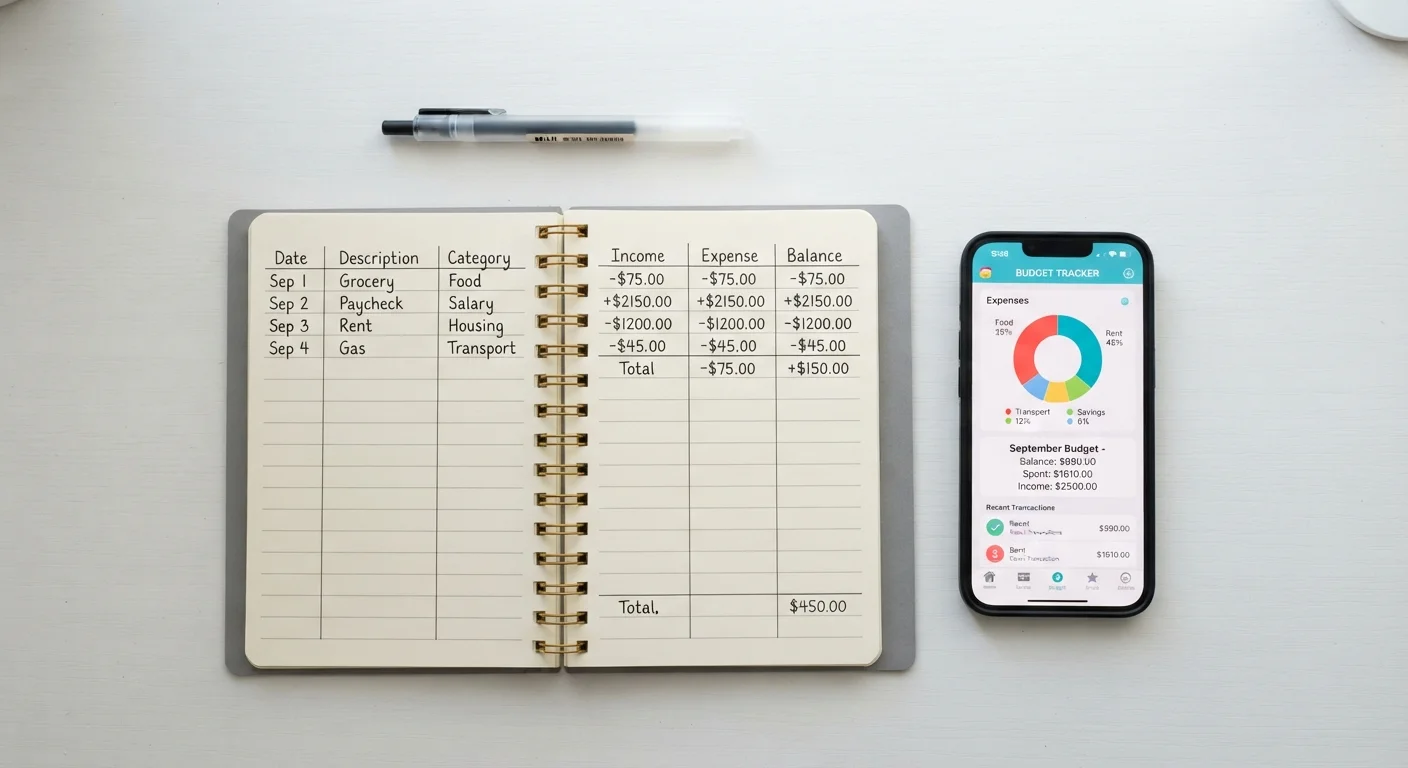
A monthly review doesn't need to be a long or stressful event. Think of it as a brief financial check-in: gather your numbers, spot any significant variances, make a small adjustment or two, and set a realistic plan for the month ahead. Done consistently, this habit compounds into genuine financial awareness. If you're still building your initial framework, explore whether a paper or app-based approach suits you best before you start.
Use the checklist below as your monthly guide. Work through each group at your own pace — the full process typically takes between 30 and 60 minutes.
Bank and credit card statements
Provides the raw transaction data needed to calculate your actual spending by category.
Budget document (spreadsheet, app, or notebook)
Holds your planned budget amounts so you can compare them directly against actuals.
Calculator
Helps total spending by category and calculate variances quickly.
Calendar or reminder app
Used to schedule your next monthly review and flag upcoming irregular expenses.
Your Monthly Budget Review Checklist
The checklist is organised into four logical stages: gathering your data, reviewing what happened, planning for what's ahead, and locking in your next month's budget. Work through them in order for the clearest picture.
Gather Your Data
Review Last Month's Actuals
Look Ahead: Next Month's Considerations
Set Next Month's Budget
Don't Skip Variable and Irregular Expenses
Fixed bills like rent and utilities are easy to track. It's the variable and infrequent costs — dining out, clothing, annual memberships — that most commonly blow a budget off course. Make sure every spending category, including irregular ones, has a line in your review. If a cost appeared this month that wasn't in your plan, add a category for it before next month begins.
Irregular and easily overlooked expenses — annual subscriptions, vehicle registration, seasonal costs — are among the most common reasons a budget underperforms. Review the spending categories most budgets forget to include so these costs don't ambush you mid-month.
Once you've completed your review, record your key observations in a simple note or journal entry. Tracking your month-over-month narrative — not just the numbers — helps you recognise patterns that raw figures alone won't reveal. For strategies to keep this habit alive long-term, see habits that make a budget stick over time.
A Budget Review Is Not a Guilt Exercise
The purpose of a monthly review is diagnosis, not judgment. If your spending exceeded the plan in several categories, that information is valuable — it tells you where your actual priorities or circumstances differ from your assumptions. Use what you find to adjust your budget toward accuracy, not to set unrealistically strict limits that are difficult to maintain. Sustainable budgets reflect your real life, not an idealised version of it.
This article provides general financial information and education only. It is not personalised financial or tax advice. For guidance specific to your situation, consult a qualified financial professional.