The Fundamental Difference: Your Money vs. Borrowed Money
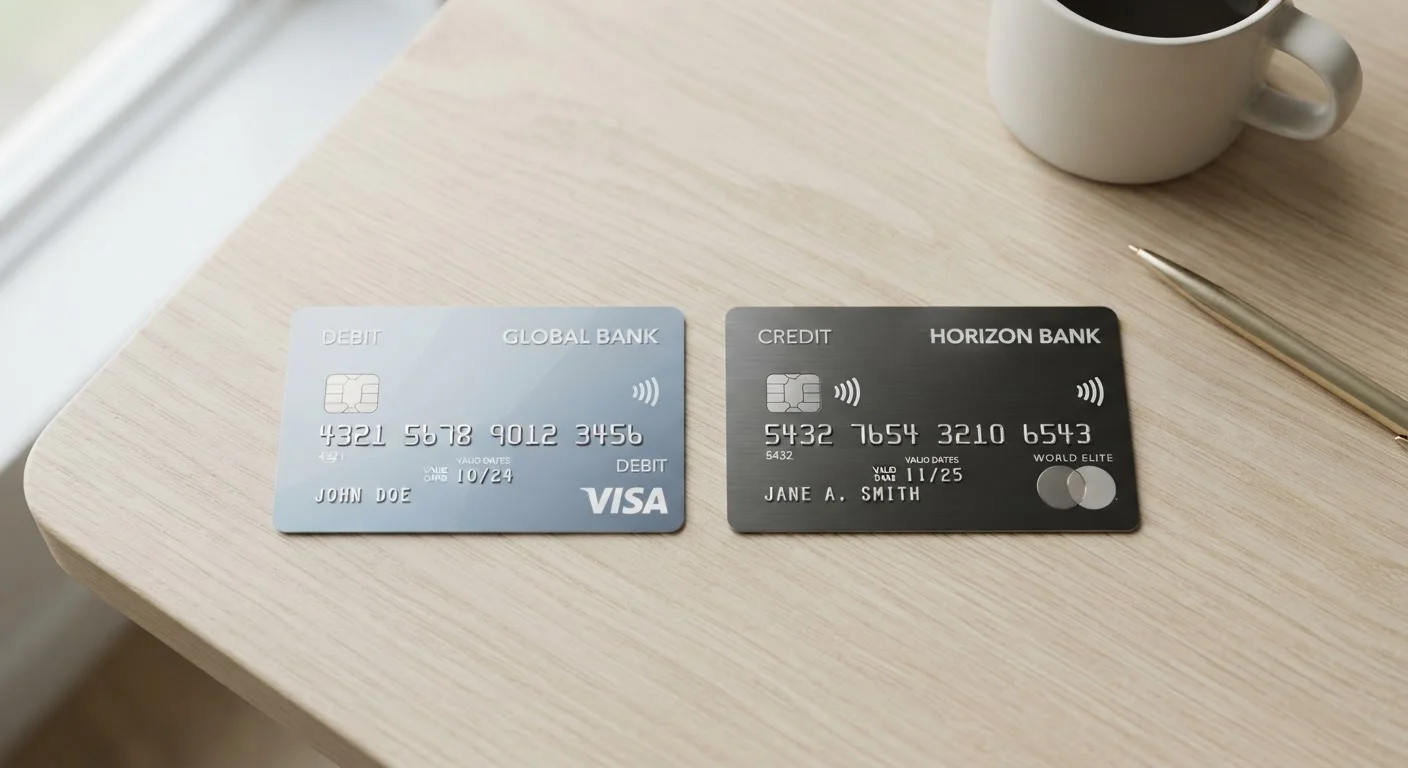
Both cards use the same payment networks and look nearly identical in your wallet, but they represent entirely different financial arrangements. A debit card is a direct line to your checking or savings account — every transaction immediately reduces your available balance. A credit card, by contrast, lets you borrow from a credit line extended by an issuer, with repayment due later.
This distinction shapes nearly every other difference between them: how fraud is handled, whether your credit score is affected, and what happens when a transaction goes wrong. Understanding this foundational gap helps you decide which card belongs in which situation, rather than treating them as interchangeable.
| Criterion | Debit Card | Credit Card |
|---|---|---|
| Funding source | Your existing bank balance | Issuer's credit line |
| Interest charges | None | Yes, if balance not paid in full |
| Fraud liability (federal floor) | Up to full amount if delayed | Capped at $50 (FCBA) |
| Builds credit history | No | Yes |
| Overdraft risk | Yes, if program is active | No (credit limit applies) |
| Spending limit | Your account balance | Your approved credit limit |
| Dispute resolution | Funds already deducted during review | Charge on statement; not yet paid |
Fraud Protection: Where the Gap Is Significant
Federal law treats debit and credit card fraud differently, and the difference can be costly. Under the Electronic Fund Transfer Act (EFTA), your debit card liability for unauthorized charges depends heavily on how quickly you report the loss. Report within two business days and your liability is generally capped at $50; wait beyond 60 days after your statement is issued and you could be liable for the full amount stolen.
Credit cards fall under the Fair Credit Billing Act (FCBA), which caps liability at $50 regardless of when you report — and most major issuers voluntarily extend zero-liability policies on top of that. Crucially, with a debit card, fraudulent charges drain real money from your account immediately. That cash may take days to be restored during an investigation, potentially disrupting bill payments or causing overdrafts. With a credit card, the disputed amount sits on a statement you haven't yet paid, so your bank balance remains intact while the investigation proceeds.
Debit Card Protections Vary by Bank
Many banks voluntarily offer stronger debit card fraud protections than federal law requires, including zero-liability guarantees. However, these are bank policies, not legal requirements, and terms can vary. Always review your account agreement and report suspicious activity promptly — the faster you act, the stronger your position under both bank policy and federal law.
Credit Building and Financial Opportunity
One of the most consequential differences is invisible at the point of sale: debit card use is not reported to the three major credit bureaus (Equifax, Experian, and TransUnion), so it does nothing to build your credit history. Credit cards, when used responsibly, directly influence factors that make up your credit score — including payment history and credit utilization ratio.
This matters because your credit score affects far more than future card approvals. It influences mortgage rates, auto loan terms, rental applications, and in some states, insurance premiums. Common credit score misconceptions often lead people to underestimate how much their card behavior shapes this number over time.
It's worth noting that carrying a credit card balance is not required to build credit — paying your statement in full each month avoids interest entirely while still generating positive payment history. For a deeper look at debt-related myths, see common myths about carrying credit card debt.
35%
Share of US payments made by debit card
According to the Federal Reserve's Diary of Consumer Payment Choice, debit cards consistently rank among the most-used payment methods in everyday US transactions.
$50
Max federal credit card fraud liability
The Fair Credit Billing Act limits consumer liability for unauthorized credit card charges to $50, and most major issuers extend zero-liability policies beyond this floor.
90%+
Credit score determined by payment behavior
Payment history and amounts owed together account for over 90% of a FICO score — behaviors driven directly by how credit cards are managed, not debit cards.
Risks Specific to Each Card Type
Each card type carries its own distinct risk profile. Debit cards expose you to overdraft risk — if you spend more than your balance and your bank has an overdraft program enabled, you may face significant fees per transaction. Overdraft fees can accumulate quickly and catch even careful spenders off guard.
Credit cards carry the risk of revolving debt and interest charges. When you don't pay your full statement balance, the remaining amount accrues interest — often at rates well above 20% APR. Minimum payments can extend repayment for years and multiply the total cost of purchases significantly. For readers navigating multiple debt types, understanding how credit card debt compares structurally to other obligations is useful context — see how credit card debt differs from student loans.
Where you bank also shapes these risk profiles. Credit unions and traditional banks differ in fee structures and overdraft policies, which can affect how debit card risk plays out in practice.
This article provides general financial education and is not personalized financial advice. Consult a qualified financial professional for guidance specific to your situation.