Why Oil Change Myths Persist
Few pieces of automotive advice are repeated as confidently - or as incorrectly - as the old oil change rules. Some of these myths originated with legitimate science from decades ago; others were kept alive by service industry marketing. Either way, following them without question costs the average driver both time and money every year.
The myths below are addressed using guidance from vehicle manufacturers and automotive engineering research. For a broader look at recurring ownership expenses that fly under the radar, see ongoing maintenance costs most drivers underestimate.
Myth
You must change your oil every 3,000 miles or your engine will suffer damage.
Fact
Most modern vehicles - especially those using full synthetic oil - can safely go 5,000 to 10,000 miles or more between changes, per manufacturer specifications.
The 3,000-mile rule made sense when engines had looser tolerances and conventional mineral oils degraded faster. Today's engine technology and modern oil formulations have made that interval unnecessary for the vast majority of vehicles. Following it anyway means paying for two to three extra oil changes per year with no measurable engine benefit. Always check your owner's manual for the interval that applies to your specific make, model, and oil type.
Myth
Switching to synthetic oil after years of using conventional oil will cause leaks.
Fact
Modern full synthetic oils are fully compatible with engines that previously ran on conventional oil and will not cause or worsen seals to leak.
This myth likely originated from very early synthetic formulations, which contained chemical compounds that could interact with certain older seal materials. Contemporary synthetic oils are engineered to be compatible with the elastomers used in modern and most older engines. If an engine develops a leak after switching oil types, the seal was already failing - the oil change did not cause it. A qualified mechanic can assess any genuine sealing concerns before you switch.
Myth
Black or dark oil means it is dirty and must be changed immediately.
Fact
Oil darkens naturally as it suspends combustion byproducts - this is normal function, not a sign of failure.
Motor oil is designed to hold microscopic contaminants in suspension so they do not accumulate on engine surfaces. That process turns oil dark relatively quickly, often within a few hundred miles. Color alone tells you almost nothing about remaining oil life or lubricating quality. A milky or frothy appearance, however, can indicate coolant contamination - a condition that does warrant prompt professional inspection.
Myth
You should warm up your engine for several minutes before an oil change to get all the old oil out.
Fact
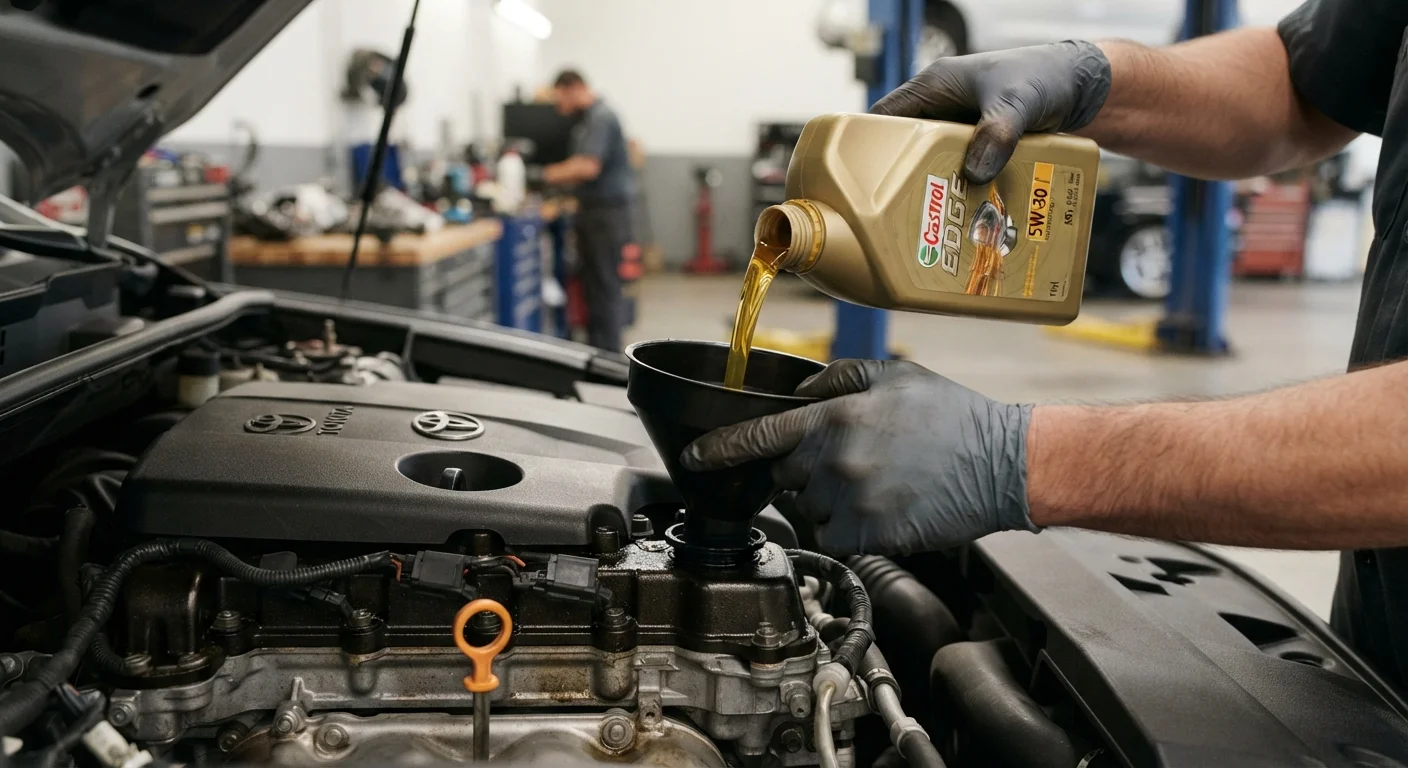
A brief warm-up of one to two minutes is sufficient to thin the oil for draining; extended idling wastes fuel and raises burn-risk when working underneath a hot engine.
Slightly warm oil drains more completely than cold oil, so a short idle before a DIY oil change is reasonable. However, a fully heat-soaked engine - one driven hard or idled for ten-plus minutes - makes the oil dangerously hot to handle and raises the risk of burns during the drain. For most DIYers, driving the car briefly and then letting it sit for ten minutes before draining strikes the right balance of oil flow and safe handling temperature.
Myth
All motor oils of the same viscosity grade (e.g., 5W-30) are interchangeable regardless of certification.
Fact
Viscosity grade is only one specification; API service category, ILSAC rating, and manufacturer approvals must also match your engine's requirements.
Two quarts of 5W-30 from different manufacturers can differ significantly in additive chemistry, detergent levels, and performance certifications. Using an oil that meets the correct viscosity but lacks the required API or manufacturer approval (such as GM dexos or BMW LL-01) can void warranty coverage and may not provide adequate protection under your engine's specific operating conditions. The approved specifications are printed in your owner's manual and are non-negotiable for warranty-covered vehicles.
What the Evidence Actually Recommends
The single most reliable source for your vehicle's oil change schedule is the owner's manual. Manufacturers spend millions of engineering hours determining the correct interval for each engine, factoring in oil type, operating temperatures, and design tolerances. A reminder sticker placed by a quick-lube shop reflects that business's revenue interests - not your engine's needs.
7,500+
Typical modern oil change interval (miles)
Many automakers now specify intervals of 7,500 to 10,000 miles for vehicles using full synthetic oil under normal driving conditions.
2-3x
Extra oil changes per year from the 3,000-mile rule
Drivers following the outdated 3,000-mile interval on a modern synthetic-oil vehicle may pay for two to three unnecessary services annually.
Understanding which oil type your car takes is equally important. Conventional, synthetic, and synthetic-blend oils behave differently and carry different manufacturer-approved intervals. Drivers of older or high-mileage vehicles will find additional guidance in maintaining a high-mileage vehicle without overspending.
Your Owner's Manual Overrides Every Sticker
No quick-lube reminder sticker, oil cap marking, or well-meaning advice replaces the interval specified by your vehicle's manufacturer. Automakers engineer and test the correct oil type and change frequency for each engine - and deviation from those specs can affect both performance and warranty coverage. If you no longer have the physical manual, most manufacturers provide digital versions on their official websites.
Oil changes are one maintenance item - but they receive outsized attention compared to tires, brakes, and transmission fluid, which can quietly erode both safety and budget. Keeping a complete maintenance log and following the full schedule in your owner's manual protects your investment far more reliably than any single folk rule.