Why the Final Number Is Never the Sticker Price
The advertised price on a vehicle - known as the Manufacturer's Suggested Retail Price (MSRP) - is rarely what you'll actually pay at signing. By the time a dealer processes your purchase, a collection of fees, taxes, and optional add-ons are layered on top. For buyers who aren't familiar with each line item, the final figure can come as a genuine shock.
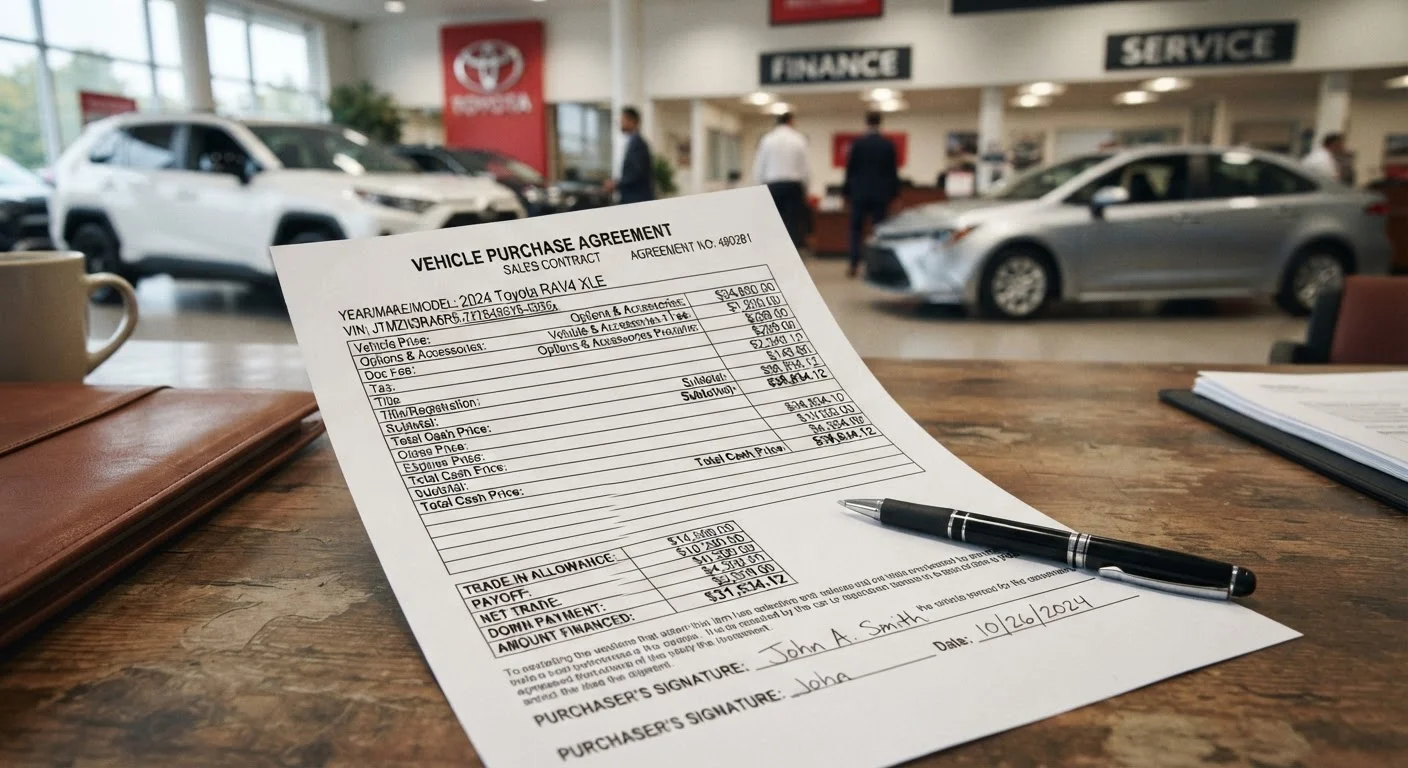
Understanding the structure of a purchase agreement before you sit down at the finance desk is one of the most practical things you can do. As we cover in our guide to total vehicle ownership costs, the purchase price itself is only the starting point for what car ownership will cost you over time.
Line Items You'll See on Almost Every Contract
Some fees on a car purchase agreement are standardized and largely non-negotiable. Others are dealer-specific and worth scrutinizing. Here's what the most common charges actually mean:
- Documentation Fee ("Doc Fee"): Charged by the dealer to process paperwork. Amounts vary widely by state - some states cap them; others don't. This fee is nearly universal but the amount is worth confirming upfront.
- Destination and Delivery Charge: Covers the cost of shipping the vehicle from the manufacturer to the dealership. This is a legitimate, fixed cost set by the manufacturer and printed on the window sticker.
- Sales Tax: Calculated as a percentage of the vehicle's sale price, varies by state and sometimes by county. This is non-negotiable and set by law.
- Title and Registration Fees: Paid to your state's motor vehicle agency to transfer ownership and issue license plates. Amounts depend on your state and, in some cases, the vehicle's weight or value.
- Dealer Prep Fee: Ostensibly covers dealer preparation of the vehicle for delivery. This charge is common but is sometimes considered a profit-padding item - it's worth asking what specific work it covers.
MSRP
Manufacturer's Suggested Retail Price - the price the manufacturer recommends the vehicle be sold for. It does not include taxes, fees, or dealer markups.
Documentation Fee
A dealer-charged fee for processing the sale's paperwork and title transfer. The amount is set by the dealer and may or may not be regulated by state law.
GAP Insurance
Guaranteed Asset Protection insurance covers the difference between the outstanding loan balance and the vehicle's actual cash value if the car is totaled or stolen.
F&I Office
The Finance and Insurance office at a dealership where loan paperwork is finalized and optional protection products are offered to the buyer.
Out-the-Door Price
The total amount a buyer pays including vehicle price, all dealer fees, taxes, and registration - the true final cost of completing the purchase.
Vehicle Service Contract
A contract sold separately from a manufacturer's warranty that covers certain repair costs after the factory warranty expires. Terms and exclusions vary widely.
Finance and Insurance Office Add-Ons
After agreeing on a vehicle price, buyers are typically sent to the Finance and Insurance (F&I) office, where a second round of potential costs is presented. These are almost always optional, though they may be presented as standard inclusions.
- Extended Warranty / Vehicle Service Contract: Extends mechanical coverage beyond the manufacturer's warranty. Coverage terms, exclusions, and prices vary enormously - read any contract carefully before agreeing.
- GAP Insurance: Covers the difference between what you owe on a loan and what your insurer pays if the car is totaled or stolen. This can be valuable for buyers with small down payments, but it's also available from many auto insurers, sometimes at lower cost.
- Credit Life / Disability Insurance: Pays your loan if you die or become disabled. These are frequently expensive relative to comparable standalone policies and worth comparing before accepting.
- Paint and Fabric Protection: Dealer-applied sealants and treatments. Independent assessments of their value vary; weigh the cost against publicly available products.
You Can Decline Most F&I Products
Extended warranties, paint protection, and credit insurance offered in the finance office are almost always voluntary. Dealers are not permitted to make a sale conditional on purchasing these products in most states. If you're interested in GAP insurance or an extended warranty, compare pricing from your own insurer or an independent warranty provider before accepting the dealer's offer.
Tracking all of these costs together is essential for realistic budgeting. Our article on building a realistic annual car budget can help you factor every expense - from loan payments to registration renewals - into a complete financial picture.
How to Review a Purchase Agreement Confidently
You have the right to request a copy of the purchase agreement before signing and to ask for a line-by-line explanation of every charge. A few practical steps can protect you:
- Request the out-the-door price in writing early. This total - including all fees and taxes - is the number that matters for your budget.
- Distinguish mandatory from optional charges. Taxes, title fees, and destination charges are fixed. Documentation fees vary. F&I add-ons are almost always optional.
- Don't feel rushed. Finance offices can be fast-paced environments. You are entitled to time to read what you're signing.
- Compare F&I products independently. GAP insurance and extended warranties are available from third-party providers, sometimes at lower cost.
The same discipline that careful homebuyers apply - as explored in our breakdown of homebuyer closing costs - translates directly to the dealership finance office. In both situations, knowing what each fee is for, and whether it's negotiable, gives you a meaningful advantage.
This article is for general informational purposes only and does not constitute financial, legal, or purchasing advice. Fee structures, tax rates, and regulations vary by state and dealer. Consult a licensed professional for guidance specific to your situation.