Why Sudden Food Changes Cause Digestive Problems
A pet's gastrointestinal tract is colonized by a complex community of bacteria, collectively called the gut microbiome, that adapts over time to digest a specific diet. When you abruptly replace one food with another, the microbiome hasn't had time to adjust — digestive enzymes are mismatched to the new ingredients, and the result is often vomiting, loose stool, excessive gas, or a temporary loss of appetite.
This is true across species. Dogs, cats, and many small animals are all susceptible, though the degree varies by individual. Puppies and kittens, senior pets, and animals already managing GI conditions tend to be especially sensitive. Even a change between two formulas from the same manufacturer can trigger symptoms if the protein sources or fiber content differ meaningfully.
If you're new to pet nutrition fundamentals, the nutrition primer for new owners is a useful starting point before attempting a food switch. And if you're switching because your pet's current diet seems inadequate, review signs that a diet may not be meeting nutritional needs so you can document what you're observing for your vet.
What you will need
How to Transition Your Pet's Food Safely
The standard approach recommended by most veterinarians is a ratio-based transition spread over at least seven days. The goal is to allow the gut microbiome and digestive enzymes to adjust incrementally rather than all at once.
Days 1–2: 75% old food, 25% new food
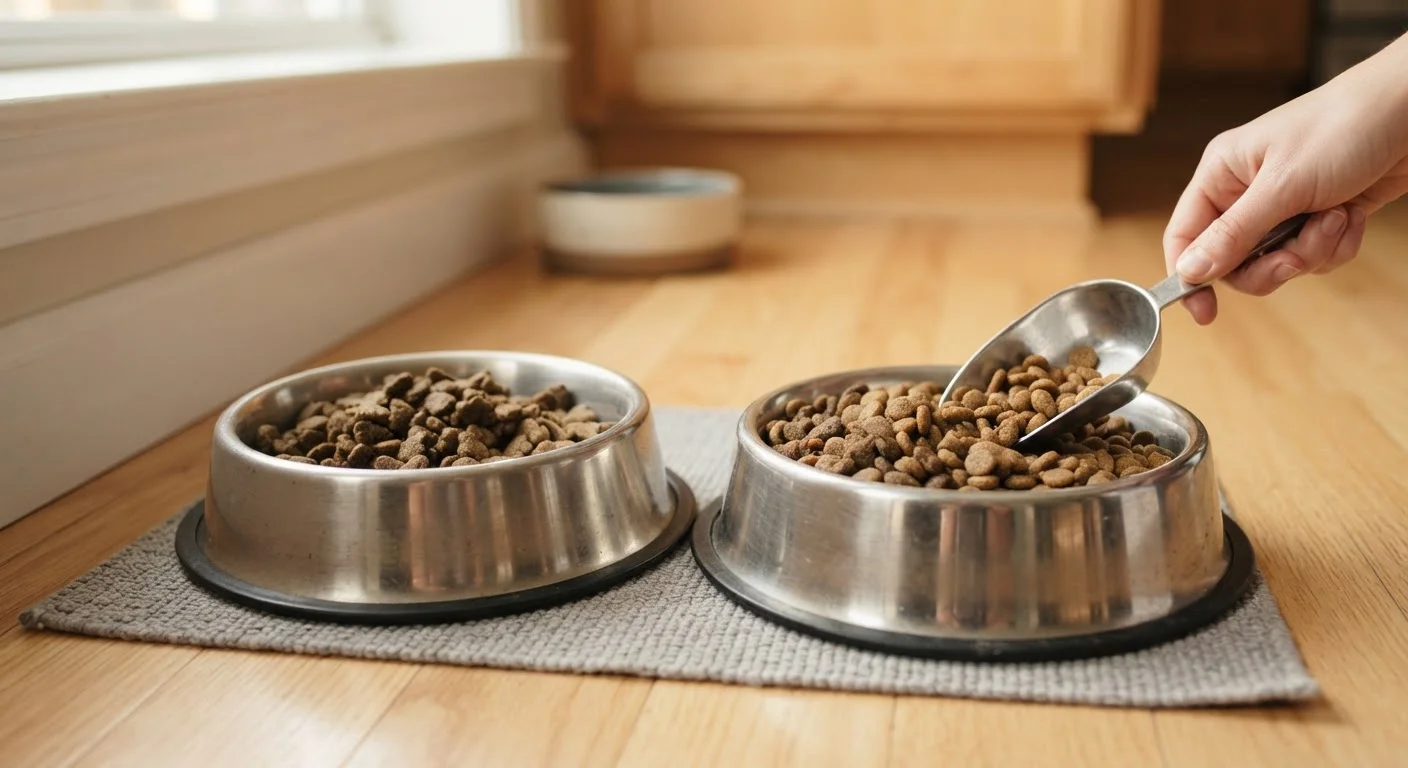
Begin by replacing approximately one-quarter of each meal with the new food. Keep overall portion size the same — this is not the time to increase calories. Mix the foods thoroughly so your pet can't easily eat around the new addition.
Days 3–4: 50% old food, 50% new food
Move to an equal split only if your pet showed no significant GI symptoms during days 1–2. Mild softening of stool is common and not necessarily a reason to stop — but vomiting, diarrhea, or a complete refusal to eat are signals to hold at the previous ratio for another day or two.
Days 5–6: 25% old food, 75% new food
With most of the meal now composed of the new food, watch stool quality closely. It should be returning toward your pet's normal baseline. If stool remains loose, extend this ratio by two to three days before proceeding.
Day 7 onward: 100% new food
If your pet has tolerated each stage without significant symptoms, you can now feed the new food exclusively. Continue to monitor stool consistency, appetite, and energy for the next two to four weeks, as the full effects of a dietary change can take time to become apparent.
Sensitive Stomachs Need More Time
If your pet has a history of GI sensitivity, stretch the full transition to two to four weeks by spending three to four days at each ratio. A slower timeline is not a failure — it simply reflects that different animals have different microbiome adjustment rates. Patience during the transition significantly reduces the likelihood of a setback.
Once the transition is complete, continue monitoring your pet's coat quality, energy level, and stool consistency over the following weeks. These are reliable long-term indicators of whether the new food is a good nutritional fit. For a broader view of how nutrient needs shift at different life stages, see how feeding should shift across your pet's life stages.
Before your next food switch, it's also worth using a structured checklist to vet the new formula — the pet food evaluation checklist covers AAFCO compliance, ingredient quality, and life-stage suitability.
When to Slow Down or Seek Veterinary Advice
Not every pet transitions smoothly within seven days, and that's normal. If you notice soft stools or mild gas, hold the current ratio steady for two to three extra days before advancing. Pushing forward too quickly is the most common mistake owners make.
Know When Symptoms Cross a Line
Mild gas or slightly softer stools during a transition are common and generally self-resolving. However, persistent vomiting, bloody or very watery diarrhea, significant lethargy, or refusal to eat for more than 24 hours are not normal transition symptoms. These warrant a call to your veterinarian, as they may indicate a food intolerance, allergy, or an underlying health issue unrelated to the switch.
Pets with inflammatory bowel disease, food sensitivities, or a history of pancreatitis should be transitioned under direct veterinary guidance, as some conditions require a prescription diet introduced under controlled conditions. For general pet health and care guidance, always partner with a licensed veterinarian who knows your animal's history.
This article provides general educational information and is not a substitute for personalized veterinary advice. If your pet shows persistent vomiting, bloody stool, significant lethargy, or refuses food for more than 24 hours during a transition, contact your veterinarian promptly.